Heritage
Abu Mena: Visitor and Heritage Guide
A Coptic pilgrimage city south of Alexandria, built over a martyr's tomb. It spent twenty-four years on the Danger list and came off in 2025.
- Country Egypt
- Category Heritage
- Reviewed 17 August 2026
- Sources 4
- Length 3 min read
Credit isawnyu, CC BY 2.0, via Wikimedia Commons
Nothing else on this site tells a heritage story that ends well. Abu Mena spent nearly twenty-four years on the List of World Heritage in Danger and came off it, and the reason it came off is a drainage project. Hold that in mind while reading the rest, because it is rarer than any of the architecture.
What UNESCO inscribed
Abu Mena went onto the World Heritage List in 1979. It lies in the Mariut desert southwest of Alexandria, between the city and Wadi el-Natrun, and it is a ruined Christian city rather than a monument.
It grew up over the tomb of Menas of Alexandria, a martyr who died in AD 296, and the tomb was believed to work miracles. Between the fifth and seventh centuries the pilgrimage built a town around it: a baptistery and two churches at the center, the tomb church with the saint’s cave beneath it, a cruciform church for pilgrims, and two more churches in the northern and eastern quarters. Around them stood rest houses for pilgrims, two public baths, workshops, cisterns, presses for olives, oil, raisins and wine, pottery kilns, and the ordinary town where the people who serviced all of it lived.
The good buildings were ashlar limestone set in lime mortar, with marble columns and mosaic; the plain ones were mud brick under fine lime plaster. UNESCO describes the architecture as Egyptian practice worked together with traditions from Europe and Asia Minor, which is what a pilgrimage site does to a building style.
Twenty-four years in danger, and off the list
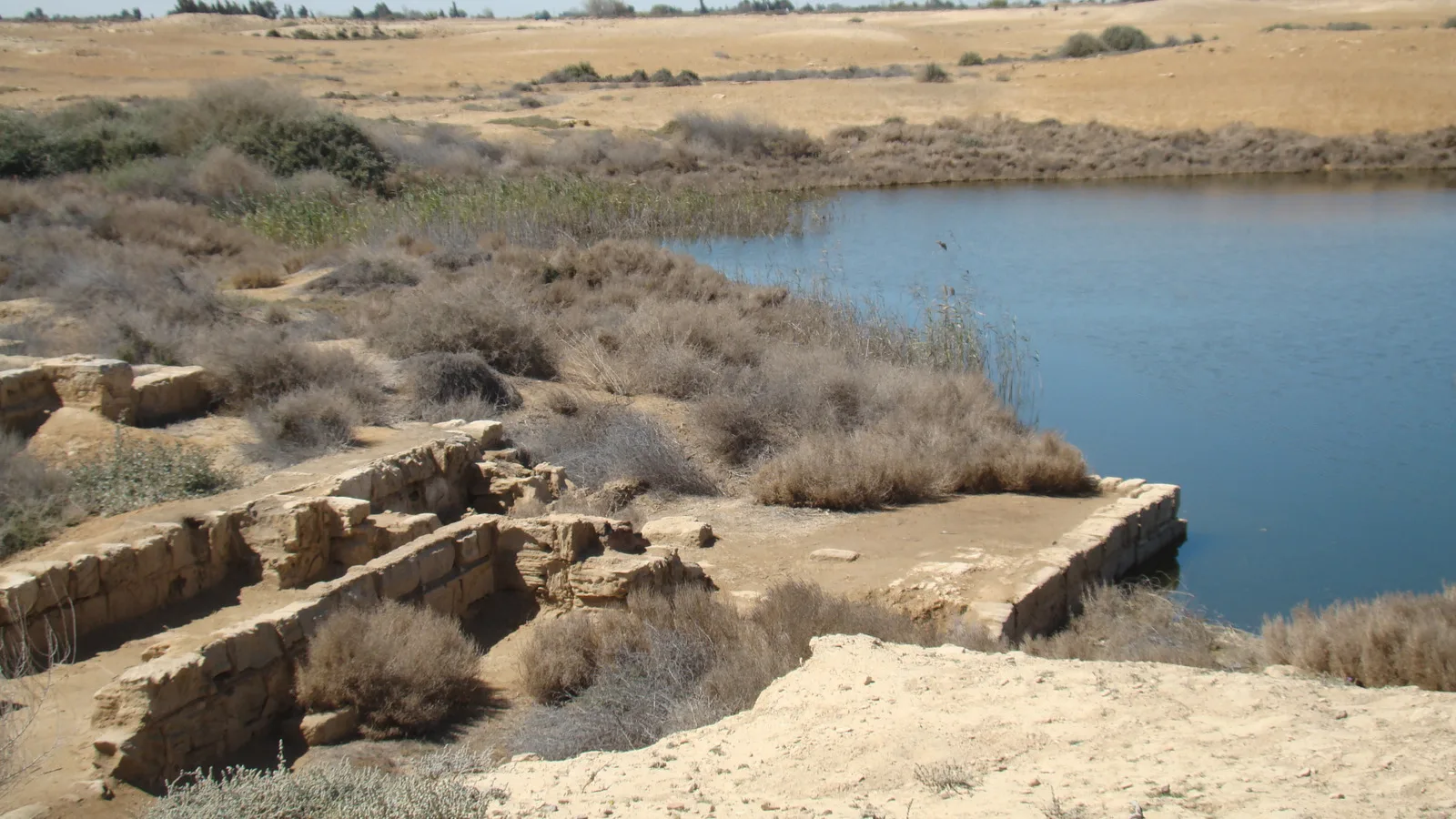
On 12 December 2001 the World Heritage Committee put Abu Mena on the List of World Heritage in Danger. The problem was water. Reclaiming the land around the site for agriculture raised the water table under it, and a city built of limestone and mud brick does not survive that.
On 9 July 2025 it was taken off, with two other African properties. UNESCO now records the property as stable, with the rising water contained by a dewatering project and a monitoring regime to keep it contained, while noting that heavy rain, wind, humidity and fire remain pressures. Nothing about that was quick and nothing about it is finished. It is still the outcome heritage conservation almost never gets to report.
What you will see, and what is still living
Manage your expectations about the stones. UNESCO puts it plainly: complete structures are few, and what survives is lower courses, ground plans and some standing fragments. The site was first properly recorded in Kaufmann’s excavations of 1905. You are reading a city plan at ankle height, in open desert, with no shade.
What is not ruined is the devotion. A monastic community still lives beside the site, relics held to confer blessing are still kept there, and UNESCO notes that the place has held its meaning for the Coptic community for more than fifteen centuries. The modern Saint Mina Monastery next door is a working monastery and a separate place from the archaeological property, though the antiquities service consults it informally about the site’s management. Do not treat the two as one visit.
Practical notes
- This is a plan at ground level, not a skyline. Come for the shape of a pilgrimage city
- The working Saint Mina Monastery next door is a separate place and a separate visit
- It is a Coptic holy site with a resident community. Dress and behave as you would at any working monastery
- Open desert, no shade, west of the Delta. Water and sun cover matter more than they sound
- The Ministry of Tourism and Antiquities and the Supreme Council of Antiquities hold the site and publish the current arrangements
- The site has been registered as Coptic and Islamic antiquities since 1956 and a national heritage park since inscription, so it is regulated ground
Sources
- UNESCO World Heritage Centre: Abu Mena, inscription 90
- UNESCO World Heritage Centre: the List of World Heritage in Danger
- UNESCO World Heritage Centre: Egypt, States Parties
- Egyptian Ministry of Tourism and Antiquities: the custodian of the monuments
Every date, dimension and description is UNESCO’s own wording for inscription 90, read on 2026-08-17, including the danger listing dates and the current assessment of the property’s integrity. The removal from the Danger list on 9 July 2025 was confirmed against the current list as well as against the property record. Opening arrangements and charges are the Ministry of Tourism and Antiquities’ to publish and are not stated here.