History
Abydos and the Myth of Osiris
The story that made Abydos the most sacred place in Egypt
- Region North Africa
- Country Egypt
- Category History
- Reviewed 30 October 2026
- Length 4 min read
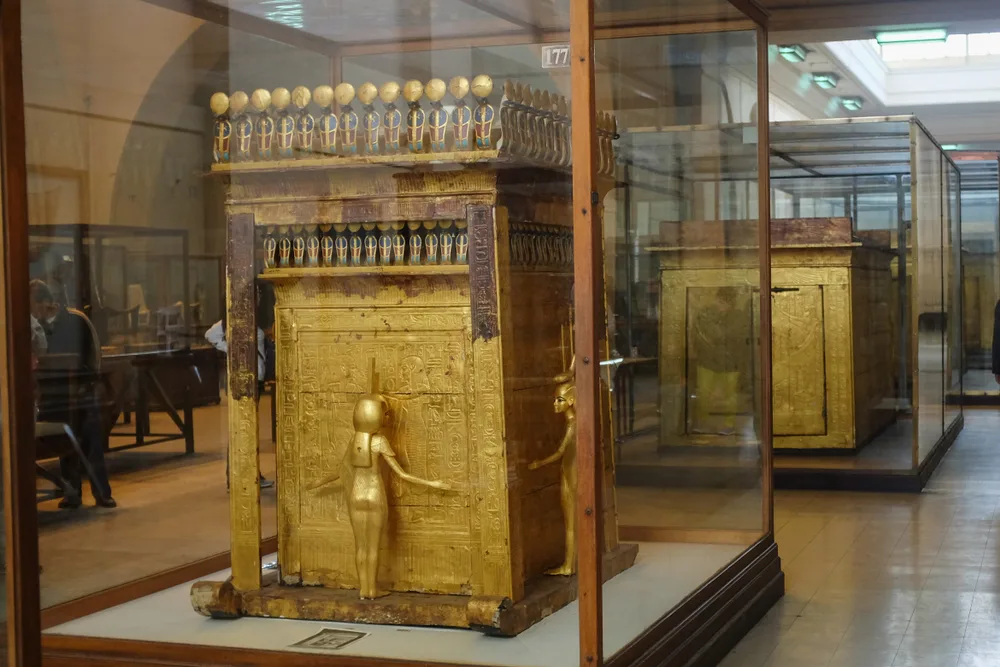
A gilded shrine from the tomb of Tutankhamun, Egyptian Museum, Cairo. · Credit Amr Fadl
Abydos is the Greek form of the ancient Egyptian name Abdju. It lies on the west bank of the Nile, about seven miles west of the modern town of El Balyana. It made its debut on the stage of ancient Egypt long before the dynastic period, and it kept its aura of sanctity longer than any other place in Egypt, because it was the cult center of Osiris: Egypt’s most beloved hero, and the central figure of the country’s most popular myth.
The myth of Osiris
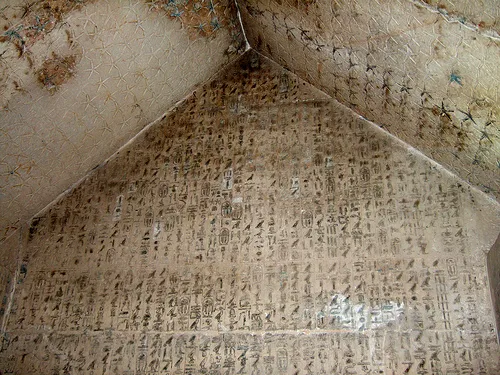
The Osiris myth is one of the most poignant, and probably the best known, of all the myths of ancient Egypt. It survived in oral tradition and was retold over the centuries, so it has come down to us in many versions and with many contradictions. The earliest Egyptian sources are the so-called Pyramid Texts, where the story is not told in connected form. The most complete version was written by the Greek author Plutarch, who lived in the first and second centuries AD.
The death of Osiris
According to the earliest version of the myth, Osiris, with his devoted wife Isis at his side, was a just god who ruled wisely and well. His brother Set, however, was jealous of his popularity and secretly sought to do away with him. At a festival, Set invited his guests to try out a marvelously fashioned chest. When it came to Osiris’s turn he obliged, unaware that the chest had been made to his measurements. As soon as Osiris lay down in it, Set and his accomplices fell on the chest, shut the lid and cast it into the river to be carried away by the flood.
Isis and Nephthys
Isis was overwhelmed with grief at the news. She cast sand on her hair, tore her robe in sorrow and set out in search of the chest. When she finally found it, she hid it beneath a tamarisk tree. Unfortunately, Set, who was out hunting, came upon the hiding place. He took out the body, tore it brutally into fourteen pieces and scattered them all over the country.
The tormented Isis, this time in the company of her sister, the goddess Nephthys, set out once more on a harrowing journey to collect the parts of the body. Having done so, she and Nephthys called on the gods to help them bind the parts together and restore the body. Isis chanted incantations until breath came to his nostrils, sight to his eyes and movement to his limbs. Then the devoted wife, in the form of a bird, descended on Osiris and received his seed. She became pregnant and gave birth to their son Horus, the hero of the second part of the story.
Horus avenges his father
When Isis gave birth to Horus, she nursed him in solitude and raised him to manhood to avenge his father’s death. The tales of Isis’s devotion to her son are many and varied. She brought him up in secret in the marshes of the Delta until he was strong enough to confront the evil Set.
Then Horus set out in search of Set, his father’s slayer, and many and terrible were the battles between them all over Egypt. Horus lost one of his eyes in battle, but he finally triumphed over evil and emerged the victor. Then, with the approval of all the gods, he claimed his father’s throne and declared himself the protector of the throne of Egypt.
A sorrow shared by a nation
The Pyramid Texts are full of references to the faithful wife, Isis, seeking the body of her husband. The weeping and lamentation of Isis and Nephthys for Osiris became a widespread and sacred expression of sorrow among the Egyptians. They loved to dwell on the loyalty and devotion of Isis, the evil of Set and the filial piety of Horus. They rewove the tale in their many oral retellings and dramatized it in public.
Source
Jill Kamil, Upper Egypt, 1983.
The photographs were taken by the author, in the burial chamber of the pyramid of Unas at Saqqara and in the Egyptian Museum, Cairo.