Culture
Botswana Culture and Etiquette Guide
Get the words for the country, the people and the language right, and Botswana will notice; get them wrong and it will notice that too.
- Country Botswana
- Category Culture
- Reviewed 18 August 2026
- Sources 3
- Length 3 min read
Credit Mompati Dikunwane, CC BY-SA 4.0, via Wikimedia Commons
There is one piece of vocabulary that does more work than anything else here, and it is worth learning before you land, because using it correctly signals that you paid attention and using it incorrectly signals the opposite very clearly.
Botswana, Batswana, Motswana, Setswana
The country is Botswana. The people are the Batswana. One person is a Motswana. The language is Setswana.
Four words, one root, and they are not interchangeable. Calling the people Botswanans or the language Botswanan is the clearest possible sign that nobody who knows the place read what you wrote. Say it a few times before you arrive.
English is an official language and is used in government and business, so you can travel the country in it. Setswana is what most people speak, and a greeting in it is worth a disproportionate amount of goodwill. Dumela rra to a man, dumela mma to a woman.
The kgotla
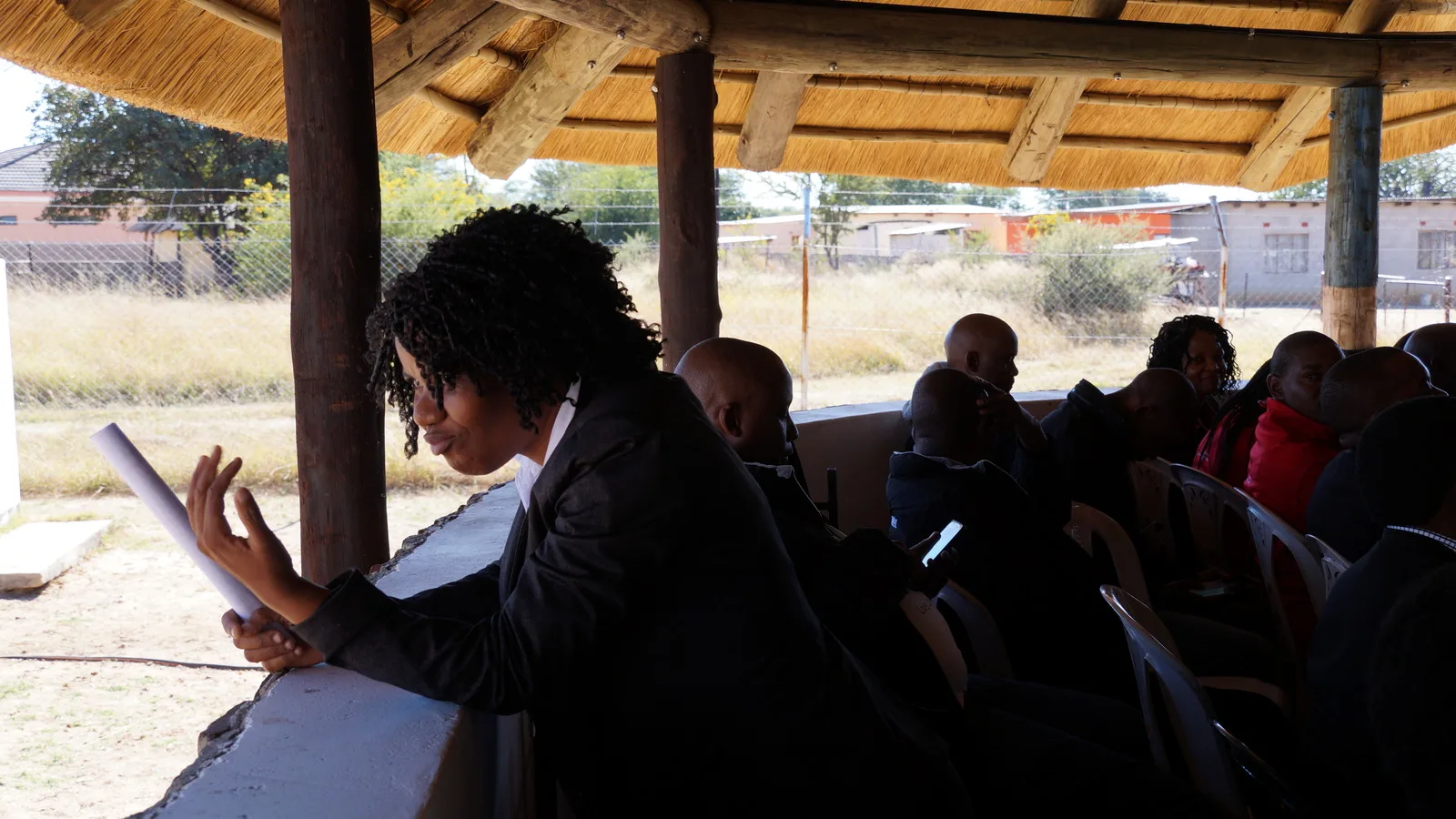
The kgotla is the community assembly, held in a public meeting place, where disputes are heard, decisions are debated and a chief can be addressed directly by anyone present. It is not a museum piece: it is a working part of how Botswana governs itself, and it sits alongside the courts and the parliament rather than beneath them.
Two things follow for a visitor. The first is that consultation is genuinely expected here, and decisions that look slow from outside are usually being taken properly. The second is that if you are invited to a kgotla, you are a guest at an institution, and you dress and behave accordingly: modestly, and quietly, and you do not photograph it without asking.
Greetings, age and the right hand
Greet before you ask. Walking up and opening with the question is brusque in a way that is hard to recover from. Greet, ask how someone is, wait for the answer, then ask your question.
Give and receive with the right hand, or with both, and often with the left hand supporting the right forearm as a mark of respect. Greet the eldest person present first. Age carries real weight in conversation.
Dress is conservative away from the lodges. Covered shoulders and knees in towns, at a kgotla and in anything official.
Photography
Always ask before photographing a person. That is the advice the travel advisories themselves give for Botswana, which is unusual enough to be worth noticing: it is a courtesy that has been formalised into guidance.
Photographing or filming near military and government installations is illegal. If you are unsure whether a building qualifies, do not take the picture.
One thing that has changed, and one that has not
Same sex sexual activity is no longer prohibited by law in Botswana. Public attitudes remain less tolerant than in Europe or North America and public displays of affection may attract negative attention. Both halves are true and a visitor deserves both.
The relationship between the state and the San, or Basarwa, and in particular the removals from the Central Kalahari Game Reserve, is a live and litigated question. It is not settled, this publication does not pretend to settle it, and a visitor who wants to engage with San culture should do it through community run organizations rather than through a lodge excursion.
Habits worth arriving with
- Botswana the country, Batswana the people, a Motswana one person, Setswana the language
- Dumela rra and dumela mma, used before anything else
- Greet, ask how someone is, wait, then ask your question
- Give and receive with the right hand
- Greet the eldest person present first
- Ask before every photograph of a person, and never near military or government sites
- Dress modestly in town and at a kgotla
Sources
- UK FCDO: Botswana safety and security
- Botswana Tourism Organisation: the national tourism authority
- Government of Botswana: the national government portal
Laws affecting visitors are set by the Botswana government. Nothing here is legal advice.