Events and Festivals
Botswana Festivals and Celebrations
All four of Botswana’s UNESCO listed traditions are on the urgent safeguarding list, which is the opposite of what that label usually means.
- Country Botswana
- Category Events and Festivals
- Reviewed 18 August 2026
- Sources 3
- Length 2 min read
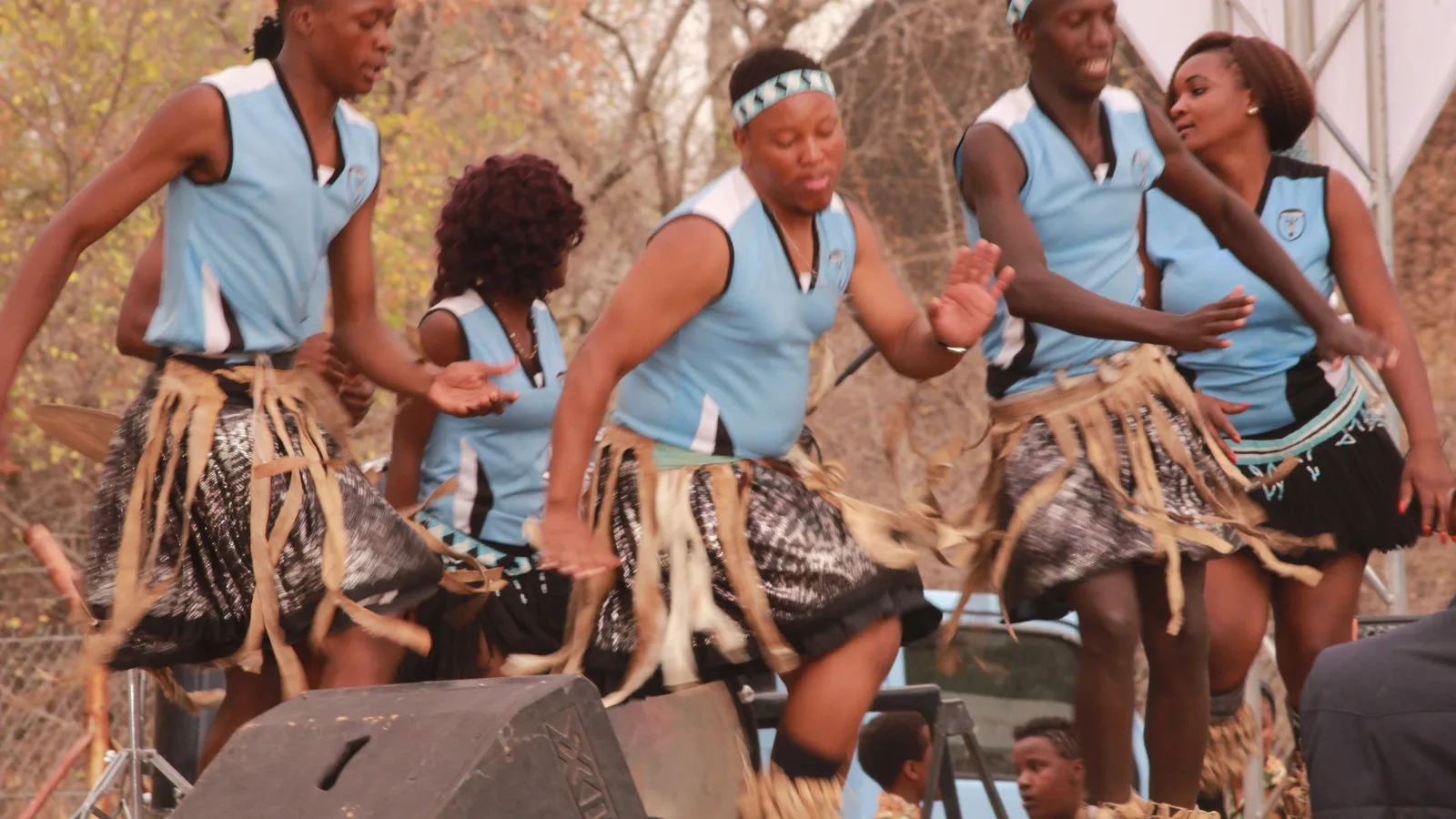
Credit Mompati Dikunwane, CC BY-SA 4.0, via Wikimedia Commons
Botswana’s ceremonial calendar is smaller than Zambia’s and its UNESCO position is the exact reverse, in a way that changes how these traditions should be written about and how a visitor should think about attending them.
Four elements, all of them at risk
Botswana has four elements inscribed by UNESCO, and every one of them is on the List of Intangible Cultural Heritage in Need of Urgent Safeguarding rather than the Representative List:
- Earthenware pottery making skills in Botswana’s Kgatleng District, inscribed 2012
- Dikopelo folk music of Bakgatla ba Kgafela in Kgatleng District, inscribed 2017
- Seperu folkdance and associated practices, inscribed 2019
- Wosana ritual and associated practices, inscribed 2024
The two lists mean opposite things and the difference is not a technicality. The Representative List offers a living practice as an example of human heritage. Urgent Safeguarding means the practice has been formally identified as at risk of disappearing. Zambia has six elements and all six are Representative. Botswana has four and all four are urgent.
So these are not thriving spectacles that happen to have a certificate. They are traditions with fewer practitioners each decade, and the correct posture towards them is attentive rather than acquisitive.
The festivals you can actually attend
The Domboshaba Cultural Festival, held at the Domboshaba ruins in the north east, is the annual gathering of the Kalanga, with dance, food and a deliberate emphasis on language. Dithubaruba, in Molepolole, is the Bakwena equivalent. Both are community festivals rather than tourist products, and both welcome visitors who arrive as guests.
The Kuru Dance Festival in D’Kar is run by and for San communities, and it is the honest alternative to the various commercial bushman experiences a visitor will be offered. Maitisong in Gaborone is an urban performing arts festival and a different thing entirely, worth knowing about if your trip includes the city.
Dates, and why this page gives few
Most of these run to an annual rhythm rather than a fixed calendar date, and are confirmed by organizers a few weeks ahead. Build a trip around a region and a season, and treat a specific festival as a possibility to confirm locally rather than a fixture to book flights around.
Attending well
Find out who is hosting. Ask what visitors wear and where they stand. Ask before photographing anything, and accept a refusal without negotiating. If an element is on the urgent safeguarding list, the community’s interest in keeping it alive on their own terms outranks a visitor’s interest in seeing it.
If you are planning around a ceremony
- Confirm the date with the organizers rather than a listing site
- Ask what visitors wear and where they stand
- Ask before photographing, and accept a refusal
- Choose the Kuru Dance Festival over a commercial bushman experience
- Remember that all four UNESCO elements here are listed as at risk
Sources
- UNESCO: Botswana’s elements on the Intangible Cultural Heritage lists
- Botswana Tourism Organisation: the national tourism authority
- UNESCO World Heritage Centre: Botswana, its inscribed properties and its Tentative List
The inscriptions and their lists were read from the Convention’s own record. Festival dates are set locally.