Food
Botswana Food Guide
Botswana eats meat and grain, in that order, and its national dish is a method rather than a recipe: boiled slowly, then pounded.
- Country Botswana
- Category Food
- Reviewed 18 August 2026
- Sources 3
- Length 3 min read
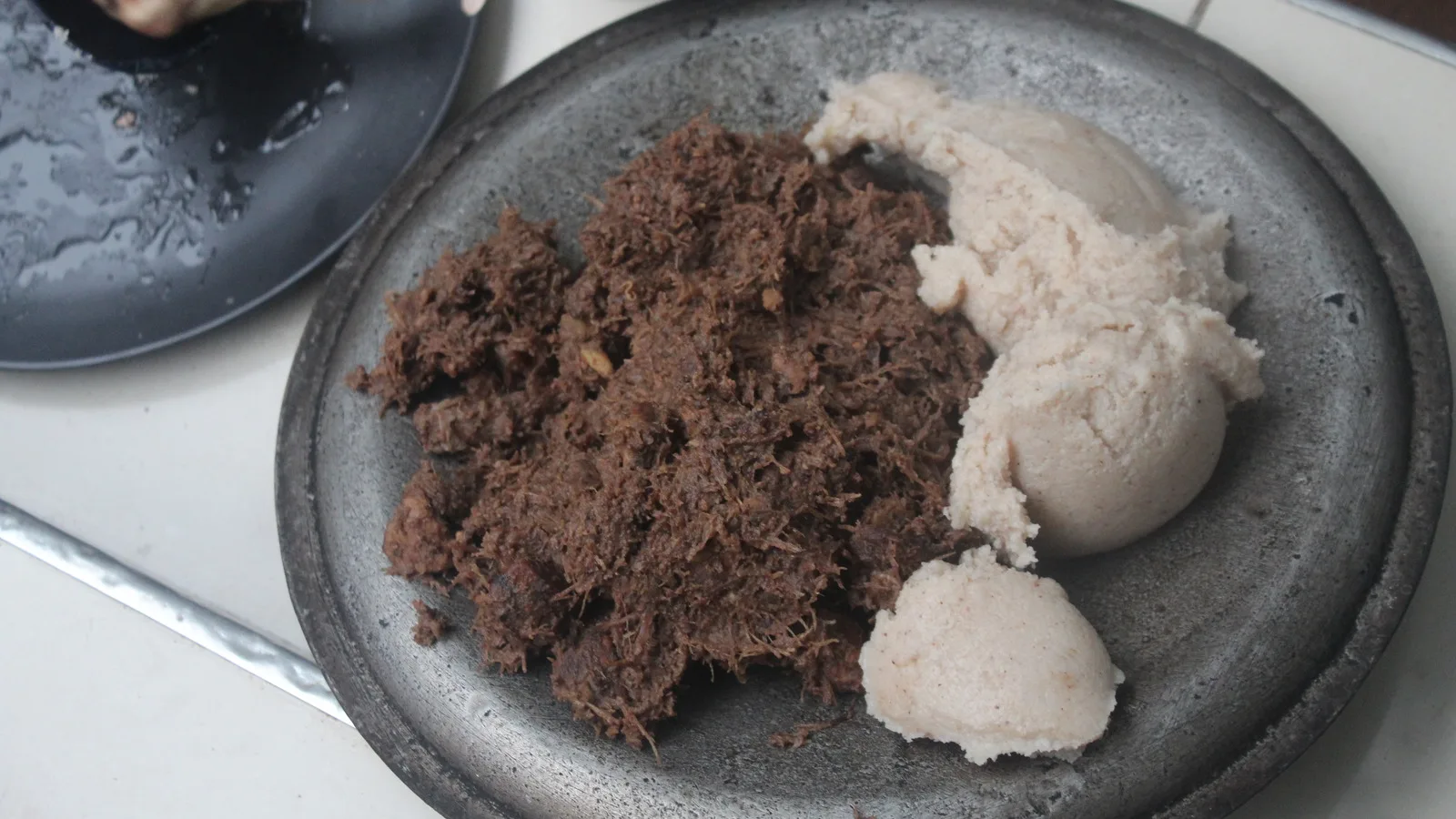
Credit Pell007, CC BY-SA 4.0, via Wikimedia Commons
Botswana is cattle country, and it has been for a very long time. The food follows from that, and so does a good deal of the culture around it: cattle are wealth, status and obligation here, and eating them is an occasion rather than a Tuesday.
Seswaa, which is a method
Seswaa is beef or goat boiled slowly in salted water until it falls apart, then pounded until it is a coarse shredded mass. There is no sauce and almost no seasoning beyond salt. That sounds austere written down and is not: long boiling and pounding produce something dense and deeply savoury that no amount of spicing would improve.
It is the dish for weddings, funerals and any occasion where a beast is slaughtered, and it is traditionally pounded by men. If you are offered seswaa at somebody’s gathering, you are being included in something.
What it is served on
Bogobe is the grain half of the plate: a porridge of sorghum, maize or millet, and the sorghum version is the older and the more distinctly Botswanan. Pap or phaletshe is the stiffer maize form. Either way, the grain is the base and the meat is what goes on it.
Regional cooking runs deeper than the national dishes suggest. The photograph at the top of this page is not generic seswaa: the photographer records it as Masiko, a dish of the Subiya people of northern Botswana, served with bogobe. Botswana has a national menu and it also has a Kalanga one, a Subiya one and a Herero one.
The rest of the plate
Morogo is wild or cultivated leafy greens, stewed, and it is what most meals actually come with. Madila is soured milk, thick and sharp, eaten with grain. Dikgobe combines grain with beans or cowpeas into something closer to a whole meal.
Phane, the mopane worm, is the one visitors ask about. It is the caterpillar of the mopane moth, dried and then rehydrated and fried or stewed, and it is a serious source of protein across the region rather than a novelty. It is seasonal, it is harvested by hand, and it is worth trying if it is offered and not worth demanding if it is not.
Practicalities
In the camps you will eat well and internationally, because that is what camps do, though most will cook you something local if you ask in advance. In the towns, look for the lunchtime places where the food is dished from pots, which is where seswaa actually lives.
Tap water in the main towns is generally treated, but bottled or filtered water is the norm for visitors. Do not drink from rivers, and do not swim in them either.
Eating well here
- Ask for seswaa with bogobe rather than with pap, at least once
- Look for the lunchtime places in town where food is dished from pots
- Try phane if it is offered, and leave it alone if it is not
- Ask a camp in advance if you want to eat Botswanan rather than international
- Ask before photographing anyone’s food or stall
- Bottled or filtered water, and never from a river
Sources
- Botswana Tourism Organisation: the national tourism authority
- UK FCDO: Botswana health advice
- US CDC: health information for travelers to Botswana
Food and water safety advice changes. Nothing on this page is a substitute for current health guidance for the areas you are visiting.