Heritage
Bwindi Impenetrable National Park: Visitor and Heritage Guide
Almost half the world's mountain gorillas live in one forest surrounded by farmland at 350 people to the square kilometer.
- Country Uganda
- Category Heritage
- Reviewed 18 August 2026
- Sources 2
- Length 2 min read
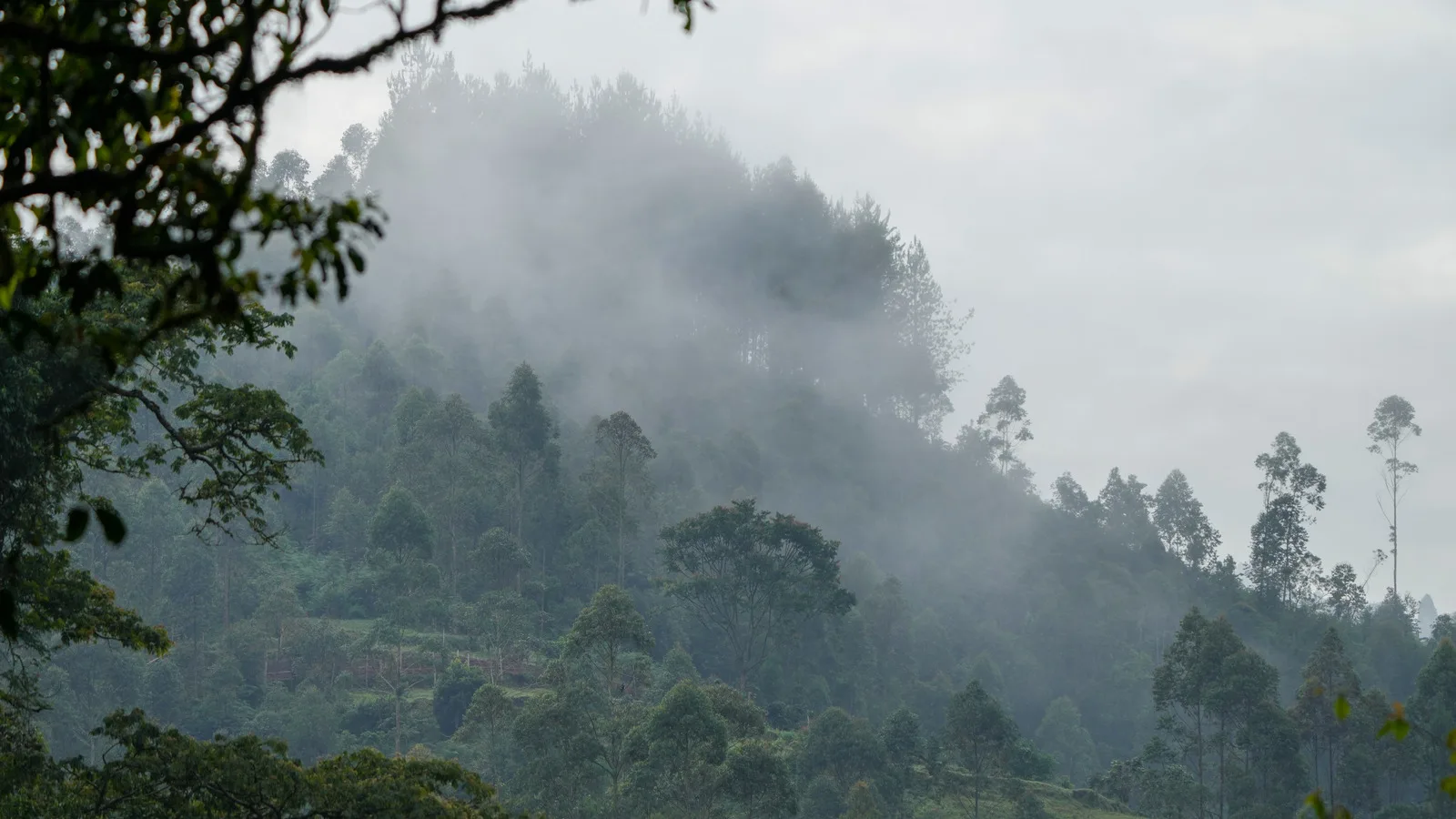
Credit Giles Laurent, CC BY-SA 4.0, via Wikimedia Commons
Bwindi is a fragment. UNESCO describes it as the remnant of a very large forest that once covered much of western Uganda, Rwanda, Burundi and eastern Democratic Republic of Congo, and almost half the world's mountain gorillas now live in what is left.
The numbers, and what they mean
The property covers 32,092 hectares and was inscribed in 1994 under criteria seven and ten. It runs from 1,160 to 2,706 meters in altitude, which is why so much lives in it.
UNESCO records over 200 tree species including ten endemics, some 104 ferns, 202 butterfly species, which is 84 per cent of Uganda's total, and over 347 forest bird species, among them 22 of the 36 Albertine Rift endemics. It holds about 340 mountain gorillas, almost half the global population of a critically endangered animal.
It also sits inside farmland at more than 350 people per square kilometer, one of the highest rural population densities in tropical Africa. There is no buffer zone except four square kilometers donated by communities at the southern end. UNESCO's own assessment is blunt about what follows: community benefit from gorilla tourism "may be the only hope for the future conservation of this unique site".
Tracking
Gorilla tracking is by permit from the Uganda Wildlife Authority, in small groups, with a ranger, to a habituated family. Numbers are strictly limited and permits should be secured well ahead in the dry months.
The walk is genuinely hard. Bwindi is steep, wet and thick, the name is not marketing, and there is no guarantee about how long you will walk. Porters are available at the trailhead, are usually from the surrounding communities, and hiring one is both sensible and the most direct way your money reaches a neighbor of the park.
Bwindi has four tracking sectors and they are hours apart by road. Booking a permit for the wrong sector for your lodge is the commonest and most expensive mistake made here.
The rules exist because gorillas catch what we catch
Mountain gorillas are close enough to us to be threatened by our diseases, and UNESCO names disease transmission from tourism as a specific threat to the property. The distance rule, the time limit and the exclusion of anyone visibly ill are not formalities.
Keep the distance you are given, do not eat or drink in front of the animals, turn away to cough, and use no flash. If you are unwell on the morning, say so.
Before you go
- Permit booked well ahead, and for the sector your lodge is actually in
- Waterproofs, gaiters and boots with grip that you have already worn
- A porter hired at the trailhead
- Cash for the porter and for tips
- Yellow fever certificate, which Uganda requires on arrival
- Stay away if you are ill on the day
Sources and references
- UNESCO World Heritage Centre: Bwindi Impenetrable National Park
- Uganda Wildlife Authority: parks and permits
All species counts, the population density figure and the quoted assessment are from the UNESCO World Heritage Centre entry, read at source on 18 August 2026.