Food
Cape Verde Food Guide
Cachupa is the national dish and it is built from what the islands could actually grow. It takes a long time on purpose.
- Country Cape Verde
- Category Food
- Reviewed 20 August 2026
- Sources 2
- Length 1 min read
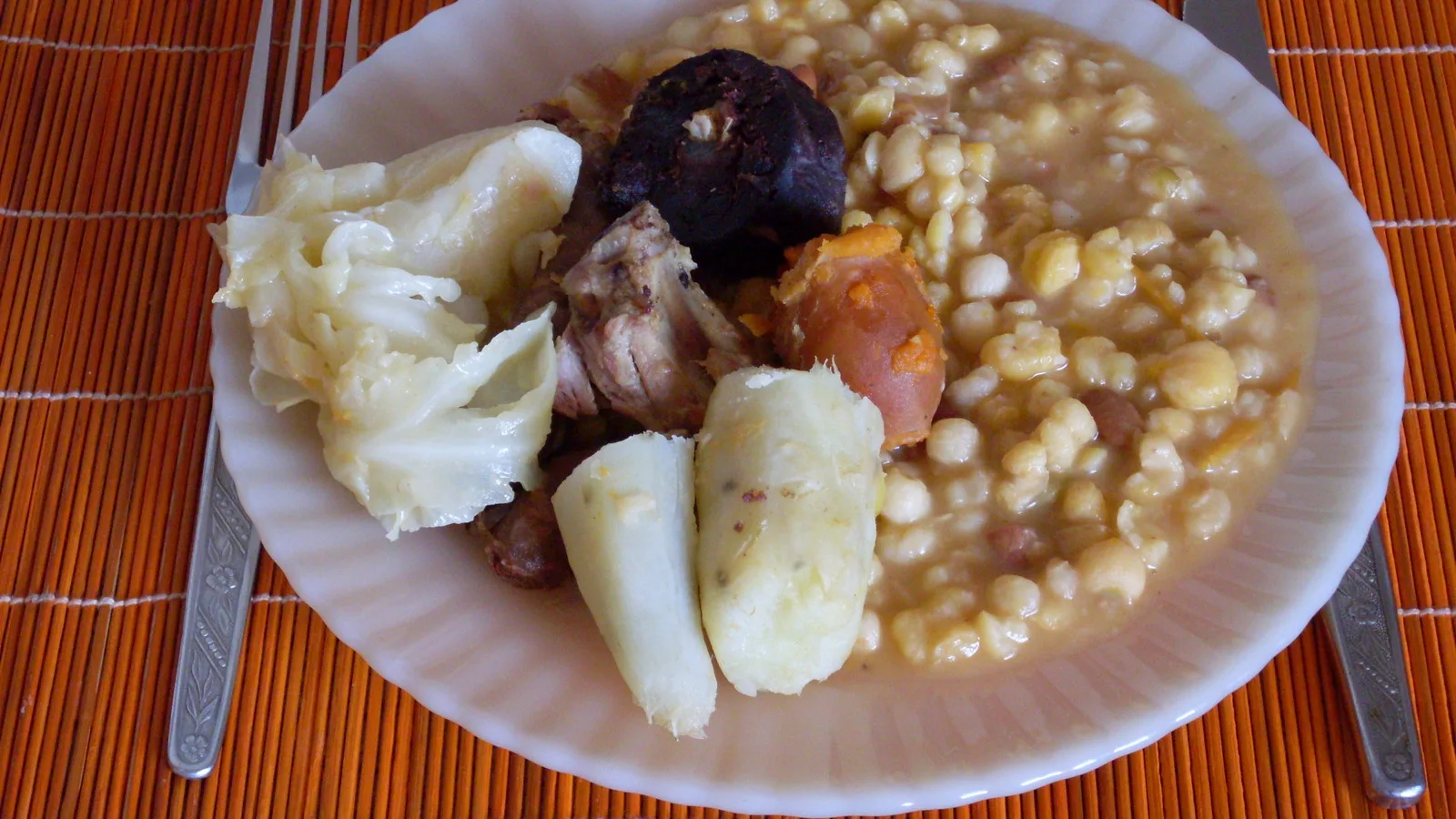
Credit Xandu, public domain, via Wikimedia Commons
Cachupa is hominy and beans, cooked slowly with whatever else there is: cassava, sweet potato, squash, and meat or fish depending on the day and the household.
It is the national dish of a country that had to feed itself on volcanic islands with unreliable rain, and it tastes like that history rather than in spite of it.
Why a slow dish
Cape Verde's food comes out of a particular situation: a small archipelago that was also, for centuries, a port. UNESCO's account of Cidade Velha describes the valley of Ribeira Grande as a place that experimented with new forms of agriculture, and names the town as a center for the acclimatization and dissemination of plant species between temperate and tropical zones and between continents.
So the ingredients of a Cape Verdean plate arrived from several continents through a port that was moving them deliberately. Corn is not indigenous to these islands, and neither is cassava.
Eating here
- Cachupa is the thing to eat first. It is often better the second day, refried.
- Fish is the other constant. These are ten islands in the Atlantic.
- Markets are where the produce is: the Plateau market in Praia and the municipal market in Mindelo are both worth an hour.
- Follow food and water hygiene. The UK Health Security Agency has investigated a rise in Shigella and Salmonella cases in travelers returning from Cape Verde.
- Wash your hands before eating, which is the single measure the advice keeps repeating.
Sources
The agricultural history is from the UNESCO listing for Cidade Velha, ref 1310. The hygiene advice and the UKHSA investigation are from the FCDO health page for Cape Verde. Both read on 20 August 2026.