Cape Verde
One World Heritage site, and it is where the Atlantic trade in people was organized
- Region West Africa
- Country Cape Verde
- Type Country
- Reviewed 11 August 2026
- Sources 3
- Length 4 min read
Credit Andreea Munteanu, Unsplash
Why Cape Verde
Cape Verde is ten islands in the Atlantic off the coast of Senegal, and it has exactly one World Heritage property. That property is not a landscape. It is a town.
Ribeira Grande, renamed Cidade Velha in the late eighteenth century, sits in the south of Santiago. UNESCO inscribed it as the first European colonial town built in the tropics, and reads it as marking a decisive step in European expansion towards Africa and the Atlantic at the end of the fifteenth century. Everything else about these islands, the music, the language, the cooking, the diaspora, runs back through that one fact.
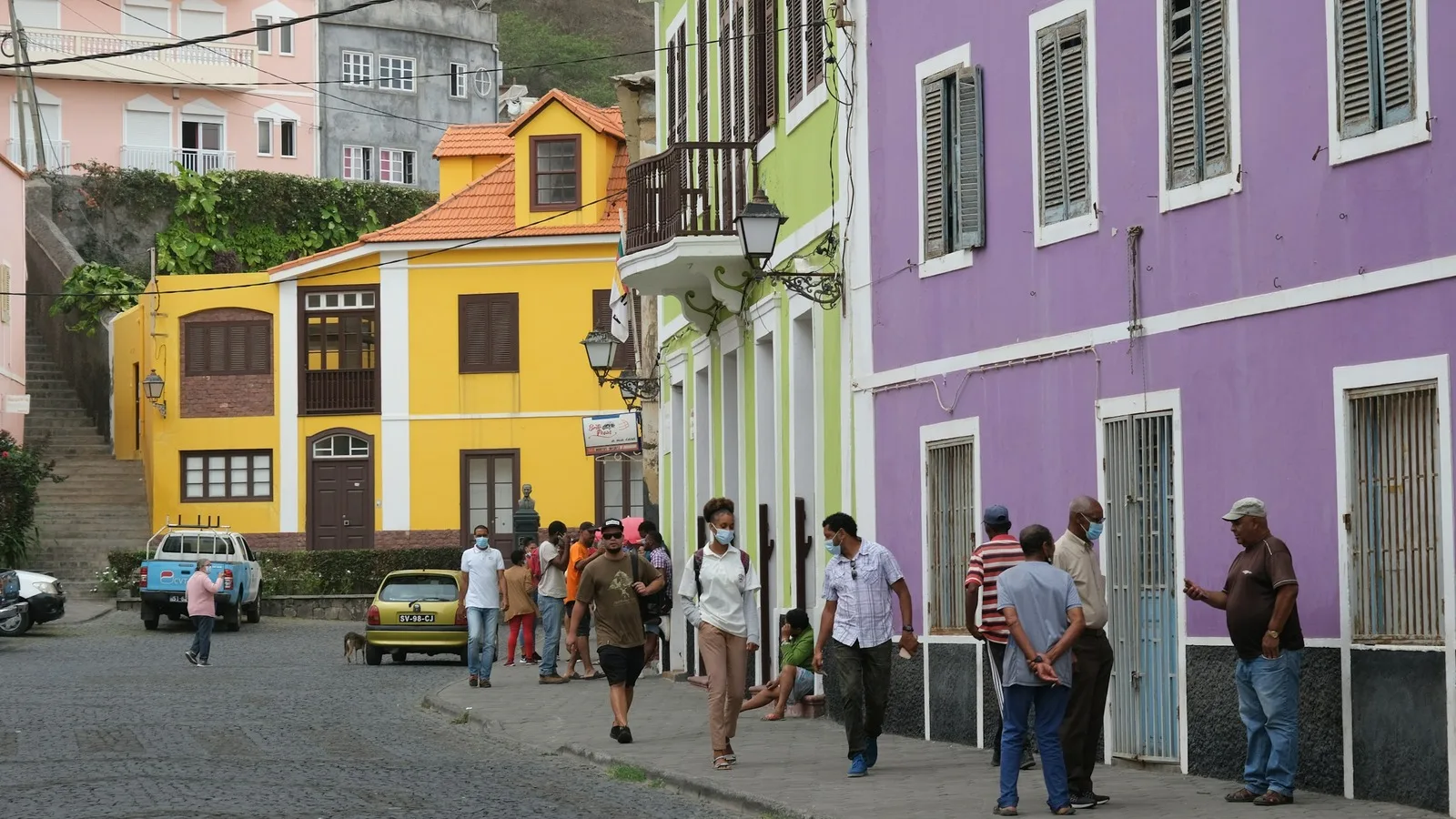
Cidade Velha
What is left is modest: some of the original street layout, two churches, a royal fortress, and Pillory Square with its carved sixteenth century marble pillar. The importance is not in the quantity of stone.
Through the sixteenth and seventeenth centuries Ribeira Grande was a key port of call for Portuguese colonization and its administration, and a hub in the sea routes running between Africa and the Cape, Brazil and the Caribbean. Its position, isolated but close to the African coast, made it what UNESCO calls an essential platform for the Atlantic trade of enslaved persons in modern times. The valley behind it was also a laboratory, where plant species were acclimatized and then sent on across the world.
Morna
Morna is the music of these islands and it is inscribed in its own right, on UNESCO’s Representative List of the Intangible Cultural Heritage of Humanity, since 2019. It combines voice, music, poetry and dance. The instruments are mostly stringed: guitar above all, with violin, the ten string guitar, the cavaquinho and the ukulele.
The lyrics can be improvised, and the subjects are worth listing because they are the same list every time: love, departure, separation, reunion, longing, the ocean and the motherland. That is the emotional record of a country that has exported its people for centuries. Morna was once written in Portuguese and is now written mainly in Cape Verdean Creole, and it is sung at weddings, christenings and family reunions.
Food
Cachupa is the national dish and the household one: hominy corn and beans cooked slowly with whatever else the house has, which might be fish, might be pork and sausage, might be neither. It is better the next morning, fried with an egg on top, and that version has its own name. The fish is the argument for eating on the coast. Grogue, the sugarcane spirit distilled on Santo Antão, is drunk plain or sweetened with molasses as ponche.
Practical orientation
Portuguese is the official language and Cape Verdean Creole is what everyone actually speaks; French is common on some islands and English less so. The currency is the escudo, pegged to the euro. The islands are dry and warm all year, windiest from roughly December to March. They are also genuinely separate places: the flat sandy east and the vertical green west are a flight apart, and an itinerary that treats them as one destination will spend its time in transit.
Entry requirements vary by nationality and change. The government’s own traveler pre-registration service is the authority on them, and this page is not.
Sources and references
- UNESCO World Heritage Centre: Cidade Velha, Historic Centre of Ribeira Grande
- UNESCO Intangible Cultural Heritage: Morna, musical practice of Cabo Verde
- EASE, the Government of Cabo Verde traveler pre-registration service
These are the authoritative references for the heritage this page discusses; each was checked at source on 11 August 2026. Practical details (entry rules, health guidance, opening times) change constantly. The bodies listed here are authoritative and this page is not.