Heritage
Central Kalahari Game Reserve: Visitor and Heritage Guide
Botswana's largest protected area, nominated as a mixed property for its landscape and for the hunter-gatherer communities that still live inside it.
- Country Botswana
- Category Heritage
- Reviewed 18 August 2026
- Sources 6
- Length 3 min read
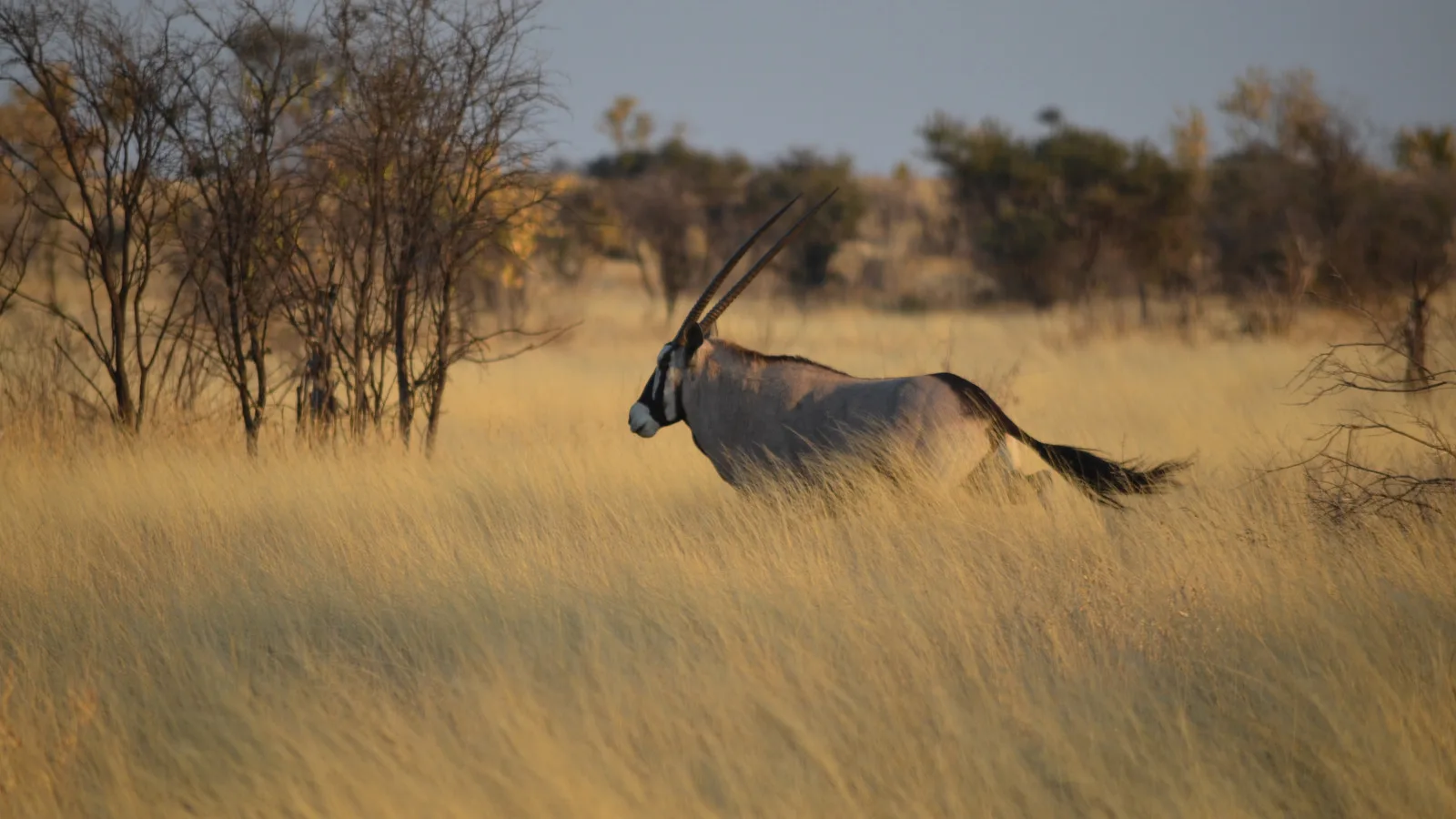
Credit Benjamin Hollis, CC BY 2.0, via Wikimedia Commons
Most of the places in this section are nominated for what they look like or for what happened there. The Central Kalahari Game Reserve is nominated, in part, for the people who live in it. That makes it a mixed property, and it makes it the most complicated page in this cluster.
What was proposed
The reserve was submitted on 27 October 2010 by the Department of National Museum and Monuments as a mixed property under criteria (v), (vii) and (x): human interaction with the environment, natural beauty, and biodiversity. It covers Ghanzi and Kweneng Districts, and the nomination treats it together with the adjoining Khutse Game Reserve.
The reserve was established in 1971 to protect its pans, dry river valleys and game. It is bounded to the north by the Kuke veterinary cordon fence and to the south by Khutse. UNESCO’s record for Chobe describes it as the largest park in Botswana.
The landscape is a record of rivers that are gone
The reserve sits in the Kalahari Basin, which UNESCO describes as the largest continuous stretch of sand in the world. Most of it is semi-arid shrub savanna and scrub, with strips of acacia woodland and large areas of Terminalia sandveld.
The interesting part is underfoot. Fossil riverbeds run through the Deception and Okwa valleys and through Khutse, and they mark the courses of rivers that once drained into ancient Lake Makgadikgadi. Pans and shallow depressions across the reserve hold water occasionally, and after heavy rain some of them behave like wetlands for a while.
What lives there
- The black maned lion, which UNESCO describes as the largest variety of lion in Africa
- Brown hyena, a species of global conservation concern
- A diversity of birds of prey
- Gemsbok, springbok, kudu and eland across the open grassland
- Khutse, adjoining to the south, which the nomination records as having no human inhabitants
People live here, and that is part of the nomination
This has to be stated plainly because the nomination states it plainly. UNESCO’s record says the reserve is presently inhabited by traditional hunter-gatherers belonging to the Basarwa, also called San, and to the Bakgalakgadi. Criterion (v) is invoked precisely for that: an outstanding example of human interaction with a demanding environment, sustained over a very long period.
What the nomination does not discuss is that residency in the reserve has been contested for decades. Relocations, access to water, hunting rights and the terms on which people may return have all been disputed, and some of it has been litigated. That dispute is real and it is live, and it involves communities, the Botswana government and organizations acting on both sides.
No account of who is right is offered here. This site does not have the standing to settle it, and a travel page that summarized a judgment from memory would do more harm than saying nothing. What a visitor should know is that the reserve is not empty land, that the question of who belongs in it is unresolved, and that both the government and the communities concerned publish their own positions.
Visiting with that in mind
- Treat settlements inside the reserve as homes, not as an attraction on a game drive route
- Ask before photographing anyone, and accept a refusal without negotiating
- Book any cultural visit through the community concerned rather than around it
- Do not ask a guide to arbitrate the land dispute for your benefit
- The reserve is remote and largely unserviced: fuel, water and recovery are your own problem
- Read the FCDO advice on self drive travel before committing to it
What the status is, and is not
Fifteen years after it was filed, the Central Kalahari Game Reserve remains on the tentative list. That is not a failure and not a queue position: a tentative list is a statement of what a country may nominate, with no timetable attached. Nothing about the reserve’s protection, management or access derives from it.
Sources
- UNESCO World Heritage Centre: Central Kalahari Game Reserve, tentative list ref 5555
- UNESCO World Heritage Centre: Chobe Linyanti System, tentative list ref 5556
- UNESCO World Heritage Centre: World Heritage and tentative list properties in Botswana
- Botswana Tourism Organisation: the national tourism authority
- Government of Botswana: the national government portal
- UK Foreign, Commonwealth and Development Office: Botswana travel advice
The criteria, districts, dates, boundaries, geology and species on this page are read from the UNESCO tentative list record. The statement that people live in the reserve is UNESCO’s own. Nothing about the course or outcome of any legal proceeding is stated here, because none was read from a primary source.