Heritage
Dougga: Visitor and Heritage Guide
Probably the first capital of the Numidian kingdom, and called by UNESCO the best preserved Africo-Roman town in North Africa.
- Country Tunisia
- Category Heritage
- Reviewed 20 August 2026
- Sources 4
- Length 2 min read
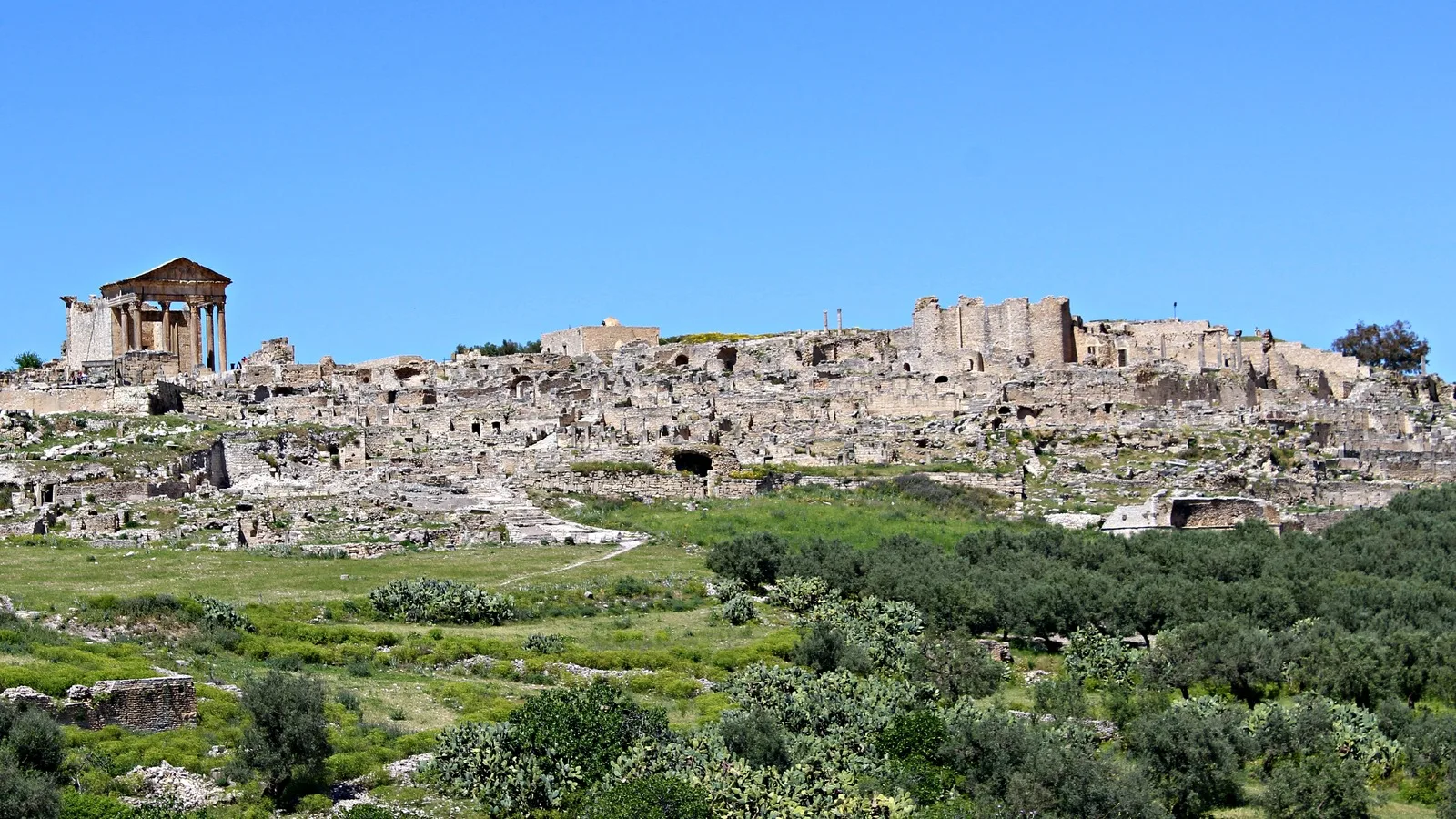
Credit Emna Trabelsi, CC BY-SA 3.0, via Wikimedia Commons
Dougga sits on the summit of a hill at 571 meters in northwestern Tunisia, looking down the fertile valley of the Oued Khalled. It covers about 75 hectares, it was inscribed in 1997, and it is the site that most changes how a visitor reads this country.
Numidian first
The easy description is a Roman town, and UNESCO does not accept it. Before the Roman annexation of Numidia, Thugga had already existed for more than six centuries and was probably the first capital of the Numidian kingdom. The ruins record more than seventeen centuries of history and the inscription describes them as an outstanding example of the synthesis between Numidian, Punic, Hellenistic and Roman cultures.
The crucial sentence is about the town plan: the Roman monuments were integrated within an urban fabric that is essentially Numidian. The street layout you walk is not a Roman grid with African decoration. It is an indigenous town that Rome furnished.
Visiting
The site is open ground with no barriers around most of it, which is part of what makes it worth the trip and all of what makes the footing a real consideration.
- It is roughly two hours from Tunis and is usually combined with Testour or Bulla Regia.
- The site is large, spread across a hillside, and the ground is loose stone. Wear real shoes.
- The theater, the Capitol and the Libyco-Punic mausoleum are the set pieces.
- Allow at least half a day. Doing Dougga in an hour is doing something else.
- There is almost no shade and no facilities on the hill itself.
- Spring and autumn. The hill in high summer is punishing.
Sources and references
- UNESCO World Heritage Centre: Dougga / Thugga
- UNESCO World Heritage Centre: Tunisia, States Parties
- Tunisian National Tourist Office
- UK FCDO: Tunisia travel advice
The altitude, the area, the Numidian capital, the seventeen centuries and the Africo-Roman judgment are all from the property's UNESCO page, read at source on 19 August 2026.