Heritage
Tunisia and Diaspora Reconnection
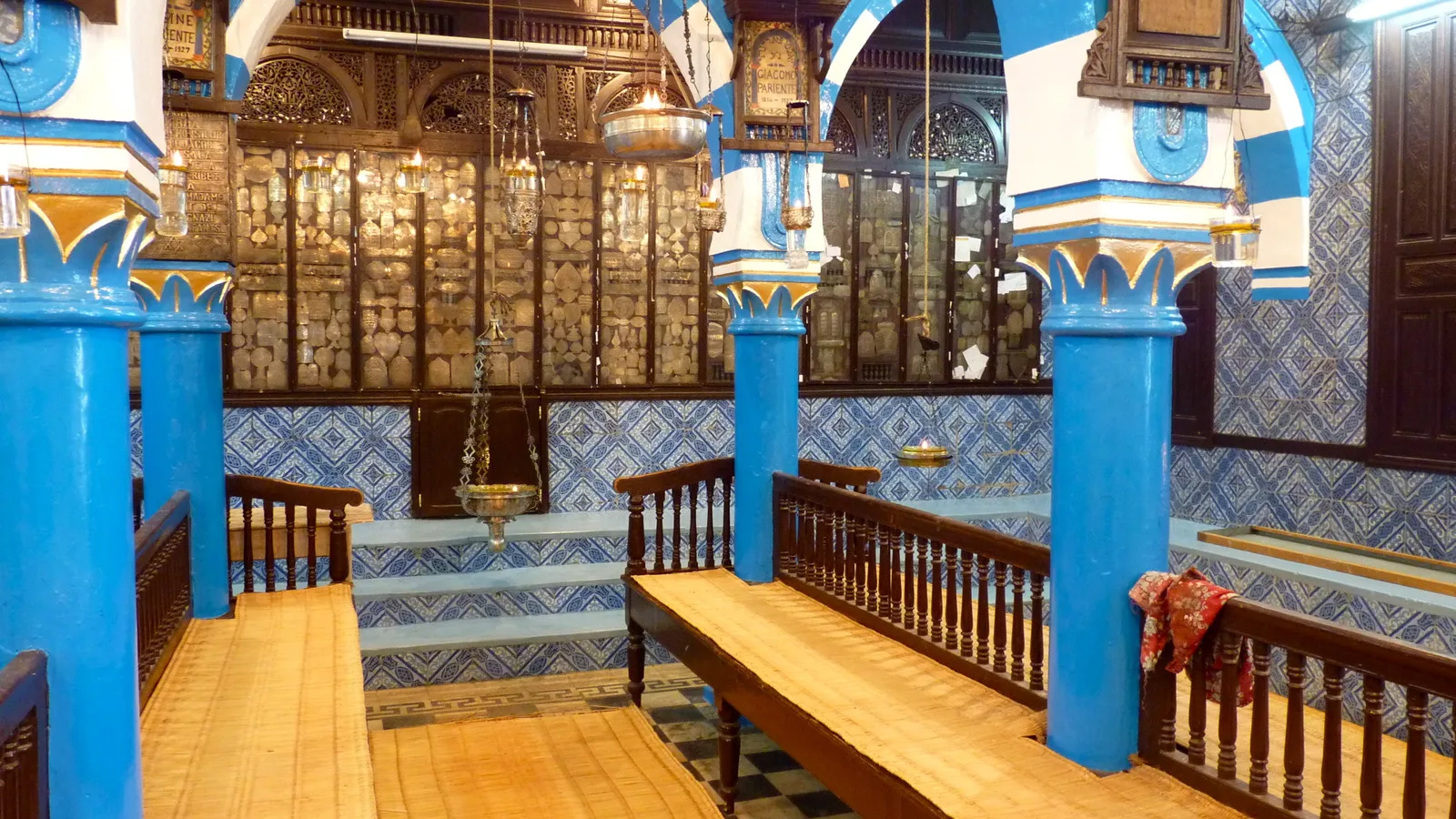
UNESCO inscribed Djerba for a settlement pattern built by communities of different faiths, and names the synagogue and the churches among its parts.
- Country Tunisia
- Category Heritage
- Reviewed 20 August 2026
- Sources 5
- Length 2 min read
Credit Bellyglad from Tunisia, CC BY 2.0, via Wikimedia Commons
Tunisia's place in African history is older than the framings usually applied to North Africa. Carthage was a Phoenician foundation that became the metropolis of Punic civilization in Africa and the rival of Rome, and Dougga was a Numidian capital before it was a Roman town. Neither is a footnote to European antiquity. Both are African cities that Europe later wrote about.
An island inscribed for coexistence
The clearest documented case is Djerba, inscribed as a testimony to a settlement pattern in an island territory. The inscription is unusually explicit about what made the pattern work: it describes a symbiotic relationship between communities of diverse cultures and faiths who coexisted peacefully, adapting their way of life to a water scarce environment between the ninth and eighteenth centuries.
The components UNESCO lists say the same thing in physical form. Alongside the dispersed menzel estates and the market district, the property includes residential neighborhoods inhabited by Jewish communities, the fondouks that served as caravanserai type inns, the La Ghriba synagogue, and Catholic and Orthodox churches. The mosques are described as built with insecurity in mind: short, squat, with arrow slits.
That is a settlement system in which three faiths organized one small dry island between them, and it is inscribed for exactly that.
Where this history is legible
None of these is a memorial site. They are working towns and excavated cities with a history in them.
- Djerba, for the menzel estates, the fondouks and the religious buildings the inscription names.
- Carthage, for the Punic city beneath the Roman one.
- Kerkuane, for a Punic town that Rome never built over and that therefore shows the Phoenician world directly.
- Dougga, for the Numidian capital under the Africo-Roman town.
- Kairouan, founded in 670 AD as the first Arabo-Muslim base of the Maghreb.
Sources and references
- UNESCO World Heritage Centre: Djerba, testimony to a settlement pattern
- UNESCO World Heritage Centre: Archaeological Site of Carthage
- UNESCO World Heritage Centre: Punic Town of Kerkuane and its Necropolis
- UNESCO World Heritage Centre: Kairouan
- UNESCO World Heritage Centre: Tunisia, States Parties
Every claim on this page comes from a UNESCO inscription read at source on 19 and 20 August 2026. Djerba, ref 1640, was inscribed in 2023, and its components, including the La Ghriba synagogue and the Catholic and Orthodox churches, are named in that inscription. Carthage and the Medina of Tunis were inscribed in 1979, Ichkeul in 1980, Kerkuane in 1985, Kairouan in 1988 and Dougga in 1997.