Events and Festivals
Egypt Festivals and Celebrations
A lunar calendar, a Coptic one, a pharaonic spring festival everybody still keeps, and a sunrise that reaches the back of a temple twice a year.
- Country Egypt
- Category Events and Festivals
- Reviewed 16 August 2026
- Sources 3
- Length 2 min read
Credit Mohamed nouh2, CC BY-SA 4.0, via Wikimedia Commons
Egypt keeps three calendars at once, and they do not line up. The Islamic lunar year moves against the solar one, the Coptic church runs its own, and one of the oldest festivals in the country predates both by a very long way.
Ramadan and the Eids
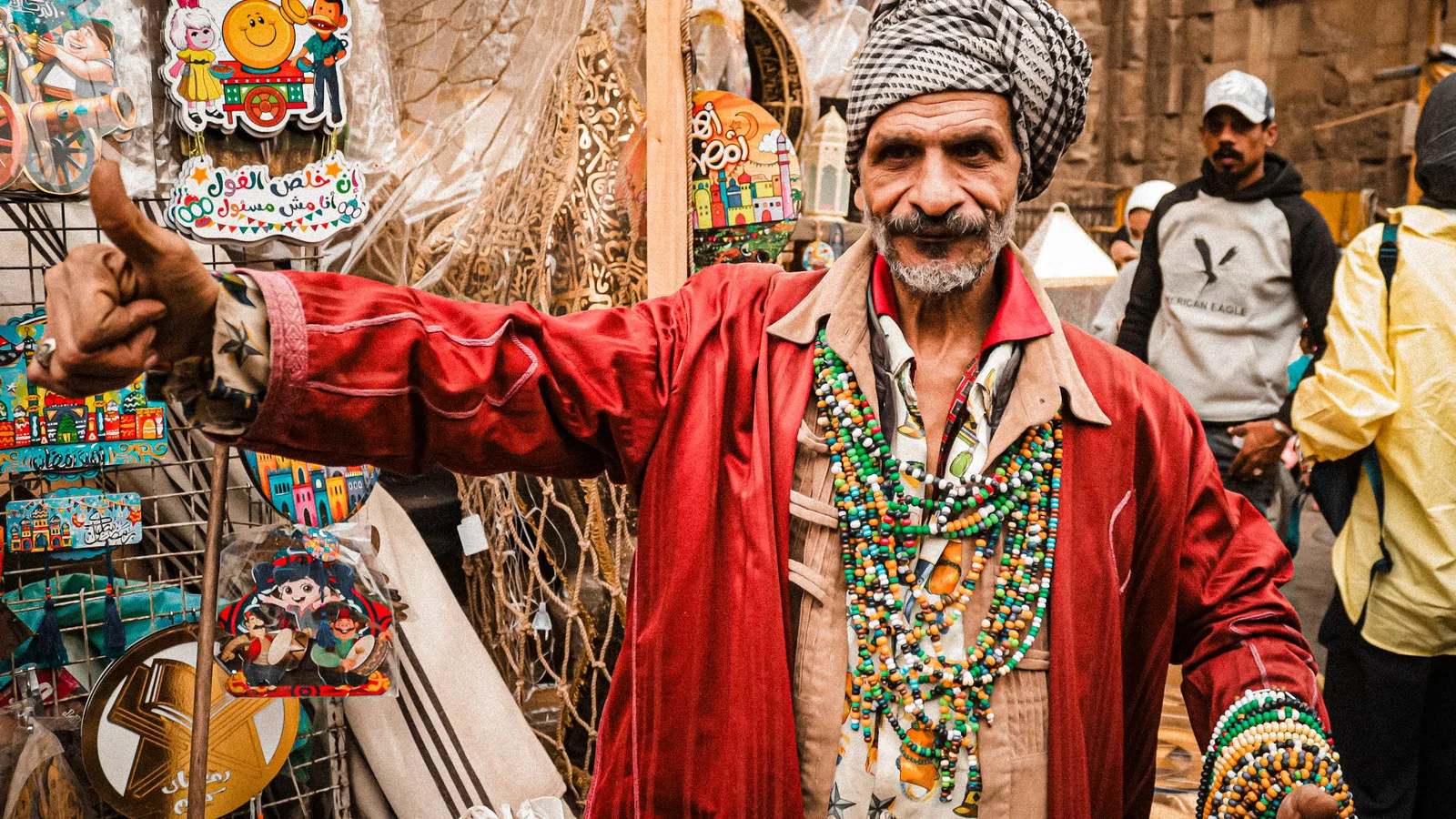
Ramadan is the month of daylight fasting and it changes the country completely. Offices and sites shorten their hours, streets are quiet in the afternoon, and then at sunset everything opens at once: tables in the street, lanterns strung between buildings, and a sociability that runs most of the night.
Visiting during it is a trade. Practicalities are harder and the atmosphere is extraordinary. Eid al-Fitr closes the month with several days of holiday, and Eid al-Adha follows later in the year. Because the lunar year is shorter, all of these move earlier by roughly eleven days each year, so check against the calendar rather than assuming.
Echoes of AfricaThree calendars, none of which agrees with the others, and a country entirely comfortable keeping all of them at once.
The Coptic calendar
Coptic Christmas falls on the seventh of January and is a public holiday. Coptic Easter moves, and the Monday after it is Sham el-Nessim.
Sham el-Nessim is the interesting one. It is a spring festival with pharaonic roots, older than either Christianity or Islam in Egypt, and it is kept by essentially everybody regardless of religion: families go outdoors and eat salted fish, spring onions and colored eggs. A country that has continued one festival across three religions is telling you something about itself.
Moulids, and the sun at Abu Simbel
Moulids are saints days, celebrated at shrines with processions, music, food and enormous crowds, in both the Muslim and Coptic traditions. They are intense, local and not staged for visitors, and going to one with somebody who knows it is a different experience from wandering in.
Twice a year, on the twenty second of February and the twenty second of October, the rising sun reaches down the length of the Great Temple at Abu Simbel and lights the statues in the sanctuary at the back. It draws a crowd well before dawn. That alignment survived the temple being cut up and moved to higher ground, which is its own kind of achievement.
If you are planning around one
- Islamic dates move earlier by about eleven days each year, so confirm rather than assume
- Ramadan changes opening hours at almost every site and museum
- Coptic Christmas is the seventh of January
- Sham el-Nessim is the Monday after Coptic Easter, and the whole country is outdoors
- The Abu Simbel sun alignment is the twenty second of February and the twenty second of October
- Eid holidays fill domestic transport, so book trains and flights early
Sources
- Egyptian Ministry of Tourism and Antiquities: the custodian of the monuments
- UNESCO World Heritage Centre: Egypt, States Parties
- UK FCDO: Egypt travel advice
Dates are given as days and months rather than by year. Confirm the current calendar and site opening hours with the authorities before booking around them.