Food
Egypt Food Guide
Bean breakfasts, a national dish assembled from three starches at once, and a food culture built on feeding a lot of people well and cheaply.
- Country Egypt
- Category Food
- Reviewed 16 August 2026
- Sources 3
- Length 2 min read
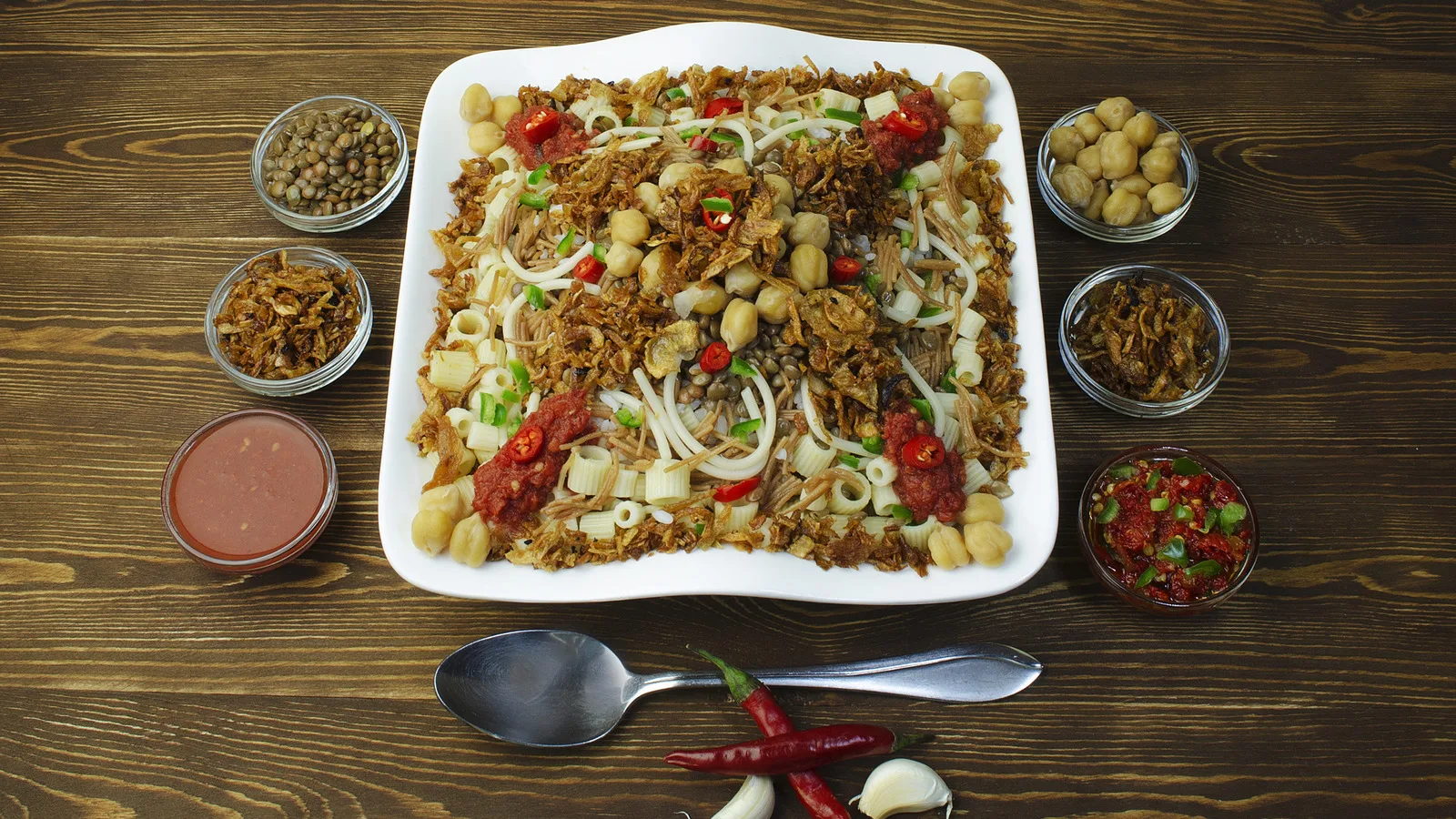
Credit Dina Said, CC BY-SA 4.0, via Wikimedia Commons
Egyptian food is not the elaborate cuisine the country is otherwise famous for exporting. It is peasant cooking that scaled: cheap, filling, vegetable and pulse heavy, and very good when it is done properly.
Koshari
The national dish, and the one to eat first. Rice, macaroni and brown lentils in the same bowl, topped with chickpeas and fried onions, with a tomato sauce and a garlic vinegar poured over at the table, and a chili sauce if you want it.
It is entirely vegan, it is sold from dedicated koshari shops, and it costs very little. Three starches in one bowl sounds like a mistake and is not. The fried onion is the part that makes it.
Breakfast
Ful medames is slow cooked fava beans, dressed with oil, lemon and cumin, and it is what the country eats in the morning. It is served with baladi bread, the round wholemeal flat loaf that arrives with everything.
Ta’ameya is the Egyptian falafel and it is made with fava beans rather than chickpeas, which makes it greener inside and softer than the Levantine version. Eaten in bread with salad and tahini, it is the standard street breakfast.
The rest of the table
Molokhia is a green leaf soup with a texture that divides visitors sharply, served over rice with chicken or rabbit. Mahshi is vegetables stuffed with spiced rice. Fattah, layers of rice, bread and meat with a garlic vinegar sauce, is celebration food.
On the coast, particularly at Alexandria, the cooking turns to fish, grilled simply and chosen from ice at the front of the restaurant. Pigeon, stuffed and roasted, is a delicacy and an acquired sight for some visitors.
Worth going out of your way for
- Koshari from a dedicated koshari shop rather than a hotel restaurant
- Ful medames and ta'ameya for breakfast, from a street stall
- Molokhia, at least once, to find out which side of it you are on
- Grilled fish in Alexandria, picked from the ice
- Om Ali, a warm bread and milk pudding with nuts, which is the standard dessert
- Fresh sugar cane juice, sold from shops with the presses in the window
- Karkade, hibiscus tea, drunk hot in winter and iced in summer
Drinking, and eating in Ramadan
Tea is drunk strong, black and very sweet, and refusing a glass takes more effort than accepting one. Egyptian coffee is served Turkish style, and you specify the sugar when you order rather than after. Alcohol exists, is not widespread outside hotels and tourist restaurants, and is best treated as a hotel matter.
During Ramadan many places close during daylight and the whole rhythm of eating shifts to after sunset, when the iftar tables are set out and the food is at its best. Eating discreetly in daylight is the courteous approach.