Food
Ethiopia Food Guide
Ethiopian eating is communal, seasoned by a fasting calendar most visitors never hear about, and built on a grain grown almost nowhere else.
- Country Ethiopia
- Category Food
- Reviewed 20 August 2026
- Sources 3
- Length 2 min read
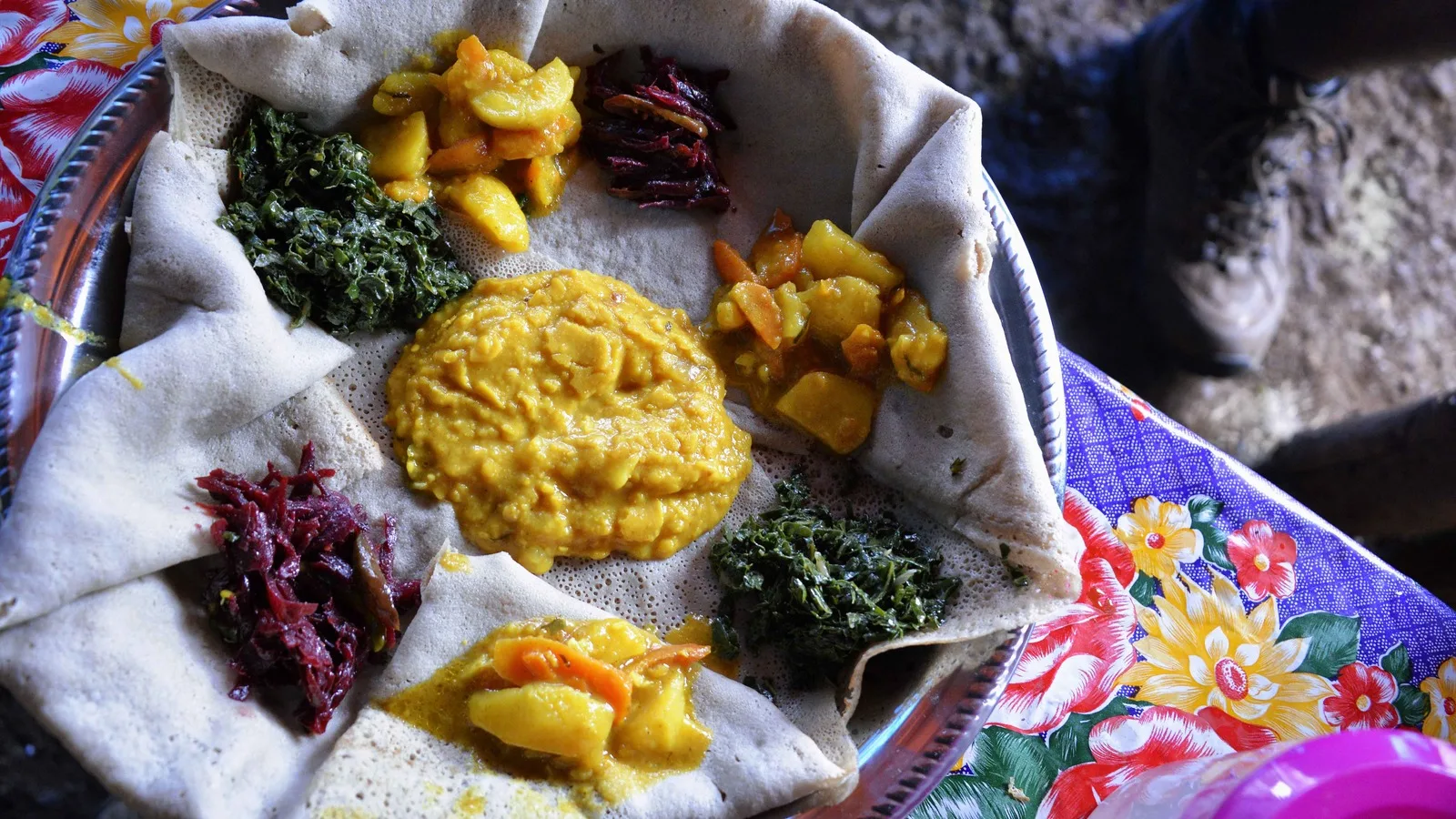
Credit Rod Waddington, CC BY-SA 2.0, via Wikimedia Commons
Ethiopian food is among the few African cuisines that traveled well enough to become familiar abroad, which means many readers will arrive with expectations formed in a diaspora restaurant. Most of them hold. One thing usually does not, and it is worth knowing before you sit down.
The fasting calendar decides the menu
The Ethiopian Orthodox Church observes an extensive fasting calendar, and on fasting days observant households and many restaurants serve no animal products at all. UNESCO records the pattern in passing when it describes the Harari festival of Shuwalid as marking the end of six days of fasting that compensate for omissions during Ramadan; the Christian calendar is more extensive still.
The practical effect is that Ethiopia is one of the easiest countries in Africa to eat well in as a vegan, and that this has nothing to do with catering to visitors. If you arrive expecting meat at every meal you will occasionally be surprised, and the surprise is usually a good one.
Practical, from the health advice
- Follow good food and water hygiene. The US CDC records active cholera transmission as widespread in Ethiopia.
- Carry oral rehydration salts, which take up no room and change what a bad day looks like.
- Outside Addis Ababa medical facilities are extremely poor, so a stomach illness is best avoided rather than treated.
- Coffee is not an afterthought here. Where you are offered a full ceremony rather than a cup, accept, and expect it to take time.
One grain
Ethiopia grows teff, a grain cultivated at scale almost nowhere else, and the fermented flatbread made from it is the base of the meal, the plate and the utensil at once. It is worth understanding that as agriculture and not only as cuisine: a national diet built on a crop that is native, drought tolerant and not widely grown elsewhere is a rare thing, and it is part of why Ethiopian food is so unlike anything around it.
Sources
- US CDC: health information for travelers to Ethiopia
- UK FCDO: Ethiopia health advice
- UNESCO: Shuwalid festival, inscribed 2023
Health and hygiene statements read from the US CDC destination page for Ethiopia and the UK FCDO health page on 20 August 2026. The fasting reference is from UNESCO's inscription of the Shuwalid festival. Descriptions of eating practice are given as general cultural context rather than as sourced claims, and no restaurant, dish or region is recommended by name.