Heritage
La Haute Ville d'Antananarivo: Visitor and Heritage Guide
The upper town of Antananarivo, its royal palace and its nineteenth century streets, on the Tentative List since 2016 and not inscribed.
- Country Madagascar
- Category Heritage
- Reviewed 19 August 2026
- Sources 4
- Length 2 min read
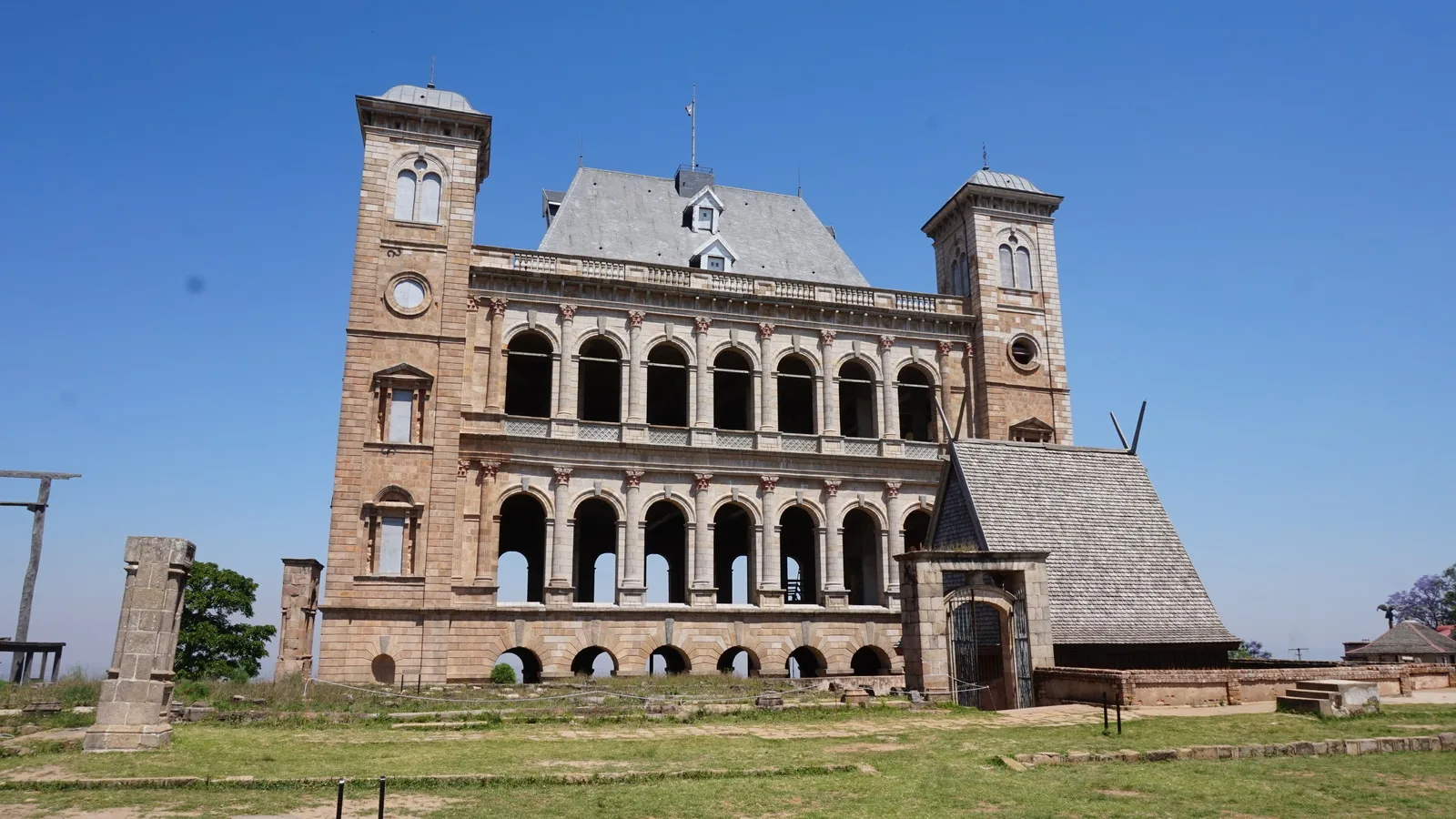
Credit Pufacz, CC BY-SA 4.0, via Wikimedia Commons
La Haute Ville d'Antananarivo is not a World Heritage site. Madagascar submitted it to UNESCO's Tentative List on 2 February 2016, under criteria two, five and six, as a cultural property. That is a statement of intent to nominate and confers no status and no protection.
It is included in this cluster because it is where the story that begins at Ambohimanga ends up, and because it is the one heritage page here that a visitor will walk through without planning to.
The Rova, and what happened to it
The upper town is built along the highest ridge of the city, and the Rova of Antananarivo stands at the top of it. The stone palace of Manjakamiadana, with its arcades and its steep roof, is the building in the photograph above and the one every view of the city is oriented on.
Its history is not a gentle one. The royal compound held the timber palaces of the Merina sovereigns and the tombs of their line; a fire in the mid nineteen nineties destroyed most of it, and the reconstruction has taken decades and is still under way. What you see is a monument being rebuilt rather than a monument preserved, and that is part of what the Tentative List submission is about.
The town around it
Below the Rova the upper town is a dense nineteenth century townscape: the Andafiavaratra palace of the prime minister, brick and stucco houses with steep tiled roofs and wooden verandas, churches built by the missionaries who arrived with and after the London Missionary Society, and stone stairways instead of streets.
It is a hard walk. The hill is steep, the steps are many, and the city is well over a thousand meters up, which visitors underestimate on the first day. Take it slowly, and take it in the morning.
If you go
- Start at the Rova and walk down rather than up.
- The Andafiavaratra museum holds what was rescued from the palace fire.
- The stairways are steep, uneven and slippery in the rain.
- Go in daylight and go with someone who knows the city.
- Keep valuables out of sight. This is a busy capital.
- Allow half a day and expect it to be a walking one.
What Tentative List status means
A Tentative List is a country's own inventory of what it may nominate in the future. Madagascar has seven entries on its list and three inscribed properties. Reading a submission is often the clearest published statement of why a country believes a place matters, and this one is worth reading before you climb the hill.
Sources
- UNESCO Tentative List: La Haute Ville d'Antananarivo
- UNESCO World Heritage Centre: Madagascar
- UK FCDO: Madagascar safety and security
- Madagascar destination guide
The submission date of 2 February 2016, the criteria and the cultural category were read from the UNESCO Tentative List entry for La Haute Ville d'Antananarivo on 19 August 2026. General safety guidance for the capital is the Foreign, Commonwealth and Development Office's.