Heritage
Historic Cairo: Visitor and Heritage Guide
One of the oldest Islamic cities in the world, founded in the tenth century and at its height in the fourteenth, inside a city of twenty million.
- Country Egypt
- Category Heritage
- Reviewed 16 August 2026
- Sources 3
- Length 2 min read
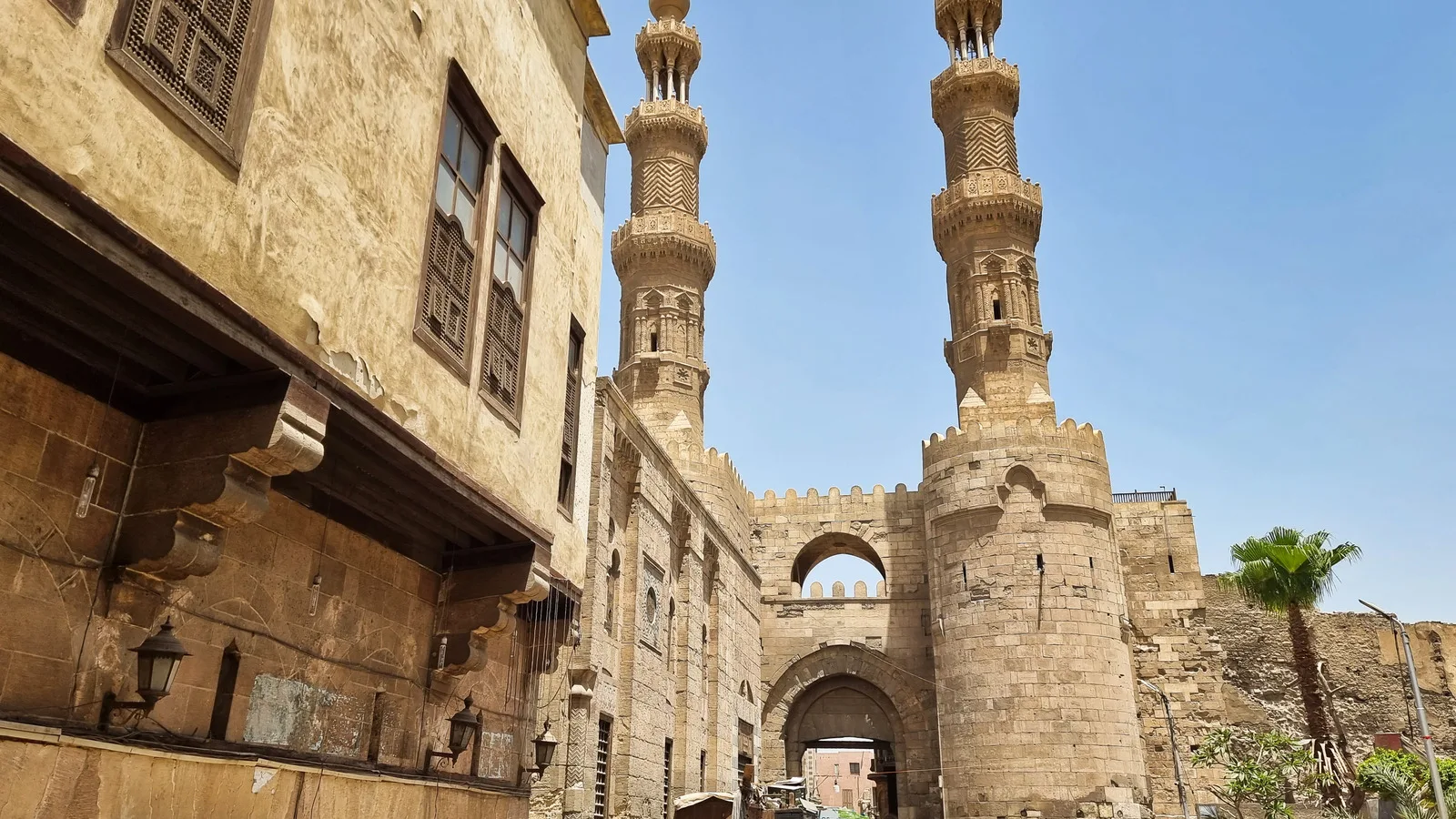
Credit Richard Mortel, CC BY 2.0, via Wikimedia Commons
Most visitors to Cairo see the pyramids and the Egyptian Museum and leave. The World Heritage property is neither of those. It is the medieval Islamic city, and it is still a working district rather than a preserved one.
What UNESCO inscribed
Historic Cairo was inscribed in 1979. UNESCO describes one of the world’s oldest Islamic cities, with its famous mosques, madrasas, hammams and fountains, founded in the tenth century, which became the new center of the Islamic world and reached its golden age in the fourteenth.
That golden age is the thing to hold in mind while walking it. For a period this was among the largest and richest cities on earth, and the density of monumental building along a few streets is the evidence.
Walking it
The spine is al-Muizz street, which runs through the old walled city and carries a concentration of medieval Islamic architecture that has few equals anywhere. At the southern end stands Bab Zuweila, one of the surviving gates, whose minarets can be climbed for the view back over the roofs.
Around it are the Khan el-Khalili bazaar, the mosque and university of al-Azhar, which has been teaching for more than a thousand years, and the great mosque and madrasa of Sultan Hassan. Coptic Cairo, with its churches and the Ben Ezra synagogue, sits to the south and is part of the same continuous story.
A living site, and what that costs
People live and work here. Workshops make things, the bazaar sells to Cairenes as well as to visitors, and the mosques are in use. That is what makes it worth seeing and it is also the conservation problem: traffic, groundwater, pollution and the ordinary pressure of a dense population all bear on buildings that are seven hundred years old.
Restoration is continuous and uneven, and individual monuments close and reopen. Check before making a special journey for one building.
Practical notes
- Al-Muizz street is largely pedestrianized and is best walked in the late afternoon and into the evening
- Modest dress, and a scarf for women, because these are working mosques
- Shoes come off in mosques, so wear something you can slip out of
- Bab Zuweila can be climbed, and the view is the best orientation to the district
- Individual monuments close for restoration without much notice
- Take small notes, for entry, for shoe minders and for tea