Heritage
Kasanka National Park: Visitor and Heritage Guide
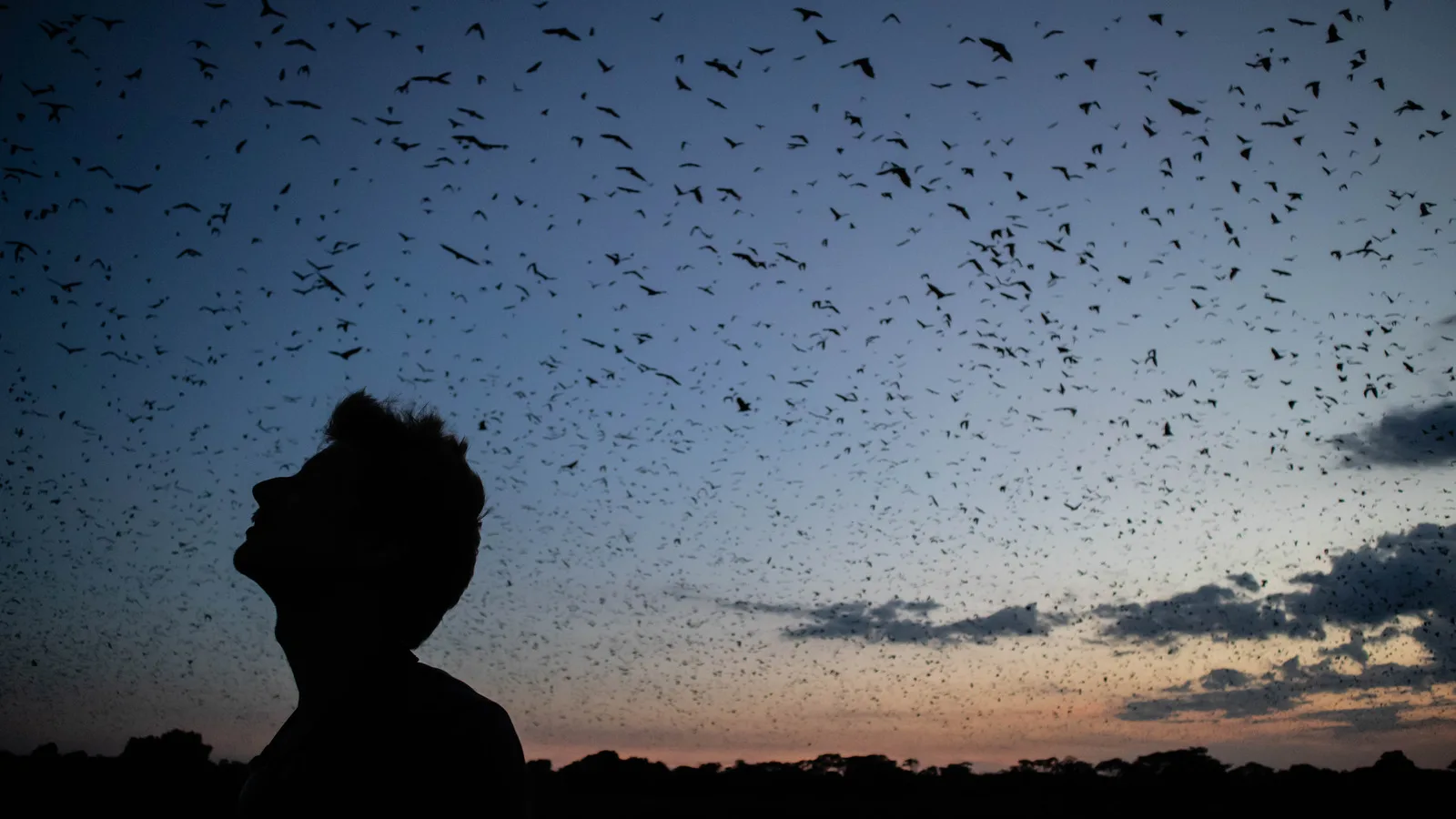
Ten million fruit bats gather each October in a patch of swamp forest smaller than a square kilometer, in a Zambian park almost no itinerary includes.
- Country Zambia
- Category Heritage
- Reviewed 18 August 2026
- Sources 4
- Length 3 min read
Credit Sybryn, CC BY-SA 4.0, via Wikimedia Commons
The largest gathering of mammals anywhere on earth does not happen in the Serengeti. It happens in a Zambian national park of about 390 square kilometers, one of the smallest in the country, roughly 525 kilometers north of Lusaka, and it lasts about three months.
What happens, and how small the space is
Between October and December, an estimated 8 to 10 million straw-colored fruit bats, Eidolon helvum, converge on Kasanka. They roost in Mushitu swamp forest, in an area UNESCO describes as less than one square kilometer. The density is the whole point: this is not a migration spread across a landscape, it is a migration compressed into a patch of trees you could walk across.
The ecological argument is larger than the spectacle. The bats disperse seeds and pollen over very long distances, which links forests across Central Africa. UNESCO’s nomination puts it plainly: the roost is seasonal and irreplaceable, and the process it supports is continental.
What Zambia has proposed, and under which criteria
Kasanka was submitted on 5 March 2026 by the National Heritage Conservation Commission as a natural property under criteria (vii), (ix) and (x), covering aesthetic significance, ecological process and biodiversity. It sits in Serenje District, Central Province, on the south west margin of the Bangweulu basin.
It is not inscribed. It is on the tentative list, filed in the same batch as twelve other Zambian proposals, and there is no timetable for any of them.
What else is in the park
- 114 recorded mammal species, including elephant, hippopotamus and sitatunga
- More than 470 recorded bird species
- Shoebill, listed by the IUCN as Endangered
- Puku and the straw-colored fruit bat itself, both listed as Vulnerable
- Sitatunga and wattled crane, both Near Threatened
- African pitta and Pel's fishing owl, which birders travel specifically to see
- Zebra and buffalo, both reintroduced by the Kasanka Trust
The timing does not line up with the rest of Zambia
This matters if you are planning one trip. Zambia’s two best known experiences run on opposite calendars already: Mosi-oa-Tunya carries most water between February and May, and the game viewing in the Luangwa and Lower Zambezi valleys is strongest from June to October, when many camps in those valleys close for the wet season.
The bats add a third window. October to December overlaps the very end of the dry season and the beginning of the rains. A trip built around Kasanka is not the same trip as one built around the falls, and pretending otherwise is how people end up disappointed by both.
How the park is run
Kasanka was the first national park in Zambia to be managed through a public and private partnership. The Kasanka Trust has held management responsibility since 1986, working with the Department of National Parks and Wildlife. That arrangement is unusual enough that UNESCO records it in the nomination itself.
What the nomination admits
The most useful paragraph in the UNESCO record is the one about integrity, because it does not oversell. The roosting forest is intact and the park is large enough to hold its core values. But the migration depends on feeding grounds far outside the boundary, and protecting those is described as essential to the phenomenon surviving.
The threats named are agricultural expansion, unregulated development and logging in the surrounding areas. Buffer zones and work to secure the feeding grounds are described as critical rather than complete.
Planning a visit
- The bats are seasonal: outside roughly October to December there is no gathering to see
- Kasanka is a long drive north of Lusaka, so treat it as a destination rather than a detour
- Check current access and accommodation with the Kasanka Trust, which manages the park
- Dawn and dusk are when the roost moves, which is what you have come for
- Read the FCDO advice for road conditions, which change with the rains
Sources
- UNESCO World Heritage Centre: Kasanka National Park, tentative list ref 6994
- UNESCO World Heritage Centre: World Heritage and tentative list properties in Zambia
- UNESCO World Heritage Centre: Mosi-oa-Tunya / Victoria Falls, inscription 509
- UK Foreign, Commonwealth and Development Office: Zambia travel advice
The species counts, population estimate, area and management arrangement on this page are read from the UNESCO tentative list record. No visitor fees, dates or accommodation details are stated here, because none were read from an authority.