Heritage
Tombs of Buganda Kings at Kasubi: Visitor and Heritage Guide
A royal burial ground of thatch and barkcloth that burned down, was rebuilt over thirteen years, and left the Danger List in 2023.
- Country Uganda
- Category Heritage
- Reviewed 18 August 2026
- Sources 2
- Length 2 min read
Credit Z thomas, CC BY 4.0, via Wikimedia Commons
The Tombs of Buganda Kings at Kasubi sit on a hillside inside Kampala and are the burial place of four kabakas of Buganda. They are also the reason the phrase "living heritage" is not decoration: the site is maintained, used and mourned in by a kingdom that still exists.
What is there
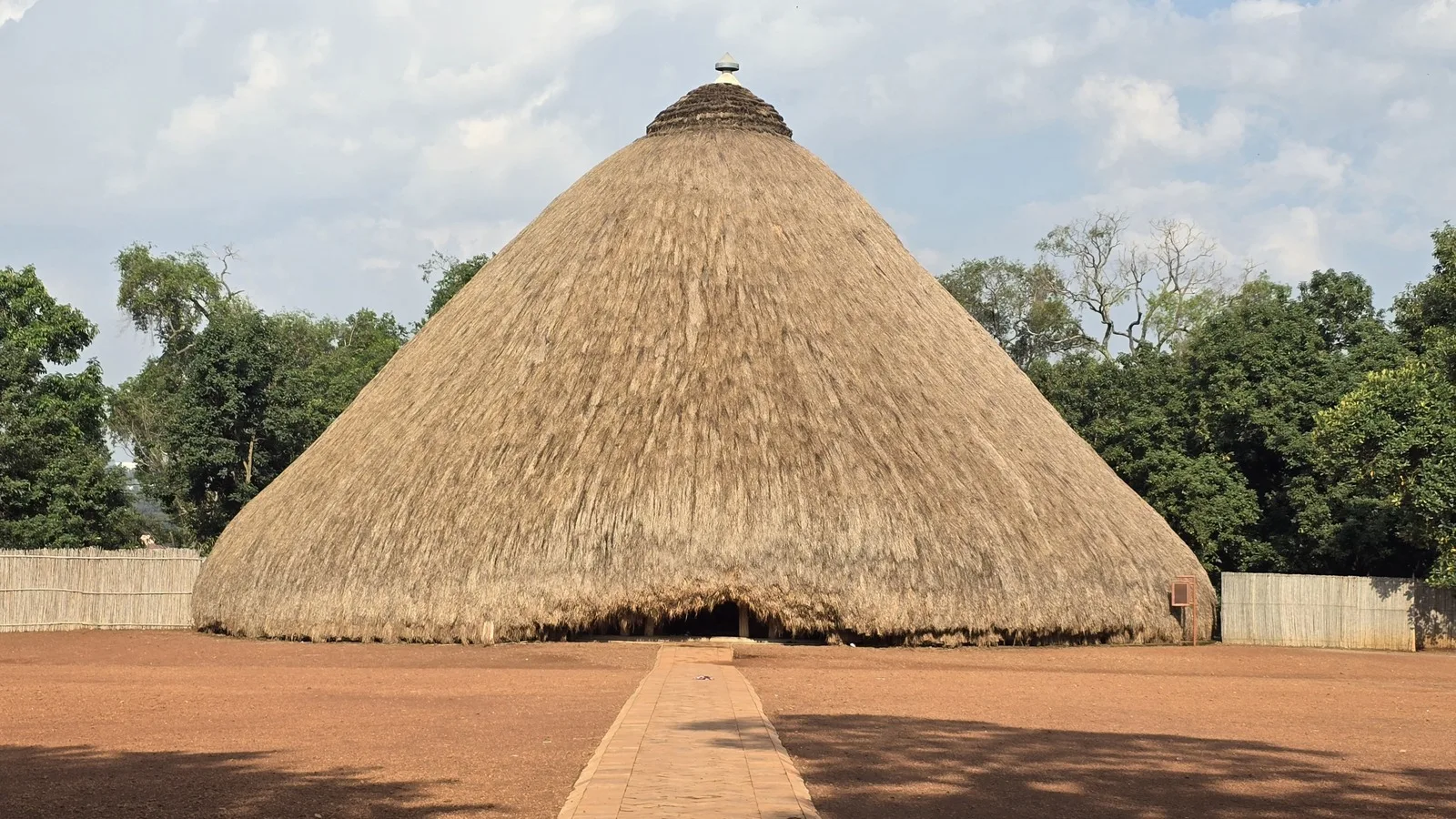
The property covers 26.8 hectares. At its core, on the hilltop, is the former palace of the kabakas, built in 1882 and converted into the royal burial ground in 1884. Four royal tombs lie inside the main building, the Muzibu Azaala Mpanga, which is circular and surmounted by a dome.
It is built entirely in organic materials: wood, thatch, reed, wattle and daub. Inside, the supporting poles are wrapped in barkcloth, which is itself on UNESCO's Representative List of intangible heritage, and the barkcloth trees on the hillside mark the boundary of the site. Most of the surrounding land is still farmed by traditional methods.
UNESCO inscribed the property in 2001 under four criteria, and states that its main significance lies not in the architecture but in "its intangible values of belief, spirituality, continuity and identity". It is the most active religious place in the kingdom.
The fire, and the thirteen years after it
In March 2010 the Muzibu Azaala Mpanga burned down. The building a visitor sees today is a reconstruction.
UNESCO placed the property on the List of World Heritage in Danger in 2010, and it stayed there until 12 September 2023, when the World Heritage Committee removed it. Thirteen years of work by the Buganda Kingdom, using the same organic materials and the same construction traditions, is what closed that file.
This matters for what you are looking at. The thatch is new; the practice that made it is not, and the reconstruction was itself an exercise of the knowledge the site was inscribed for.
Visiting
Kasubi is in Kampala and is easy to reach. It is a functioning royal and religious site rather than a museum, and there are areas a visitor does not enter and things a visitor does not photograph. Guides at the site will tell you which; take the guide.
Dress modestly. Shoes come off before entering the main building. Women are traditionally expected to wear a wrap, and one is generally available at the entrance.
The property is managed by the Buganda Kingdom and gazetted under Ugandan law, and it has a site manager and a management plan. It is not a ruin being visited; it is a place being kept.
At Kasubi
- Take the site guide rather than walking round alone
- Remove shoes before entering the main building
- Dress modestly; a wrap is generally available at the entrance
- Ask before photographing anything inside
- Understand that you may be visiting alongside people who are there to mourn
Sources and references
- UNESCO World Heritage Centre: Tombs of Buganda Kings at Kasubi
- UNESCO Intangible Cultural Heritage: barkcloth making in Uganda
Inscription facts, the 2010 to 2023 Danger List dates and the quoted phrase are from the UNESCO World Heritage Centre entry, read at source on 18 August 2026. The barkcloth inscription is from the UNESCO intangible heritage register.