Heritage
ǂKhomani Cultural Landscape: Visitor and Heritage Guide
Nearly a million hectares of Kalahari, inscribed for the San who lived on it, and for a language now down to its last speakers.
- Country South Africa
- Category Heritage
- Reviewed 17 August 2026
- Sources 3
- Length 3 min read
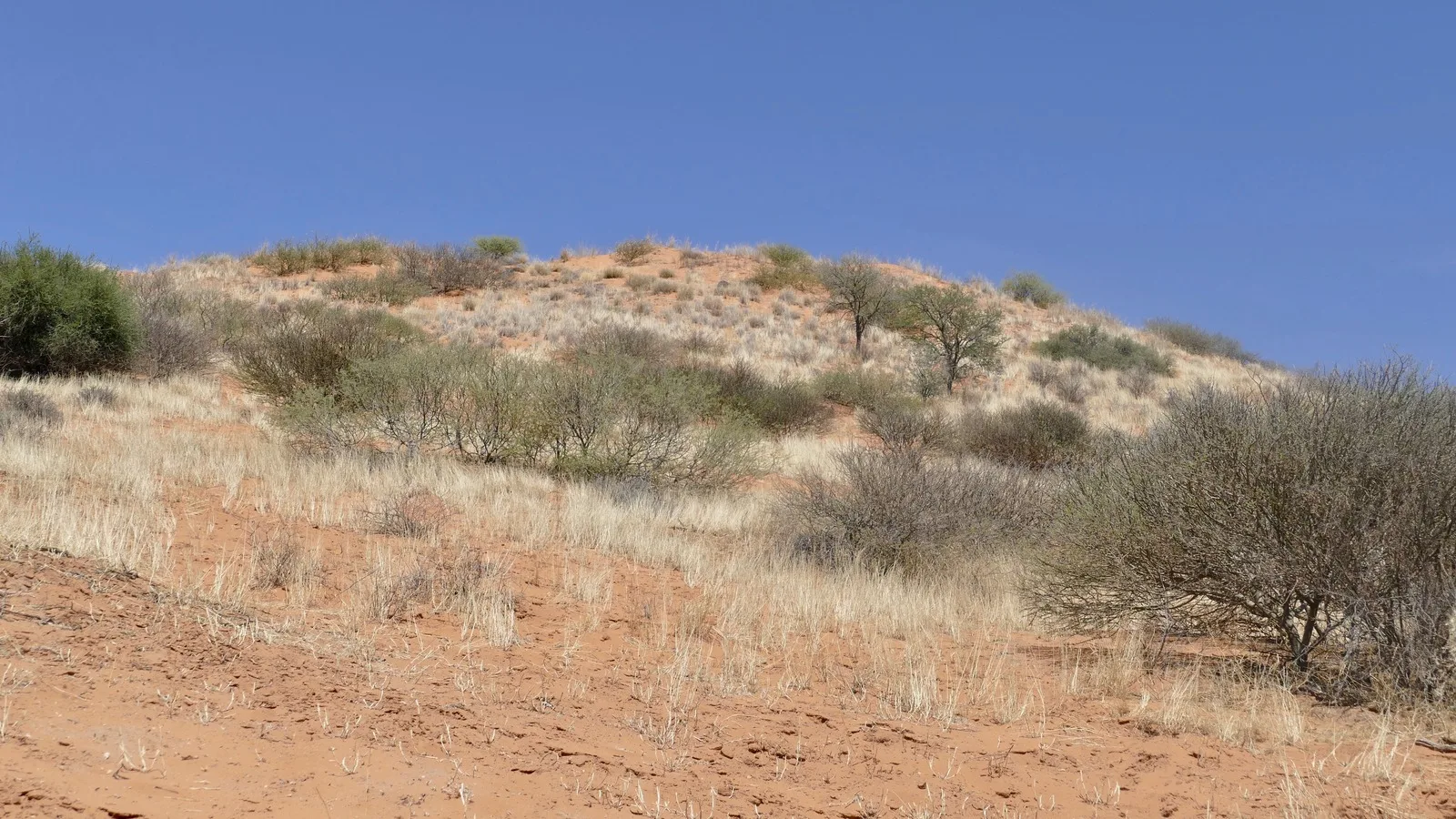
Credit Bernard DUPONT, CC BY-SA 2.0, via Wikimedia Commons
The name of this page begins with a character most keyboards cannot produce. That is the first thing worth sitting with: ǂKhomani opens with a click consonant, the URL of this page cannot carry it, and the people it belongs to are among the last indigenous communities in South Africa.
You will also see it written Khomani, without the click, which is what a keyboard and a web address can manage and what the address of this page does. Both refer to the same people and the same World Heritage property.
What UNESCO inscribed
The ǂKhomani Cultural Landscape went onto the World Heritage List in 2017. It covers 959,100 hectares in the far north of the country, on the border with Botswana and Namibia, and it coincides with the Kalahari Gemsbok National Park.
Note what that means and what it does not. The boundary is shared with a national park, and the inscription is not about the wildlife. It is a cultural landscape: a large expanse of sand dunes holding evidence of human occupation from the Stone Age to the present, and associated with the ǂKhomani and related San people and the ways they made a living in a desert.
UNESCO records that they developed a specific ethnobotanical and veld knowledge, practices, and a worldview in which geographical features carry symbolic links between people, animals and the land. This page reports that the knowledge exists and is held; it does not summarize it. A travel publication paraphrasing a living people’s knowledge system out of a nomination file would be doing something worse than leaving a gap.
A reclamation, and a language at its edge
The clause that makes this inscription different from an archaeological one is UNESCO’s own, and it holds two things at once: the ǂKhomani are actively reclaiming their knowledge, practices and traditions, bringing a landscape back to life, thanks in part to the survival of the last speakers of the !Ui-Taa languages in the community.
Read that twice. The reclamation is real and it is happening now. It depends on speakers who are counted rather than estimated. Criterion (v) says the landscape is uniquely expressive of the hunting and gathering way of life practiced by the ancestors of every modern human being, and criterion (vi) rests on knowledge carried in a language that a few people still speak.
The ethos UNESCO records is worth carrying away even if you never go: living softly on the land, and seeing yourself as part of nature rather than a visitor to it.
Visiting
This is a nine thousand square kilometer landscape that shares its boundary with a national park, so it is entirely possible to drive across it, photograph a gemsbok and see none of what is inscribed. That is the failure mode here, and it is a common one.
If you want to encounter the cultural landscape rather than the park, that means going with ǂKhomani guides, on their terms, and paying for it. Arrangements are for the community and the park authorities to publish and are not stated here. South African Tourism is the national tourism authority and a reasonable starting point for finding who is currently offering what.
Visiting respectfully
Almost everything on that list is the same principle: this is somebody’s home and somebody’s knowledge, and both are being rebuilt after a long interruption.
- The national park and the cultural landscape share a boundary and are not the same thing. Decide which you came for
- Go with ǂKhomani guides if you want the second one. There is no self-guided version of a people
- Pay properly. Cultural tourism that does not reach the community is extraction with better manners
- Ask before photographing anyone, every time, and accept a no
- Do not ask to be shown sacred or private knowledge. Being told no is not a failed transaction
- Buy craft from the makers rather than from a shop that resells it
- It is desert. Heat, water and distance are the practical constraints and they are serious
Sources
- UNESCO World Heritage Centre: the Khomani Cultural Landscape, inscription 1545
- UNESCO World Heritage Centre: the twelve properties inscribed in South Africa
- South African Tourism: the national tourism authority
The area, the dates, the criteria, the account of ethnobotanical knowledge and the sentence about the last speakers of the !Ui-Taa languages are UNESCO’s own wording for inscription 1545, read on 2026-08-17. UNESCO files the property under a name beginning with the click consonant ǂ, which this page carries in its title and which its web address cannot. Nothing about ǂKhomani practice or belief is described here beyond what that record states.