Heritage
South Africa and Diaspora Reconnection
South Africa's diaspora story runs in two directions at once: people removed from their own neighborhoods, and a solidarity movement that circled the world.
- Country South Africa
- Category Heritage
- Reviewed 16 August 2026
- Sources 4
- Length 2 min read
Credit Mike Peel, CC BY-SA 4.0, via Wikimedia Commons
The diaspora question is different here from anywhere else this publication writes about. South Africa was not primarily a place people were shipped from. It was a place where people were moved, repeatedly and by law, inside their own country, and where a movement against that drew in the rest of the world.
Internal removal, and District Six
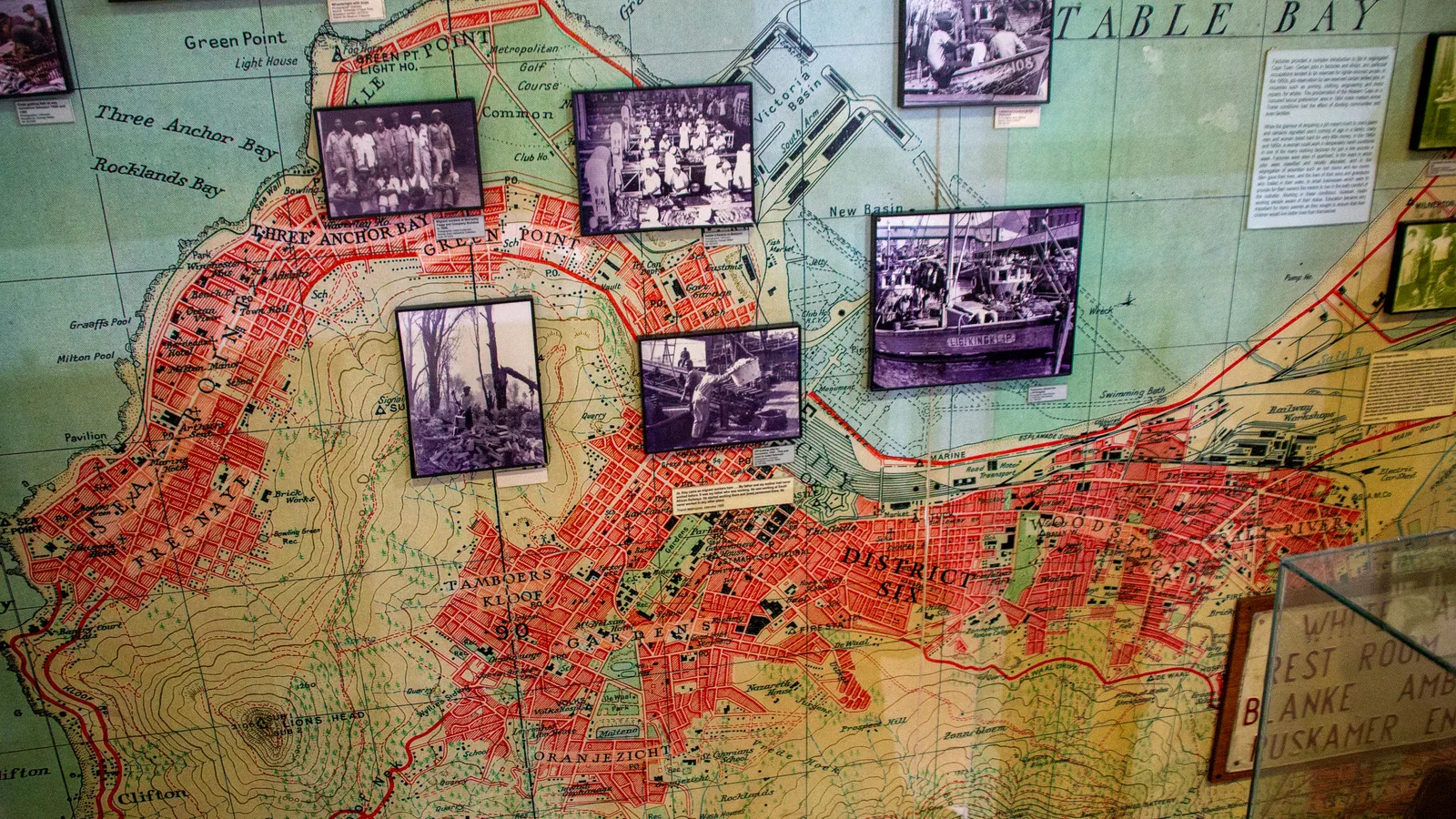
Under the Group Areas Act whole neighborhoods were declared for one race and cleared of everybody else. District Six in Cape Town is the best known: a mixed, dense, working inner city district that was declared white, bulldozed, and left largely empty for decades because nobody wanted to build on it.
Its museum is built around a floor map of the vanished streets, annotated by former residents who came back and wrote their own names on the places where they had lived. It is one of the most affecting rooms in the country and it takes about an hour.
Sophiatown in Johannesburg was cleared the same way. So were dozens of places nobody outside them has heard of. Restitution has been slow and is still running.
The solidarity diaspora
The other direction is the one that reached the rest of the world. The anti apartheid movement was one of the twentieth century’s largest international campaigns, and it ran through Black American churches and campuses, Caribbean governments, British and Scandinavian trade unions and African states that paid a real price for hosting exiles.
Many South Africans spent decades abroad, and the returning exile is a recognized figure in the country’s literature and politics. For a great many visitors of African descent, the connection to South Africa is this one rather than an ancestral one, and it is no less real for that.
Echoes of AfricaFor most visitors of African descent the tie to South Africa is not a bloodline. It is a campaign your parents joined, and a country that knew your name before you arrived.
Visiting the sites of it
The Apartheid Museum in Johannesburg is the fullest account and needs half a day. Constitution Hill, a former prison that now houses the Constitutional Court, is the most articulate single site about what replaced the old order. Robben Island is a boat trip and most of a day. The Hector Pieterson Museum in Soweto covers the schoolchildren’s uprising.
Guiding matters more at these places than almost anywhere else. Many are staffed by people who were imprisoned, or removed, or who lost family, and the difference between that and a competent narration is the difference between the visit and a museum tour.
Planning a trip built around this
- Put the historical sites early in the itinerary, not on the last morning before a flight
- Half a day for the Apartheid Museum, and do not schedule anything demanding afterward
- Book Robben Island well in advance, and expect weather to cancel sailings
- Ask whether your guide has a personal connection, because many do and it changes everything
- Leave time between the heavy sites, because doing three in a day flattens them all
Sources
- District Six Museum: the memorial museum of the forced removals
- Robben Island Museum: the custodian of the island and the operator of its tours
- South African Heritage Resources Agency: the national heritage authority
- South African Government: South Africa's people, including the official languages
Our orientation article What to Know Before Visiting South Africa argues the sequencing question in more detail.