Heritage
Kilimanjaro National Park: Visitor and Heritage Guide
The highest mountain in Africa, inscribed on a single criterion, and five vegetation zones walked through in under a week.
- Country Tanzania
- Category Heritage
- Reviewed 19 August 2026
- Sources 3
- Length 2 min read
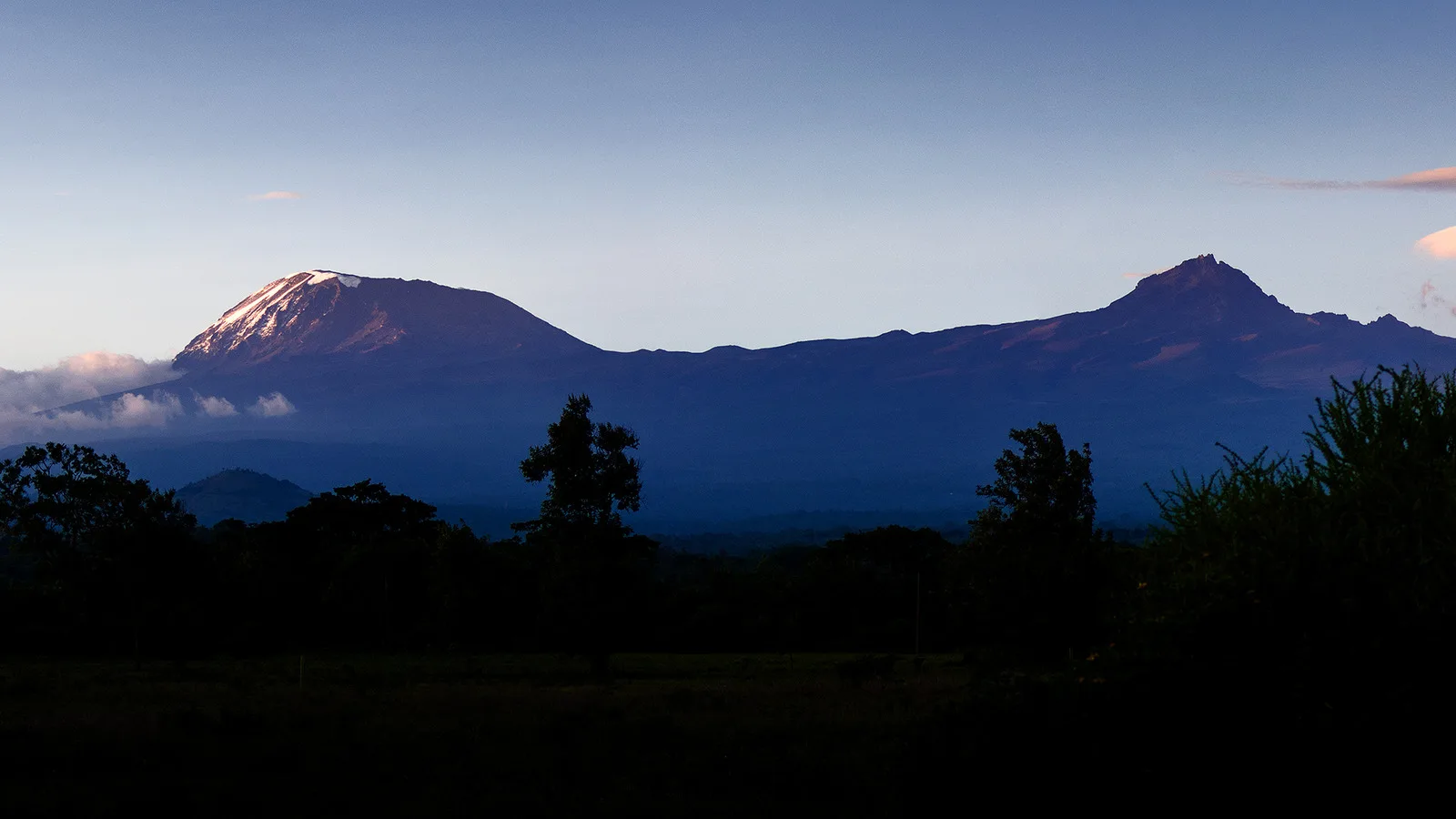
Credit David Daniel Turner, CC BY-SA 3.0, via Wikimedia Commons
Kilimanjaro is the most photographed thing in East Africa and most of those photographs are taken from Kenya. The mountain is wholly Tanzanian and the park that protects it is inscribed on one criterion alone, which is unusual and worth understanding.
One criterion, and what it says
Kilimanjaro National Park covers 75,575 hectares and was inscribed in 1987 on criterion (vii) only, the criterion for superlative natural phenomena and exceptional natural beauty.
UNESCO's reasoning is a list of superlatives that happen to be literal. It is one of the largest volcanoes in the world and the largest free standing volcanic mass. It has three main volcanic peaks, Kibo, Mawenzi and Shira. It reaches 5,895 m, rising 4,877 m above the surrounding plains, and it stands in isolation above those plains rather than in a range.
That isolation is the whole of it. A mountain of this height inside a range would be a summit. Standing alone above savannah, it is a horizon.
Five zones in a handful of days
The mountain has five main vegetation zones: lower slopes, montane forest, heath and moorland, alpine desert, and summit. Walking up is walking through all of them, which is why the packing question here is a temperature range rather than a temperature.
The whole mountain, and the montane forest belt in particular, is very rich in species, including many endangered mammals. The forest belt is the part most walkers pass through fastest and remember least.
The people who carry it
A Kilimanjaro climb is portered. The loads are carried, the camps are made and the meals are cooked by Tanzanian crews, and the difference between operators on how those crews are paid, equipped and insured is very large.
This site's Tanzania hub goes into that at greater length and this page will not repeat it. What belongs here is only the practical instruction: ask an operator directly, before you book, what its porters are paid, what weight they carry, what equipment they are issued and what happens when one is hurt. An operator that answers precisely is telling you a great deal about the rest of the trip too.
Before you commit
- Choose a route with enough days on it, because altitude sickness is a real risk here.
- Use a reputable company, stick to established routes and walk in groups.
- Be equipped for the terrain and for low temperatures, not for the equator.
- Ask the porter welfare questions above, in writing, before you pay a deposit.
- Check your insurance covers trekking to the altitude you intend to reach.
- Remember the mountain is a park with an entry fee and a permit, arranged through your operator.
Sources and references
- UNESCO World Heritage Centre: Kilimanjaro National Park
- Tanzania National Parks Authority
- UK FCDO: Tanzania safety and security
The elevation, the area, the criterion, the three peaks and the five vegetation zones are from the UNESCO inscription, read on 19 August 2026. The trekking guidance is from the UK FCDO advisory.