Heritage
Tanzania and Diaspora Reconnection
An Indian Ocean history rather than an Atlantic one, a cathedral built on a slave market, and an inscription that names the abolitionist.
- Country Tanzania
- Category Heritage
- Reviewed 19 August 2026
- Sources 4
- Length 4 min read
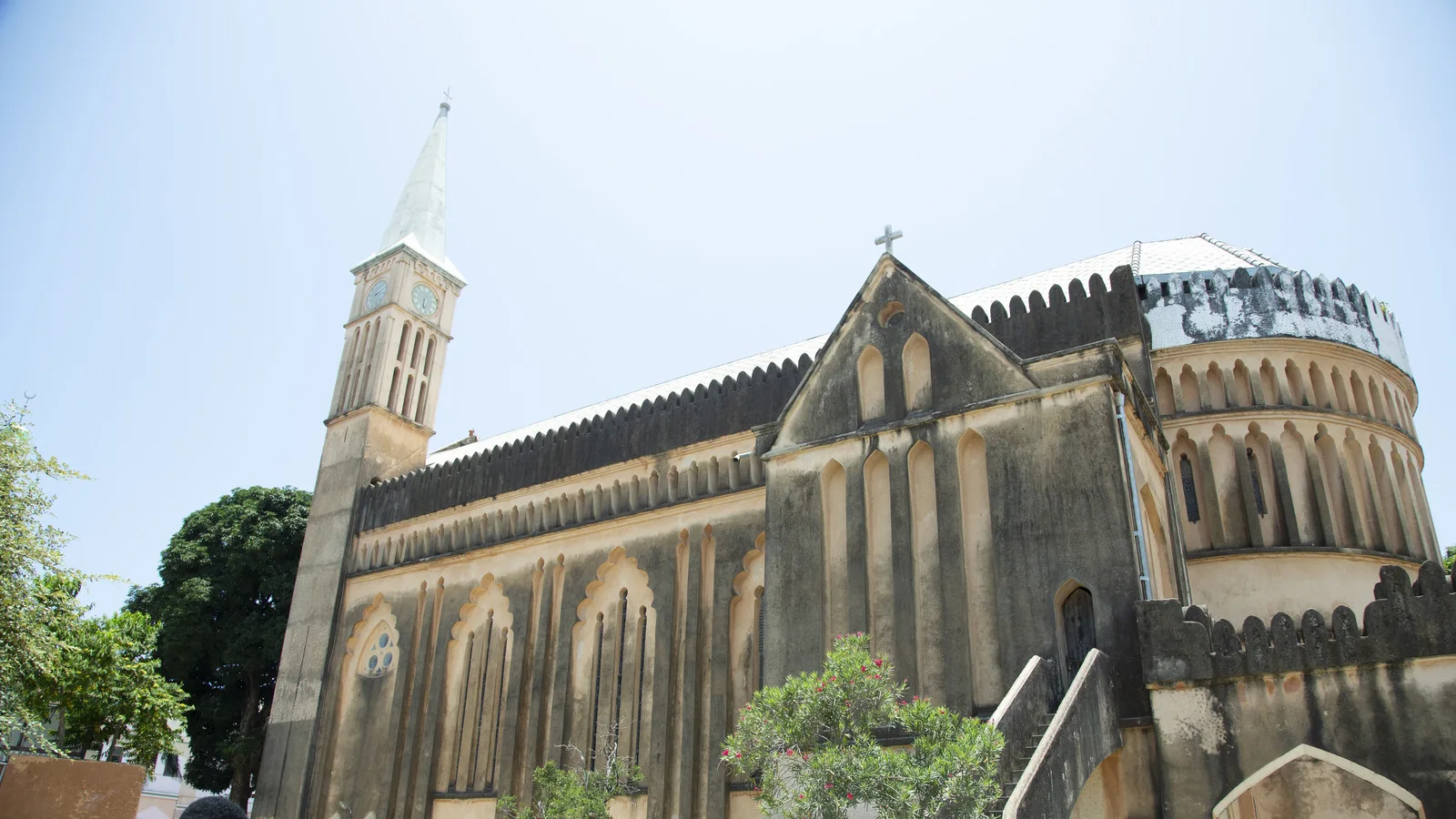
Credit Luganosamwel, CC BY-SA 4.0, via Wikimedia Commons
Almost everything this publication has written about diaspora return has been about the Atlantic. Tanzania is a different ocean and a different history, and reading it through the Atlantic one produces the wrong questions.
The trade here went east
The East African trade moved people, along with ivory and gold, out across the Indian Ocean to Arabia, the Gulf, India and the islands, over a period far longer than the Atlantic trade lasted. Its descendants are therefore dispersed differently, and many communities that descend from it are not in the Americas at all.
For a visitor whose own family history runs through the Atlantic, that is worth holding onto. Coming to Tanzania is not coming to the other end of the same route. It is coming to a place with its own version of the same crime.
Stone Town, and what UNESCO chose to say about it
Stone Town of Zanzibar was inscribed in 2000, and one of its three criteria is explicitly about slavery. UNESCO's criterion (vi) reads:
Zanzibar has great symbolic importance in the suppression of slavery, since it was one of the main slave-trading ports in East Africa and also the base from which its opponents, such as David Livingstone, conducted their campaign.
The same inscription lists among the town's buildings the Christ Church Anglican Cathedral, which it describes as commemorating the work of Livingstone in abolishing the slave trade and as built on the site of the last slave market. It also lists, a few lines later, the residence of the slave trader Tippu Tip.
Read that criterion again and notice its subject. It is written about the suppression of slavery and it names an opponent of it. The people who were sold on that site appear in it only as the object of a trade, and no one of them is named. That is not an error in the citation. It is a choice about whose story a World Heritage inscription tells, and it is visible in the text.
Going to the cathedral
The cathedral is in Mkunazini, in the middle of Stone Town, and it is the place most returning visitors come to. The former holding chambers survive beneath the site and are shown to visitors.
Two things are worth deciding before you arrive. The first is whether you want a guide, because the difference between guides here is very large and the account you get is the account you are given. The second is how long you want. It is a small site and it is possible to be moved through it quickly, which is not the same as having been there.
Kilwa, and the older layer underneath
Before Zanzibar there was Kilwa. The ruins at Kilwa Kisiwani and Songo Mnara are what is left of two Swahili port cities that controlled Indian Ocean trade between the 13th and 16th centuries, dealing gold and ivory from the interior for silver, carnelians, perfumes, Persian faience and Chinese porcelain. Kilwa minted its own currency. Ibn Battuta stopped there in 1331 and called it one of the most beautiful cities in the world.
Almost nobody goes. It is reached by boat and it is a long way south, and it is the single clearest surviving statement that this coast was a center of the medieval world rather than an edge of it.
Going well
- Read Alex William Machage on this country before you read anyone else, including this page.
- Choose your guide at the cathedral deliberately, and ask what their account is based on.
- Allow more time at small sites than the itinerary suggests.
- Learn enough Kiswahili to greet people properly, because greetings are how conversation starts here.
- Ask before photographing anyone, and put the camera away at memorial sites.
- Consider Kilwa, and accept that reaching it is most of the day.
The two pages to read next are not ours
This site publishes two articles on Tanzanian heritage by Alex William Machage, a Tanzanian tour operator and historian, and they are the deeper treatment of this subject. One covers the sweep of the country's heritage landscapes, from Olduvai and Laetoli through the Kondoa rock art to the Swahili world and Stone Town. The other is on Ngorongoro.
They carry his name and this page does not carry anybody's. That difference is the reason to go and read them.
Sources and references
- UNESCO World Heritage Centre: Stone Town of Zanzibar
- UNESCO World Heritage Centre: Ruins of Kilwa Kisiwani and Ruins of Songo Mnara
- Tanzania: a land that echoes with rich and diverse history and heritage
- Ngorongoro Conservation Area: a history between human, heritage and wildlife
The criterion (vi) text, the description of the cathedral and the reference to Tippu Tip's residence are quoted from the UNESCO inscription for Stone Town of Zanzibar. The Kilwa material is from the inscription for Kilwa Kisiwani and Songo Mnara.