Heritage
Ksar of Ait-Ben-Haddou: Visitor and Heritage Guide
A fortified earthen village on the road from the Sahara to Marrakesh, inscribed in 1987. Its communal buildings include a caravanserai and two cemeteries.
- Country Morocco
- Category Heritage
- Reviewed 19 August 2026
- Sources 4
- Length 2 min read
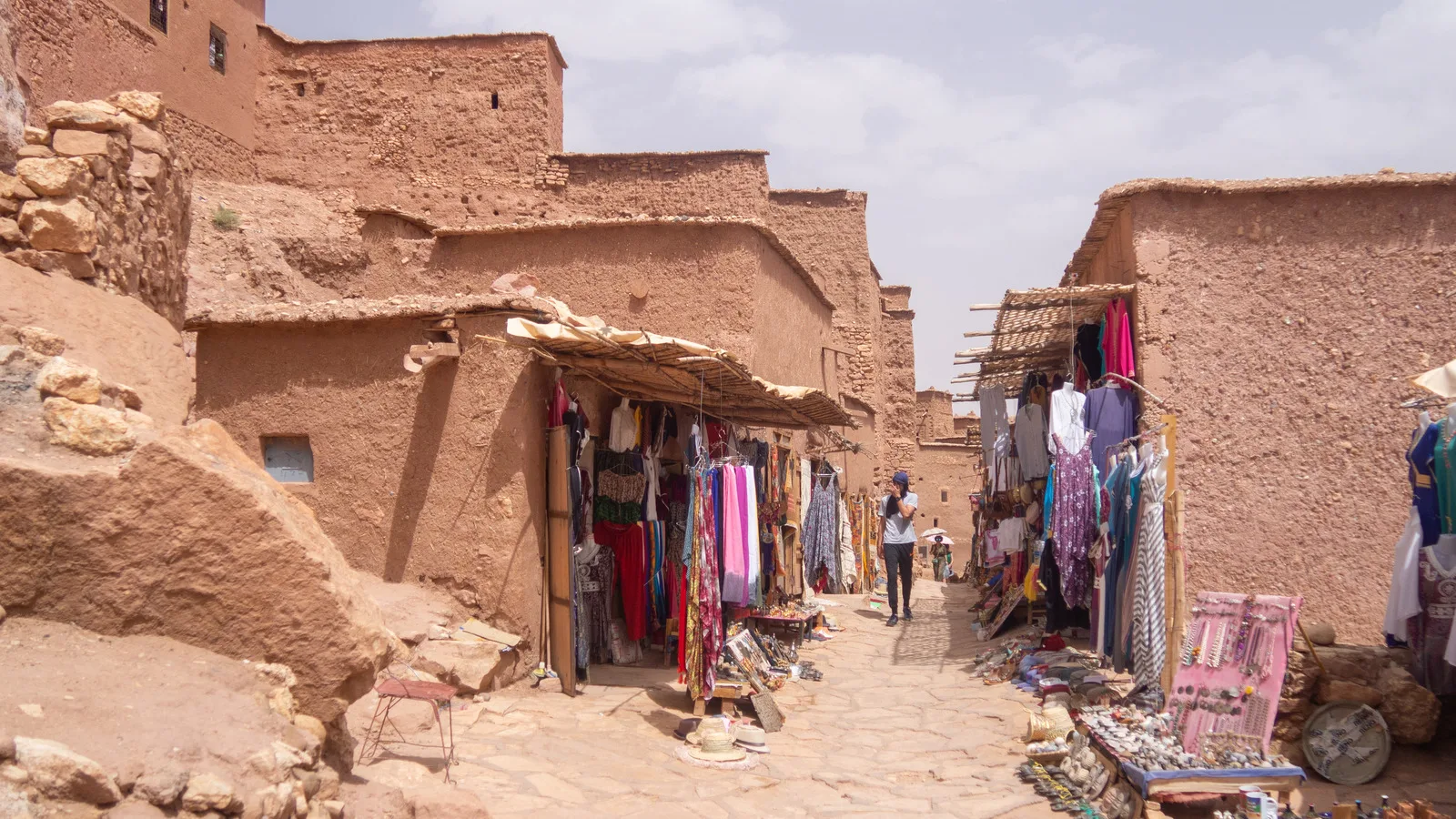
Credit C messier, CC BY-SA 4.0, via Wikimedia Commons
The Ksar of Ait-Ben-Haddou stands on the southern slopes of the High Atlas, in the Ounila valley in Ouarzazate province, and it was inscribed in 1987 under criteria four and five. A ksar is a collective fortified village: houses crowded inside a defensive wall reinforced by angle towers and entered through a baffle gate, some of them modest and some closer to small urban castles with their upper sections worked in clay brick.
UNESCO calls it an extraordinary ensemble offering a complete panorama of pre-Saharan earthen construction technique.
Older than it looks, and younger than you would guess
The buildings themselves are not ancient. UNESCO records that the oldest constructions do not appear to be earlier than the seventeenth century. What is old is the technique, which was propagated through the valleys of southern Morocco from a very early period, and the road: the site was one of many trading posts on the commercial route linking ancient Sudan to Marrakesh by the Dra Valley and the Tizi-n-Telouet pass.
Visiting
The site is around thirty kilometers from Ouarzazate and is usually visited on the way over the Atlas rather than as a destination in itself.
- The ksar is across the river from the modern village. Crossing is easy in the dry season and less so after rain.
- It is a climb to the granary at the top and the view is the reason to make it.
- Most of the families have moved to the newer village on the far bank. UNESCO records that abandonment as the main threat to the earthen buildings.
- CERKAS, the center for conservation of the architectural heritage of the Atlas zones, monitors the site, and the inscription notes it does so with difficulty.
- It is heavily used as a film location, which pays for a good deal of the upkeep and shapes what you will be shown.
- Earthen architecture is fragile. Stay off walls and out of buildings that are not open.
Sources and references
- UNESCO World Heritage Centre: Ksar of Ait-Ben-Haddou
- UNESCO World Heritage Centre: Morocco, States Parties
- Moroccan National Tourist Office
- UK FCDO: Morocco travel advice
Every architectural and historical detail here, including the caravanserai, the two cemeteries and the Dra Valley route, is from the property's UNESCO page read at source on 19 August 2026.