Heritage
Morocco and Diaspora Reconnection
UNESCO records Gnawa as beginning with people taken in the slave trade. Morocco is where the Sahara met the Atlantic, and its heritage list says so plainly.
- Country Morocco
- Category Heritage
- Reviewed 19 August 2026
- Sources 5
- Length 3 min read
Credit Vysotsky, CC BY-SA 3.0, via Wikimedia Commons
Morocco is not usually where a conversation about the African diaspora starts, and the reason is that the familiar story runs west across the Atlantic from Ghana, Senegal and Benin. Morocco's history runs the other way: north across the Sahara, and then outward from an Atlantic port that faced Europe. It is a different history and it deserves to be told as itself rather than as a variation on the better known one.
There is no Door of No Return here, and this publication does not manufacture one.
What Gnawa records
The clearest statement of that history is not in a museum. It is in a musical practice that a great many visitors will hear without being told what they are listening to. UNESCO inscribed Gnawa on the Representative List in 2019, and its own description is unambiguous: the practice originated with groups and individuals "from slavery and the slave trade dating back to at least the 16th century". UNESCO indexes the element under Slavery among its subjects.
What Gnawa became is a Sufi brotherhood music with an all-night possession and trance ceremony at its center, described by the inscription as combining ancestral African practices, Arab-Muslim influences and Amazigh performance. The word UNESCO uses for the third of those is Berber; the word used here is Amazigh. The guembri, the three stringed bass lute a Gnawa maalem plays, is the instrument that carries the whole thing.
Essaouira, the port of Timbuktu
The other end of the same system is on the Atlantic. UNESCO calls Essaouira "known for a long time as the Port of Timbuktu" and describes it as linking Morocco and sub-Saharan Africa with Europe and the rest of the world. Its inscription names the communities that made it work: Amazigh, Arab, African and European, and Muslim, Christian and Jewish.
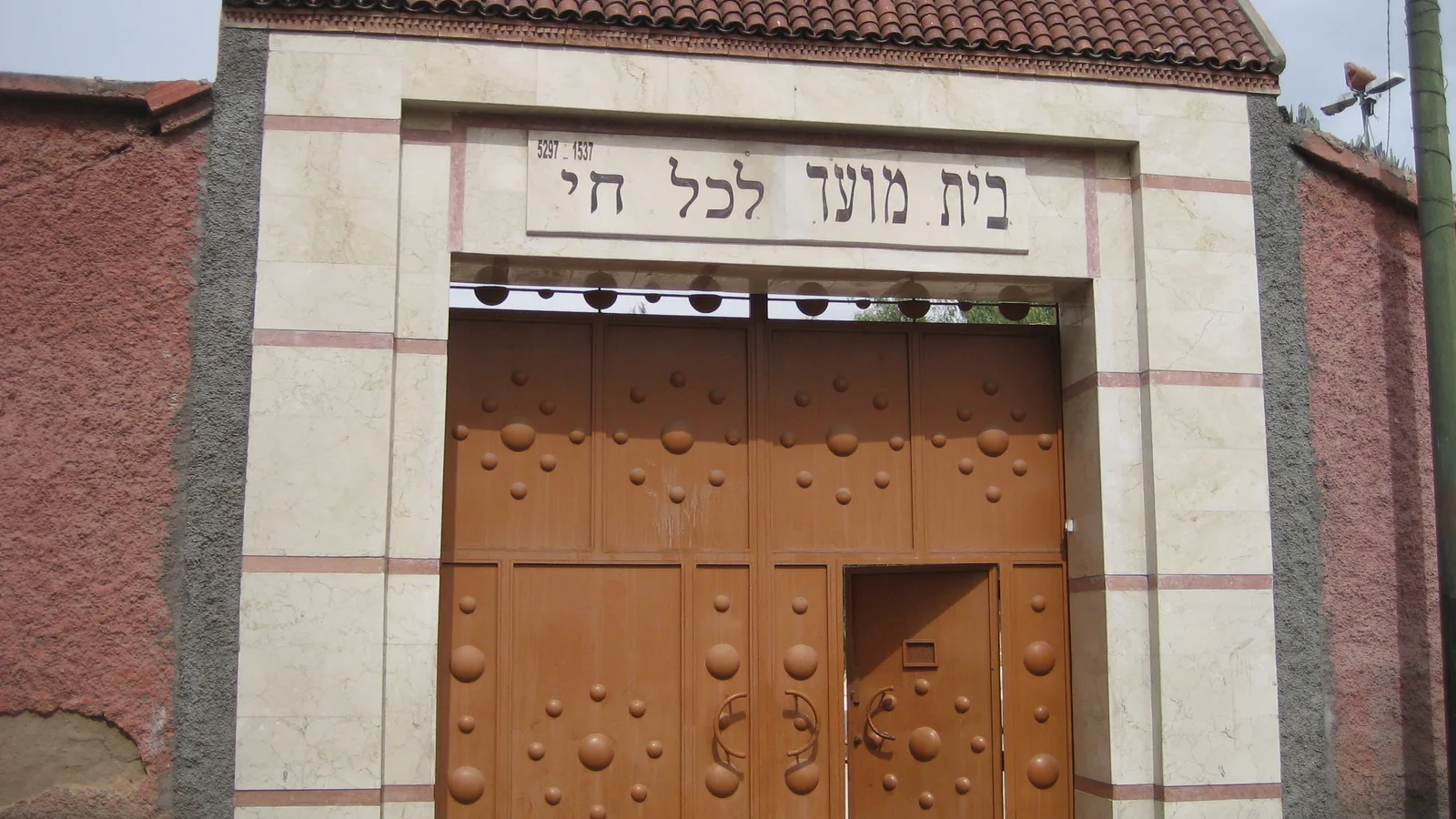
The Jewish half of that is visible and is going. Essaouira's Mellah is named in the inscription as the district where degradation has been worst, and the Jewish community that once made up a large share of the town has almost entirely left. What remains is buildings, cemeteries and the synagogues that have been restored. In Marrakesh the Miaara cemetery is still there behind its gate, and so is the mellah around it.
Places where this history is legible
None of these is a memorial site in the sense that Cape Coast or Goree is. They are working places with a history in them.
- Essaouira, its ramparts, its Mellah and its Jewish cemetery.
- The Miaara Jewish cemetery and the mellah in Marrakesh.
- Ait-Ben-Haddou, for the caravanserai and the two cemeteries UNESCO records.
- The Dra Valley and the southern oases, which are the road the trade actually used.
- A Gnawa performance, and the knowledge that the public festival is not the ceremony.
- Volubilis, whose inscription names African and Christian cultures among the layers on the site.
Sources and references
- UNESCO Intangible Cultural Heritage: Gnawa
- UNESCO World Heritage Centre: Medina of Essaouira
- UNESCO World Heritage Centre: Ksar of Ait-Ben-Haddou
- UNESCO World Heritage Centre: Archaeological Site of Volubilis
- UNESCO World Heritage Centre: Morocco, States Parties
Every claim on this page is taken from a UNESCO inscription and was read at source on 19 August 2026. Gnawa was inscribed on the Representative List in 2019; the quoted phrases about slavery, about the Port of Timbuktu and about the caravanserai and the two cemeteries are UNESCO's own.