Heritage
Lake Malawi National Park: Visitor and Heritage Guide
UNESCO compares this park to the Galapagos finches. Hundreds of cichlid species, nearly all found nowhere else, in one clear corner of the lake.
- Country Malawi
- Category Heritage
- Reviewed 19 August 2026
- Sources 4
- Length 2 min read
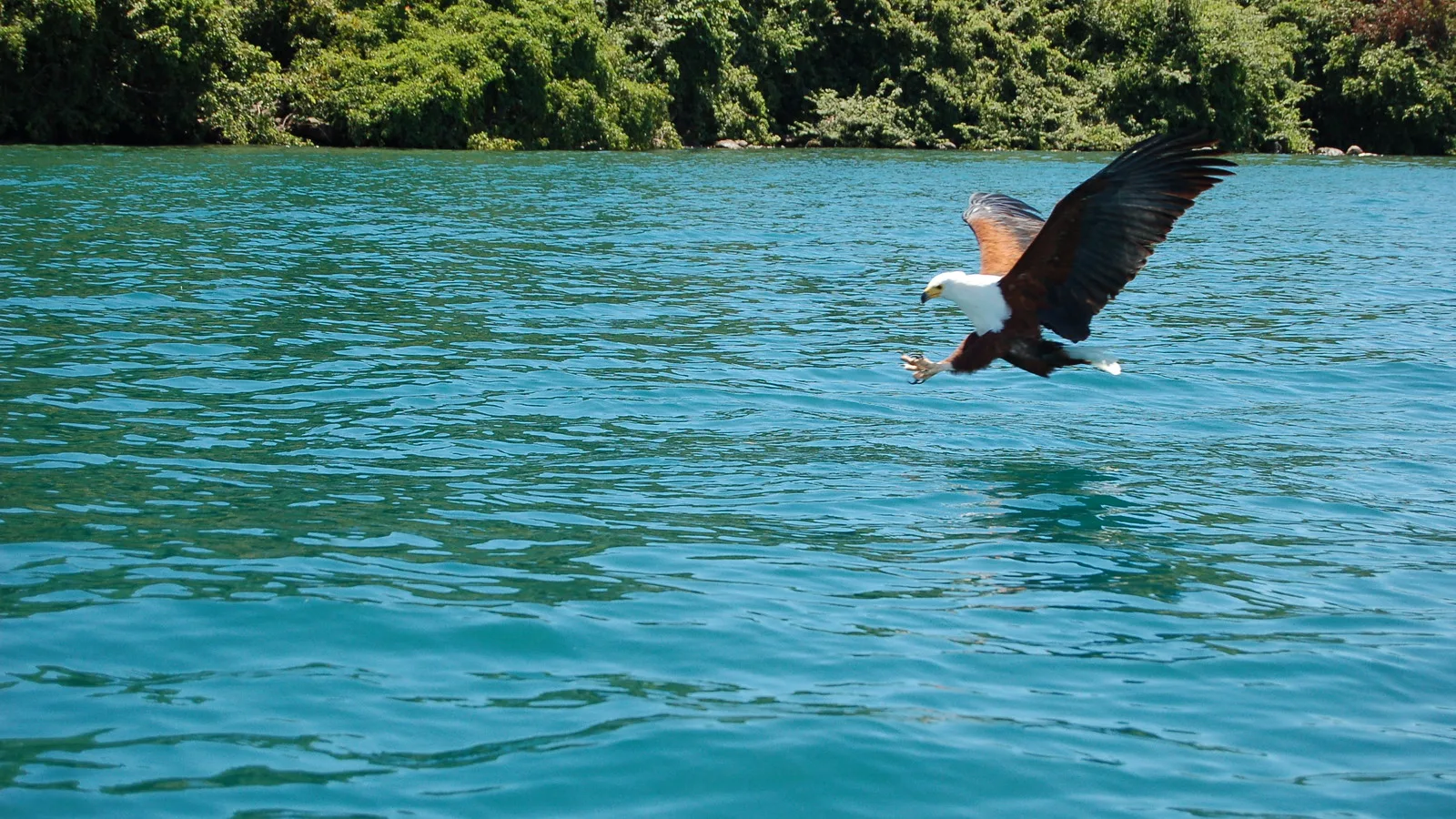
Credit Joachim Huber, CC BY-SA 2.0, via Wikimedia Commons
Lake Malawi National Park sits at the southern end of the lake, around the Nankumba peninsula and Cape Maclear, and it protects water rather than land. It was inscribed on the World Heritage List in 1984 under three natural criteria, and it remains the only natural World Heritage property in Malawi.
Why it is inscribed
UNESCO's own description is unusually direct about the reason. The park is home to many hundreds of fish species, nearly all of them endemic, and its importance for the study of evolution is described as comparable to that of the finches of the Galapagos Islands. That is a large claim and it is the inscription's claim, not this site's.
The fish in question are the cichlids, known locally as mbuna, the rock dwelling species that have radiated into hundreds of forms within a single lake. Different rocky outcrops hold different species. The clarity of the water, which is what makes snorkelling here worth the journey, is also what makes the radiation visible to anyone with a mask.
Visiting
- Cape Maclear, on the Nankumba peninsula, is the usual base and is reachable by road.
- Snorkelling and diving are the point. The water is clear and the fish are close in.
- Boat trips to Thumbi West Island and the smaller rocks show different species on different outcrops.
- Fish eagles are common along this shore and are frequently fed for visitors, which is worth declining.
- Bilharzia is present in the lake. Take medical advice before and after swimming.
- The park is a park. Entry fees apply and the rules on fishing and collecting are enforced.
The pressure the inscription does not remove
A World Heritage listing is not a fence. The lake is fished hard, the shoreline is settled and farmed, and sediment from cleared land reaches the water. The endemism that makes the park globally significant is also what makes it fragile: a species confined to one set of rocks has nowhere else to go.
Sources and references
- UNESCO: Lake Malawi National Park, inscribed 1984
- UNESCO: Malawi on the World Heritage List
- UK FCDO: Malawi health advice
- Malawi: the destination guide
The inscription details, the criteria and the comparison with the Galapagos finches are from the property page on the UNESCO World Heritage List. Health guidance on swimming in the lake is from the FCDO Malawi health page.