Heritage
Malawi and Diaspora Reconnection
Malawi sat on the eastern slave route, not the Atlantic one. The lake carried captives to Kilwa, and the trail that records it is on the Tentative List.
- Country Malawi
- Category Heritage
- Reviewed 19 August 2026
- Sources 4
- Length 3 min read
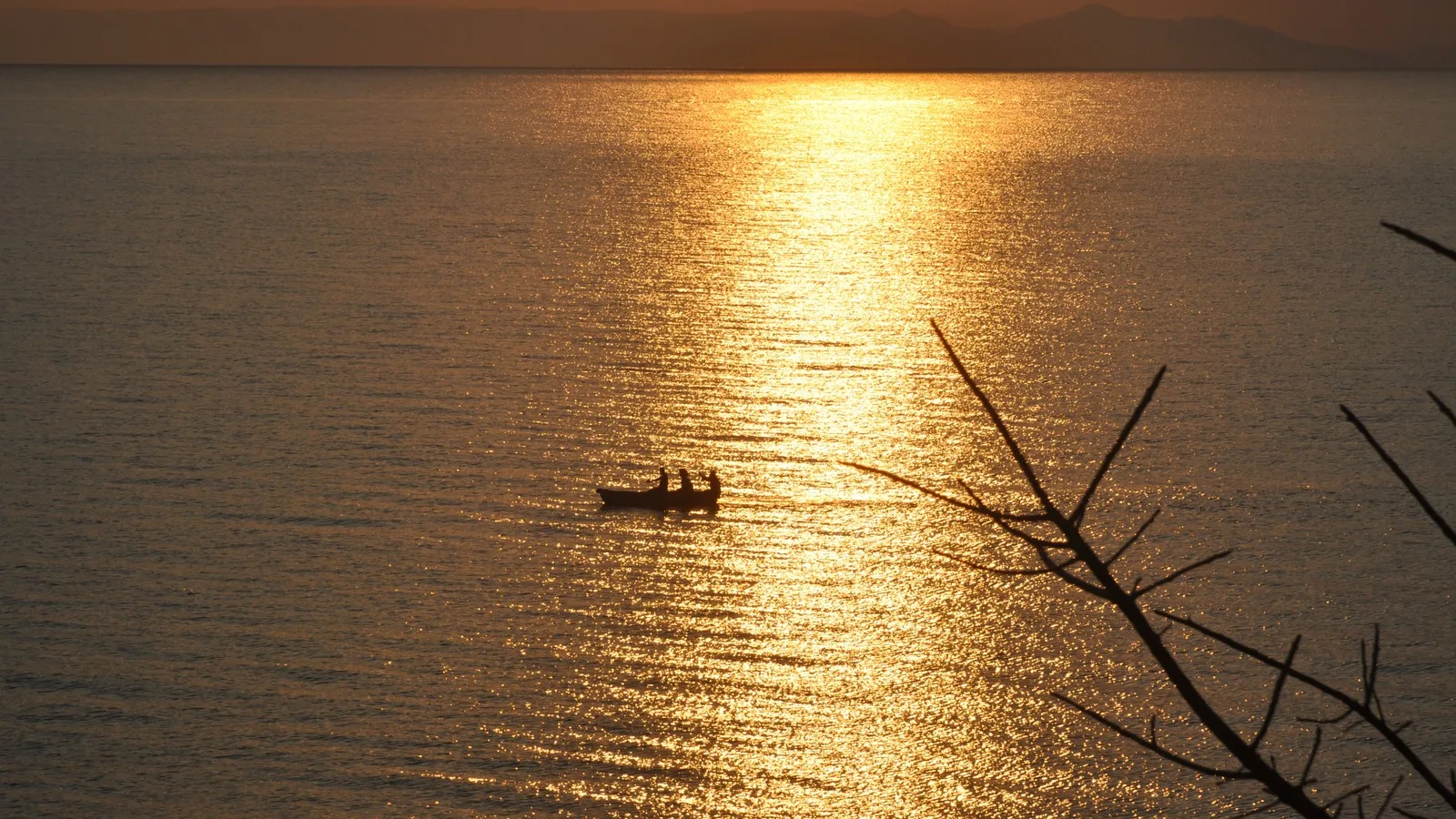
Credit Ludger Heide, CC BY-SA 2.0, via Wikimedia Commons
Diaspora travel in Africa is usually written in an Atlantic register: a castle on a west coast, a door, a crossing to the Americas. Malawi does not fit that story and putting it there would be a category error. The trade that ran through here went east, across the lake and overland to the Indian Ocean, and the people taken from Nkhotakota and Karonga were sold at Kilwa and at Zanzibar rather than at Elmina.
The route across the lake
Malawi has put that history forward for World Heritage listing. The Malawi Slave Heritage Route and Dr. David Livingstone Trail was submitted to the Tentative List in 2025, and its named centers are Nkhotakota, Karonga, Mangochi and Phalombe. The nomination is unusually direct about what happened at them.
At Nkhotakota, Salim-bin Abdullah, known as Jumbe, established a trading center and exported around twenty thousand people a year. Captives were marched to the lake and shipped across it to markets on the East African coast. Other routes were controlled by Mlozi at Karonga in the north and by the Yao chiefs Mponda, Jalasi and Makanjira in the south.
What survives, and what does not
The relics named in the nomination are modest and mostly unphotographed. The first mosque in Malawi, built by Jumbe in the 1850s, still partly stands. Jumbe's graves and those of his lieutenants are being buried by sand as the lake rises. Two fig trees at Nkhotakota still stand where Livingstone met Jumbe, in 1861 and again three years later, and secured a treaty to end the trade that did not hold.
There are also the remains of slave markets, holding pens and rest points on the forced marches, villages inhabited by the descendants of both freed captives and traders, and the colonial forts at Mangochi, Lister, Hill and Johnston, built by the British to suppress the trade and later used to administer the colony that followed.
Where the route ended
The eastern end of this route is not in Malawi. Captives shipped across the lake were taken on to Kilwa, on the Tanzanian coast, which was for centuries the port through which the East African trade passed and which is itself a World Heritage property. This publication covers Kilwa Kisiwani and Songo Mnara separately, and the two pages are the two ends of one road.
Traveling this history with care
- Nkhotakota is reachable by road on the lakeshore and by the Ilala ferry.
- Go with a local guide. Much of what matters is not marked and not signposted.
- The mission stations at Livingstonia and Ekwendeni are part of the same story from the other side.
- Ask before photographing graves, shrines or anyone connected to them.
- Read the nomination. It is the clearest account of the route that exists in public.
- Do not expect an interpretation center. This is a landscape, not a museum.
An honest caution
There is no reconstructed visitor experience here of the kind that exists on the Atlantic coast, and there may never be. The Tentative List entry is a statement of intent rather than a set of opened sites. What a visitor gets is a lake, a few standing structures, two trees and the knowledge of what passed that way. For some people that is thinner than they hoped. For others it is the reason to come.
Sources and references
- UNESCO: Malawi Slave Heritage Route and Dr. David Livingstone Trail
- UNESCO: Malawi on the World Heritage List
- Kilwa Kisiwani and Songo Mnara: where the lake route ended
- Malawi: the destination guide
The route, the named centers, the figure of around twenty thousand people a year, the dates of Livingstone's visits and the list of surviving relics are all taken from Malawi's own Tentative List submission to UNESCO.