Heritage
Le Morne Cultural Landscape: Visitor and Heritage Guide
The basalt mountain at the southwest corner where escaped slaves sheltered, inscribed for what is remembered about it rather than for what is built on it.
- Country Mauritius
- Category Heritage
- Reviewed 19 August 2026
- Sources 4
- Length 2 min read
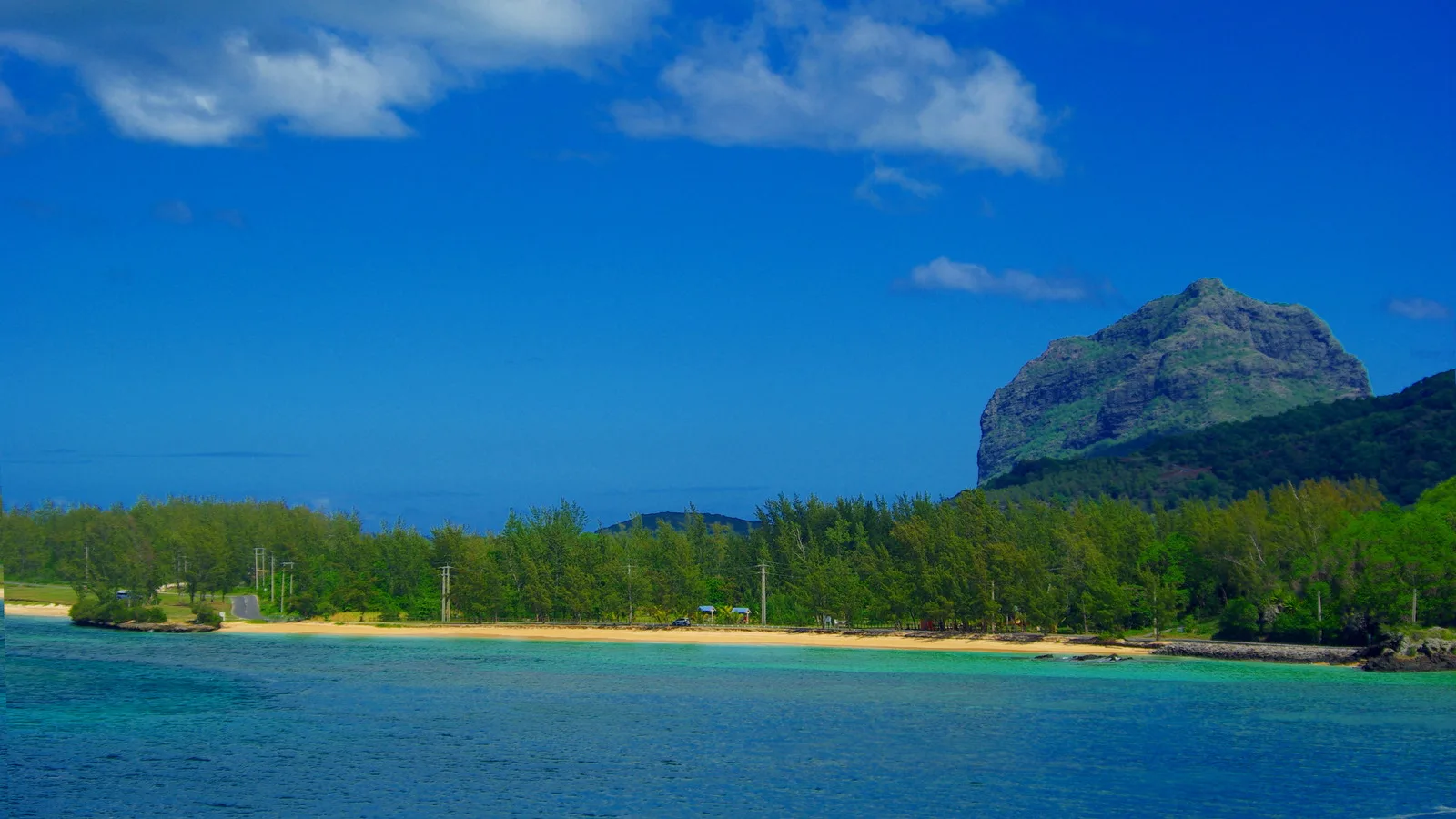
Credit LisanneD, CC BY-SA 4.0, via Wikimedia Commons
Le Morne Brabant is a basalt monolith at the southwest corner of Mauritius, rising steeply out of a lagoon that is on every photograph of the island. What put it on the World Heritage List has nothing to do with the lagoon.
Through the eighteenth century and into the nineteenth, people who had escaped slavery took refuge in its caves and on its ledges. The mountain is difficult, isolated and defensible, and maroon communities lived on it. It was inscribed in 2008 under criteria three and six, over an area of 349.6 hectares with a buffer of some 2,405 hectares.
A landscape inscribed for its oral tradition
Le Morne is unusual even among cultural landscapes. There are no ruins to speak of and no monuments from the maroon period, because people hiding from capture do not build. What carries the site is oral tradition: the stories held in the villages at its foot, passed down about who went up there and what happened to them.
UNESCO records that the mountain became a symbol of maroonage and of resistance to slavery so widely that Mauritius came to be spoken of as the Maroon republic. The inscription rests on that meaning, which is precisely what criterion six exists for.
Where the people came from
The enslaved population of Mauritius was drawn from the African mainland, from Madagascar, from India and from Southeast Asia. That range is worth pausing on, because it is unusual: a maroon community here could contain people with four different first languages and no shared homeland to return to.
What they built instead was on the mountain, and what survives of it is what was told afterwards.
If you go
Local guides from the villages below are the people to hire, and the money is meant to stay there.
- The public beach and the village at the foot are open and free.
- The climb is a real hike on steep, exposed rock and needs a guide.
- The upper section is technical and is not a walk. Do not attempt it alone.
- Start early. There is little shade and the rock holds the heat.
- The first of February is the abolition of slavery and is commemorated here.
- The lower area is reachable without climbing. The summit is not accessible.
Reading it with Aapravasi Ghat
Mauritius has two World Heritage properties and both are about forced migration. Le Morne is the resistance to slavery; Aapravasi Ghat is the system that replaced it. Slavery ended here in 1835 and indenture had already begun in 1834, so for a year the two overlapped on the same island in the same economy.
Visiting one without the other leaves half the story on the table.
Sources
- UNESCO World Heritage Centre: Le Morne Cultural Landscape
- UNESCO World Heritage Centre: Aapravasi Ghat
- UNESCO World Heritage Centre: Mauritius
- Mauritius destination guide
The inscription year, criteria, inscribed and buffer areas, and the description of the mountain as a symbol of maroonage were read from the UNESCO World Heritage Centre page for Le Morne Cultural Landscape on 19 August 2026.