Heritage
Livingstonia: Visitor and Heritage Guide
A Scottish mission on an escarpment above Lake Malawi, founded in the wake of the slave trade Livingstone came here to end. Not a World Heritage site.
- Country Malawi
- Category Heritage
- Reviewed 19 August 2026
- Sources 4
- Length 2 min read
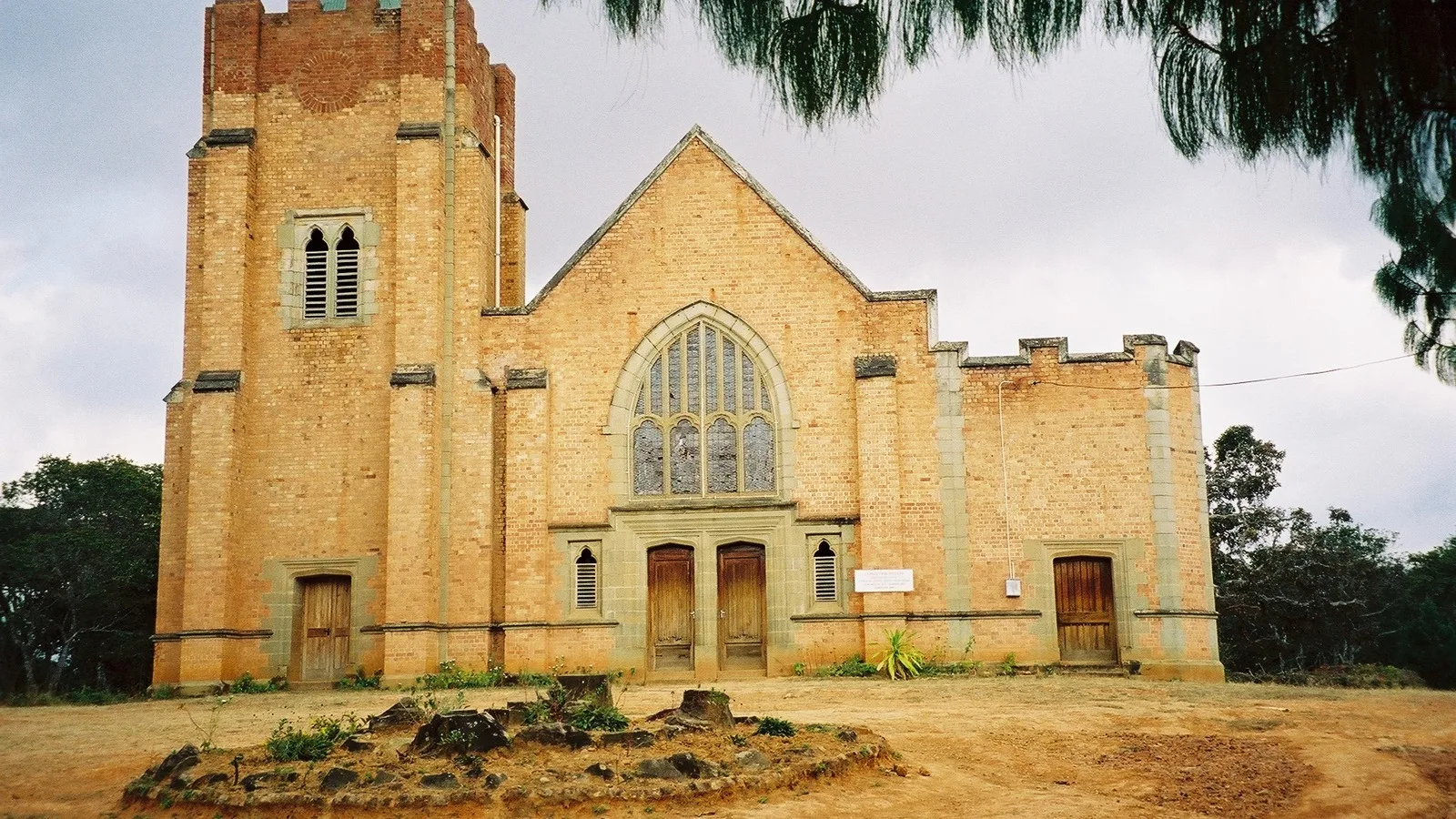
Credit Mara 1, CC BY 2.0, via Wikimedia Commons
Livingstonia is not on the World Heritage List and is not on Malawi's Tentative List. It is included here because it is the most legible surviving expression of one half of a story this country has formally put forward: the missionary intervention that followed, and was justified by, the East African slave trade.
What the trail records
Malawi submitted the Malawi Slave Heritage Route and Dr. David Livingstone Trail to UNESCO's Tentative List in 2025. Its account is blunt. Major slave trading centers operated at Nkhotakota, Karonga, Mangochi and Phalombe. At Nkhotakota, Salim-bin Abdullah, called Jumbe, exported around twenty thousand people a year. David Livingstone visited in 1861 and again in 1864 and secured a treaty with Jumbe and the Chewa chiefs to end the trade. It did not hold.
The nomination describes the physical remnants as narrating a trajectory from slavery to colonization and missionary intervention. Livingstonia is where that third stage is easiest to stand in.
The place today
The mission sits high on an escarpment above the northern lakeshore, reached by a road of switchbacks that is itself part of the experience and is not a road to attempt in the rains or after dark. The mission church is a substantial brick building with a square tower, and it is still a working church rather than a monument.
The mission was founded by the Free Church of Scotland and named for Livingstone. Its institutions, a church, a school and a hospital, are the pattern that Scottish missions repeated across this part of Africa, and the Church of Central Africa Presbyterian that grew out of them remains one of the largest churches in Malawi.
If you go
- It is in the far north, above Chitimba on the lakeshore, and the climb is long.
- Do not drive the escarpment road in the rains or after dark.
- The church is in use. Ask before entering and before photographing inside.
- There is a mission museum. Its opening is best confirmed locally rather than online.
- Combine it with the lakeshore and the Ilala rather than treating it as a day trip.
- Read the Tentative List submission first. It is the clearest public account of the trade this mission answered.
What this page cannot tell you
No Malawian institution publishes a verifiable visitor page for Livingstonia that this site could reach. The Church of Central Africa Presbyterian domain, and two domains carrying the mission's own name, all fail to resolve. The most prominent site trading under the name of Malawi tourism is a United Kingdom travel marketing consortium rather than a national authority, and is not cited here.
So this page gives the history it can source and stops. Opening times, entry arrangements and the state of the road are things to confirm on the ground or through a lodge, and anyone telling you otherwise online should be asked where they got it.
Sources and references
- UNESCO: Malawi Slave Heritage Route and Dr. David Livingstone Trail
- UNESCO: Malawi on the World Heritage List
- The lake route east, and the trail that records it
- Malawi: the destination guide
The slave route, the named centers, the figure of around twenty thousand people a year and the dates of Livingstone's visits are from Malawi's Tentative List submission to UNESCO. Livingstonia itself is not inscribed and is not on the Tentative List; it appears here as a site of national significance.