Heritage
Medina of Essaouira: Visitor and Heritage Guide
A fortified Atlantic port laid out on a European military plan in the 1760s, inscribed in 2001, and called by UNESCO the Port of Timbuktu.
- Country Morocco
- Category Heritage
- Reviewed 19 August 2026
- Sources 4
- Length 2 min read
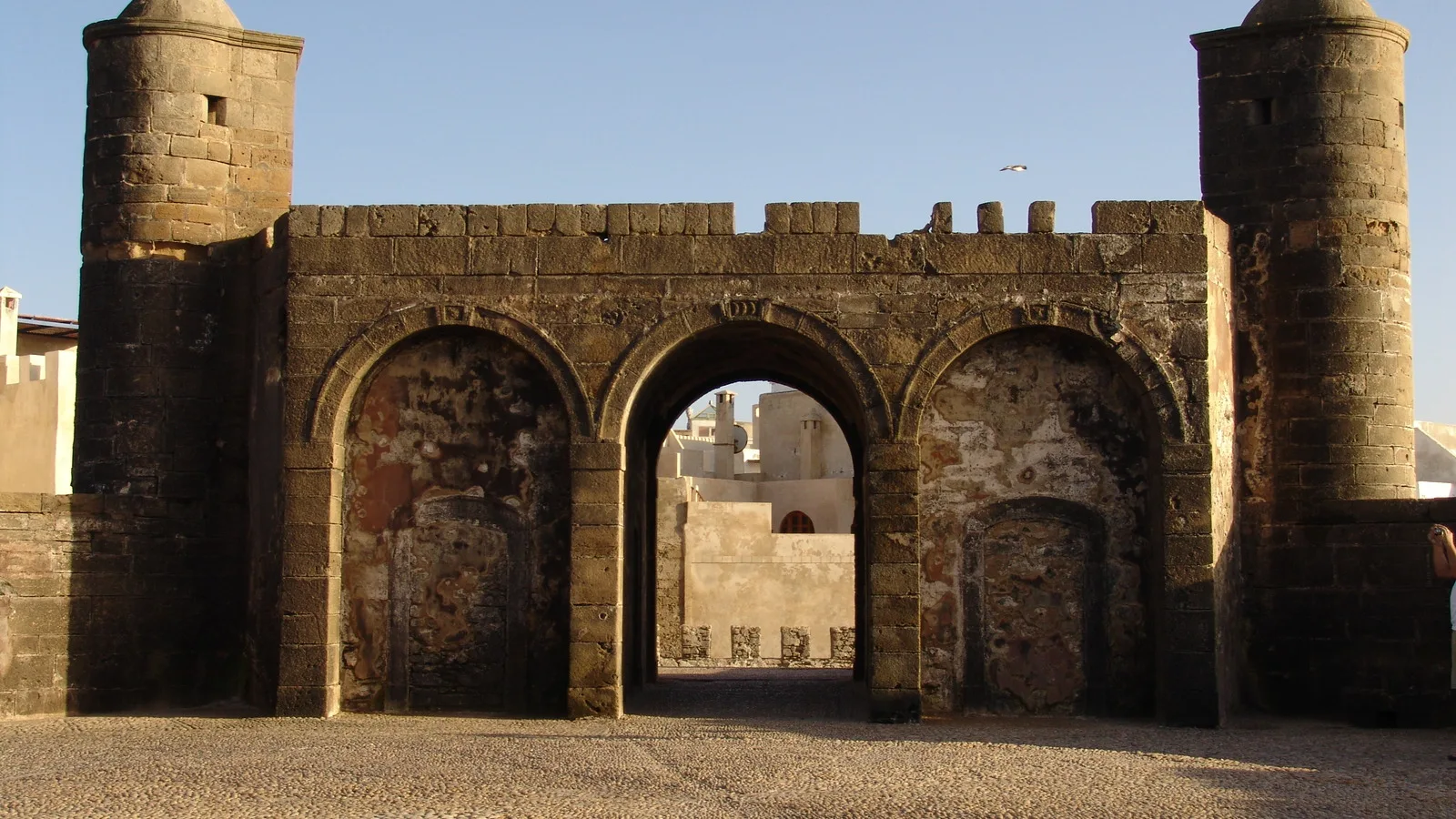
Credit Asina Aurea, CC BY-SA 4.0, via Wikimedia Commons
Essaouira is the youngest of Morocco's inscribed medinas and the one with the clearest brief. It was built to a plan, quickly, for a purpose, and it was inscribed in 2001 under criteria two and four as an outstanding example of a fortified seaport town of the mid eighteenth century.
Its earlier name, Mogador, comes from the Phoenician word Migdol, meaning a small fortress.
A European fortification in a North African town
The Alaouite sultan Sidi Mohamed Ben Abdallah, who reigned from 1757 to 1790, wanted a royal port and a commercial center open to the outside world. The town was laid out by a French architect who had been influenced by Vauban's work at Saint Malo, and the walls follow that model. Inside them the plan is Arab and Muslim, so the result is two traditions of town planning in one set of ramparts.
It is built of a local stone called manjour, and the fortifications and the urban fabric have kept their original configuration despite the sea and the damp.
Visiting
Essaouira is about two and a half to three hours from Marrakesh by road and is served by intercity coach.
- The Skala de la Ville, the sea bastion with its line of cannon, is the set piece and is free to walk.
- The medina is small and flat by Moroccan standards, which makes it the easiest of the four to navigate.
- The Mellah is in poor repair. Some of it is being restored and some of it is unsafe.
- The Mogador archipelago offshore is part of the inscribed property and is a bird reserve with restricted access.
- It is windy almost always. That is why it is a surfing town and why it is comfortable in high summer.
- The Gnawa festival fills the town each summer. Book far ahead or avoid that week deliberately.
Sources and references
- UNESCO World Heritage Centre: Medina of Essaouira
- UNESCO Intangible Cultural Heritage: Gnawa
- UNESCO World Heritage Centre: Morocco, States Parties
- Moroccan National Tourist Office
The Port of Timbuktu phrase, the named communities, the Mellah degradation, the manjour stone and the Vauban influence are all from the property's UNESCO page, read at source on 19 August 2026. Gnawa is inscribed separately on the Representative List.