Heritage
Medina of Fez: Visitor and Heritage Guide
Founded between 789 and 808 and inscribed in 1981, the Medina of Fez is a working city of some hundred thousand people, not an open air museum.
- Country Morocco
- Category Heritage
- Reviewed 19 August 2026
- Sources 4
- Length 2 min read
Credit Jerzystrzelecki, CC BY 3.0, via Wikimedia Commons
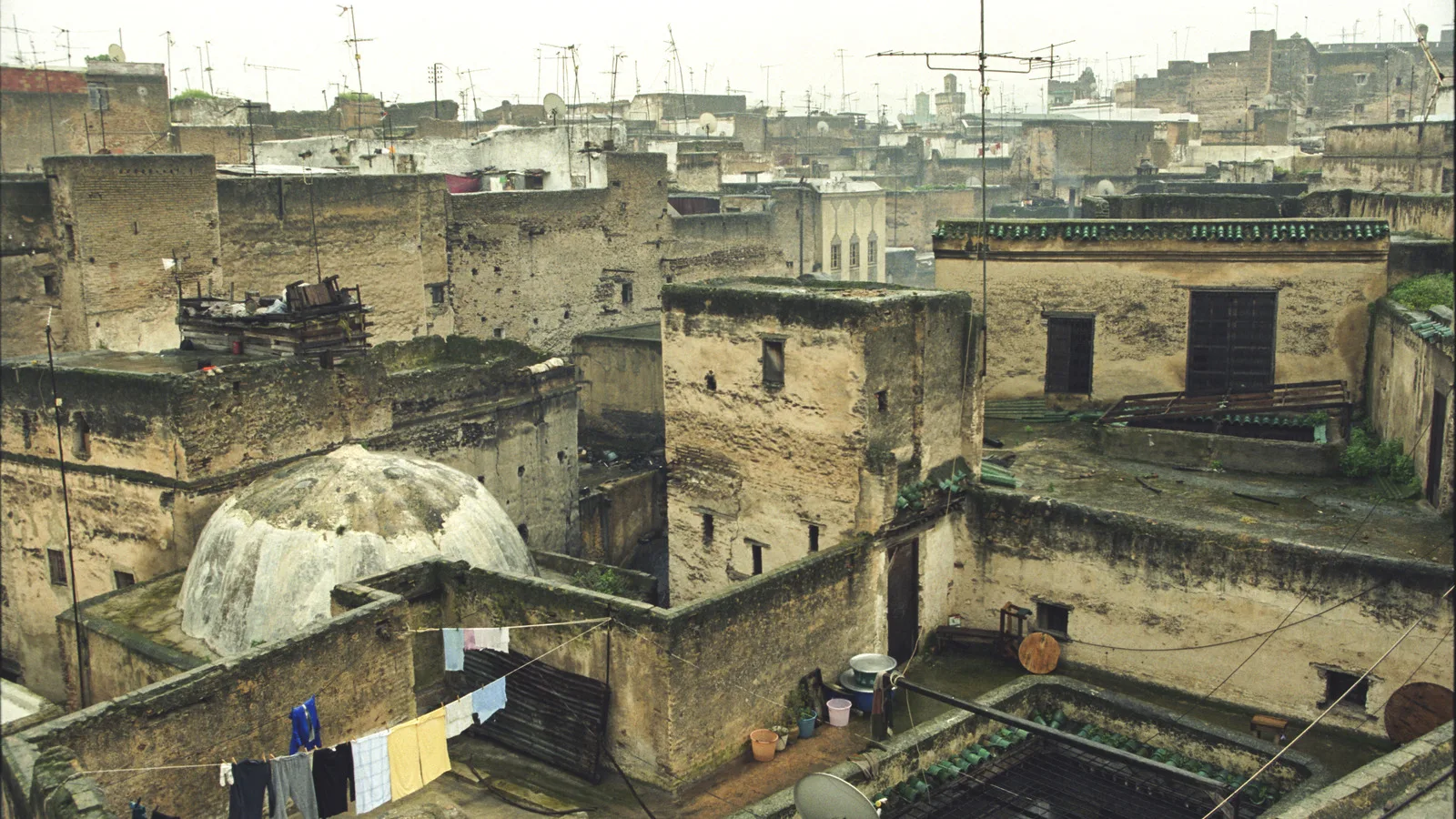
The Medina of Fez was inscribed in 1981 under criteria two and five, and it preserves the memory of a capital founded by the Idrisid dynasty between 789 and 808. What makes it extraordinary is not any single monument. It is that the whole urban fabric survived, and that people are still living in it.
Two towns that became one, and then two again
The original settlement was two fortified quarters facing each other across the Fez wadi: the bank of the Andalusians and the bank of the Kairouanese, named for where their people came from. In the eleventh century the Almoravids brought both inside a single rampart. Under the Almohads in the twelfth and thirteenth centuries the old town reached roughly the size it is now.
Then in 1276 the Merinids founded a second town beside it, Fez Jedid, holding the royal palace, the army headquarters, fortifications and residential quarters. UNESCO describes the two entities evolving in symbiosis, and the result as one of the largest Islamic metropolises of its era, carrying a variety of architectural forms and urban landscapes that took more than ten centuries to accumulate.
Visiting well
There is no vehicle access to most addresses, so luggage arrives by handcart or by mule. Book accommodation knowing that.
- Use a guide with an official badge and permission from the local authority. Unofficial guides are persistent here.
- Expect to get lost. That is the normal condition of Fes el Bali and it is not dangerous.
- Ask before photographing people, and particularly before photographing anyone working in the tanneries.
- Wear shoes that handle worn, uneven and sometimes wet stone.
- Non-Muslims cannot enter the working mosques, including the Qarawiyyin, though some doorways can be looked into.
- Go early. The lanes are quieter and the light in the courtyards is better.
Sources and references
- UNESCO World Heritage Centre: Medina of Fez
- UNESCO World Heritage Centre: Morocco, States Parties
- UK FCDO: Morocco travel advice
- Moroccan National Tourist Office
Inscription details, criteria and the conservation record are from the property's own UNESCO page, read at source on 19 August 2026. Guide licensing and local law are from the FCDO advice, updated 19 August 2026.