Heritage
Medina of Marrakesh: Visitor and Heritage Guide
Founded in 1070 and inscribed in 1985, Marrakesh gave the country its name. Its medina covers 700 hectares and its square is inscribed in its own right.
- Country Morocco
- Category Heritage
- Reviewed 19 August 2026
- Sources 4
- Length 2 min read
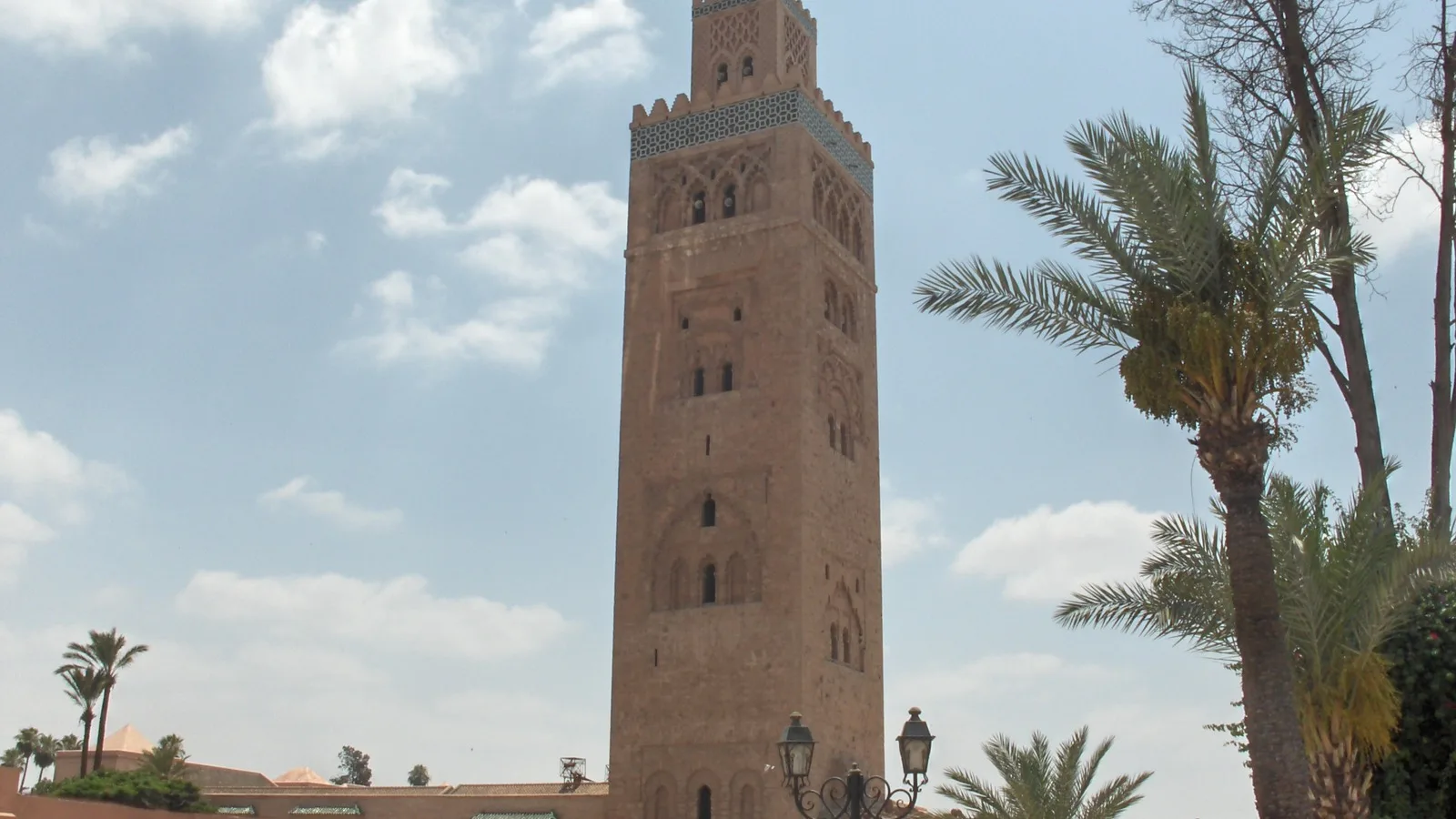
Credit aannaque, CC BY 3.0, via Wikimedia Commons
Marrakesh was founded between 1070 and 1072 by the Almoravids and became the capital of the Almohads, and for a long stretch it was the political, economic and cultural center of the western Muslim world, reaching into North Africa and Andalusia. The country takes its name from the city rather than the other way round. The medina was inscribed in 1985 under four criteria, one, two, four and five.
The monuments the inscription names
The Koutoubia mosque is the landmark and the symbol of the city, and UNESCO singles out its minaret, at 77 meters, as an essential monument of Muslim architecture. Around it the inscription lists the kasbah, the ramparts and their monumental gates, the gardens, and then a later layer: the ruins of the Badia Palace, the Ben Youssef madrasa, the Saadian tombs and the Bahia Palace.
The gardens are part of the inscription rather than an amenity beside it. The Agdal and Menara gardens and the Palmeraie are named, and the planting of the Palmeraie is attributed to the Almoravids, which makes it roughly as old as the city.
Practical notes
UNESCO also records uncontrolled alterations to upper floors and building materials as a threat to the medina's integrity, which is visible from any rooftop terrace.
- The medina covers roughly 700 hectares and the lanes are not a grid. Allow more time than the distance suggests.
- The Koutoubia interior is not open to non-Muslims. The minaret and the gardens around it are.
- Go to Jemaa el-Fna in the evening rather than at noon.
- Agree a price before a photograph with a performer or an animal, or decline.
- Bargaining is expected in the souks and is a conversation, not a contest.
- The khettaras, the underground drainage galleries that watered the city, are recorded by UNESCO as being abandoned. The Palmeraie is under pressure for the same reason.
Sources and references
- UNESCO World Heritage Centre: Medina of Marrakesh
- UNESCO Intangible Cultural Heritage: the cultural space of Jemaa el-Fna Square
- UNESCO World Heritage Centre: Morocco, States Parties
- Moroccan National Tourist Office
All inscription detail, including the minaret height and the 700 hectare figure, is from the property's UNESCO page read at source on 19 August 2026. The status of Jemaa el-Fna as intangible heritage is from its own entry on the Representative List.