Heritage
Mosi-oa-Tunya / Victoria Falls: Visitor and Heritage Guide
Zambia has exactly one World Heritage property and it is shared with Zimbabwe, which shapes what you see and where you have to stand.
- Country Zambia
- Category Heritage
- Reviewed 18 August 2026
- Sources 3
- Length 3 min read
Credit Matti Blume, CC BY-SA 4.0, via Wikimedia Commons
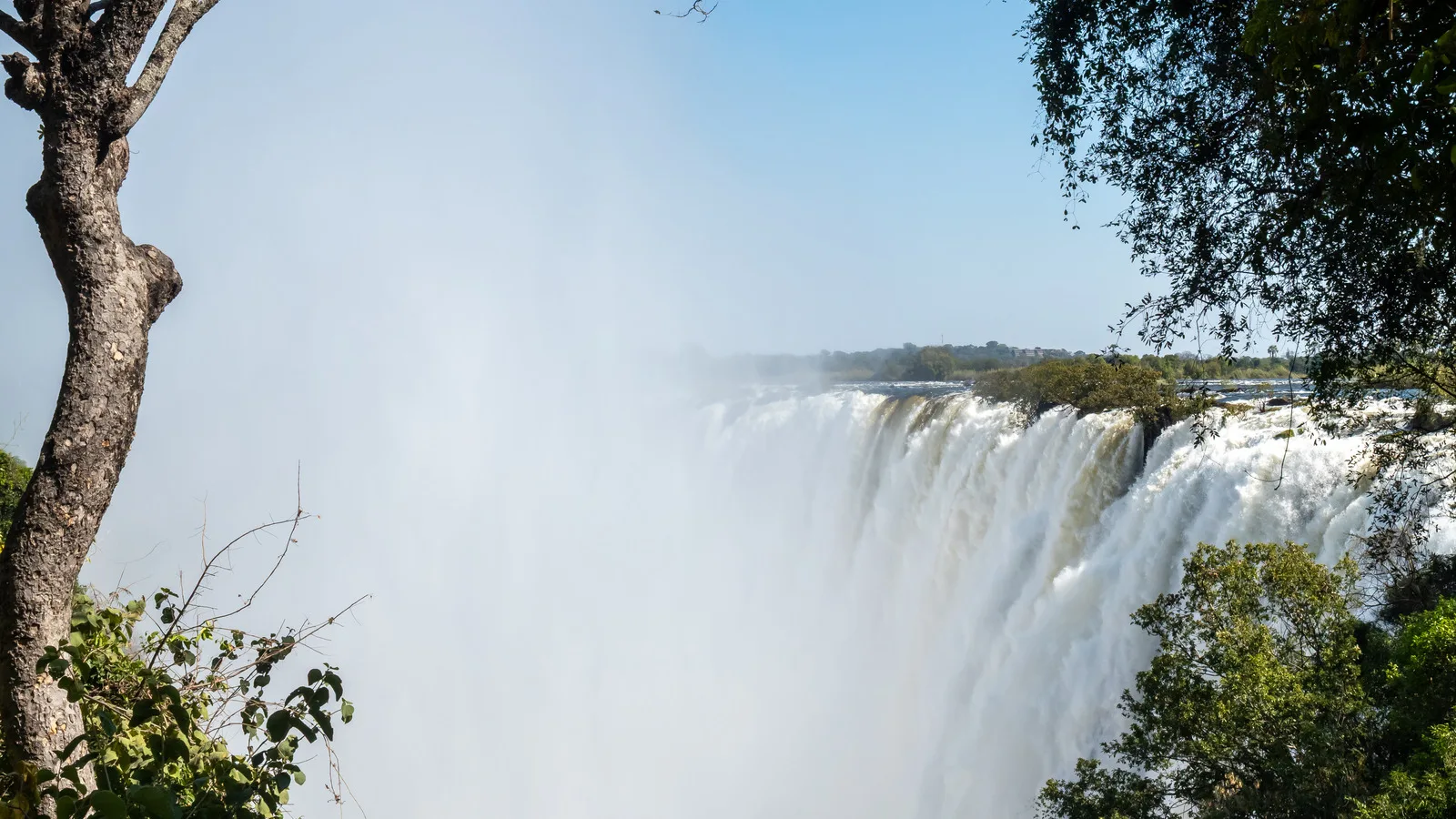
The falls have two names and both are correct. Mosi-oa-Tunya is the older one and the one this publication leads with. It is usually translated as the smoke that thunders, which is a description rather than a poetic flourish: the column of spray is visible from a long way off and the sound arrives before the water does.
What is inscribed, and what that means
Mosi-oa-Tunya / Victoria Falls was inscribed on the World Heritage List in 1989, in the natural category, as a property shared between Zambia and Zimbabwe. It is Zambia’s only inscribed World Heritage property. The country has fourteen further sites on its Tentative List, but on the List itself there is this one and nothing else.
Being transboundary is not an administrative detail. The gorge is the border, the inscription covers both sides, and the two countries manage their halves separately. UNESCO has published nineteen state of conservation reports on the property since 1979, the most recent in 2024, which tells you it is a site under active scrutiny rather than a settled one.
The Zambian side
The two sides show you different things and the choice is not a matter of national loyalty. Zimbabwe faces the main curtain and gives the broad view. Zambia puts you against it: the Knife Edge crossing takes you out to a point where the spray is weather rather than scenery, and the path down to the Boiling Pot brings you to the water at the bottom of the gorge.
In the high water months the Zambian viewpoints can be so drenched that you see almost nothing but white. In the low months the Zambian lip can dry to bare rock while the Zimbabwean side still runs. Anybody who tells you one side is simply better has not been in both seasons.
The water decides everything
The flood on this river peaks about three months after the heaviest rain, so the falls are at their most violent well after the rains have stopped, and at their thinnest at the end of the dry season. Livingstone Island and the pool at its edge are dry season propositions and are closed when the water is high, for the obvious reason.
Decide which falls you want to see before you book the month. Both are worth the trip. Neither is available all year.
Whose place this is
The land immediately around the falls on the Zambian side is Leya country, and the chieftaincy at Mukuni predates the town of Livingstone by a long way. The falls carried meaning here before they were named after a British queen by a Scottish missionary who was shown them by local guides.
Using the Zambian name is not a political gesture so much as an accurate one. It is also the name on the World Heritage inscription, which puts it first.
Planning a visit
- Decide whether you want volume or view, because the month decides which you get
- Expect to be soaked at the Knife Edge in the high water months, and dress for it
- Check whether Livingstone Island and the pool are open at your water level
- Consider the KAZA UNIVISA if you intend to see the Zimbabwean side too
- Treat adventure activities here as seriously as the safety advisories do
Sources
- UNESCO World Heritage Centre: Mosi-oa-Tunya / Victoria Falls, inscription 509
- UNESCO World Heritage Centre: Zambia, its inscribed property and its Tentative List
- UK FCDO: Zambia safety and security
Access to individual viewpoints, islands and pools depends on the water level and is decided locally on the day.