Heritage
Nyero Rock Art: Visitor and Heritage Guide
Geometric paintings in three rock shelters in eastern Uganda, whose age and makers are still disputed by the people who list them.
- Country Uganda
- Category Heritage
- Reviewed 18 August 2026
- Sources 1
- Length 2 min read
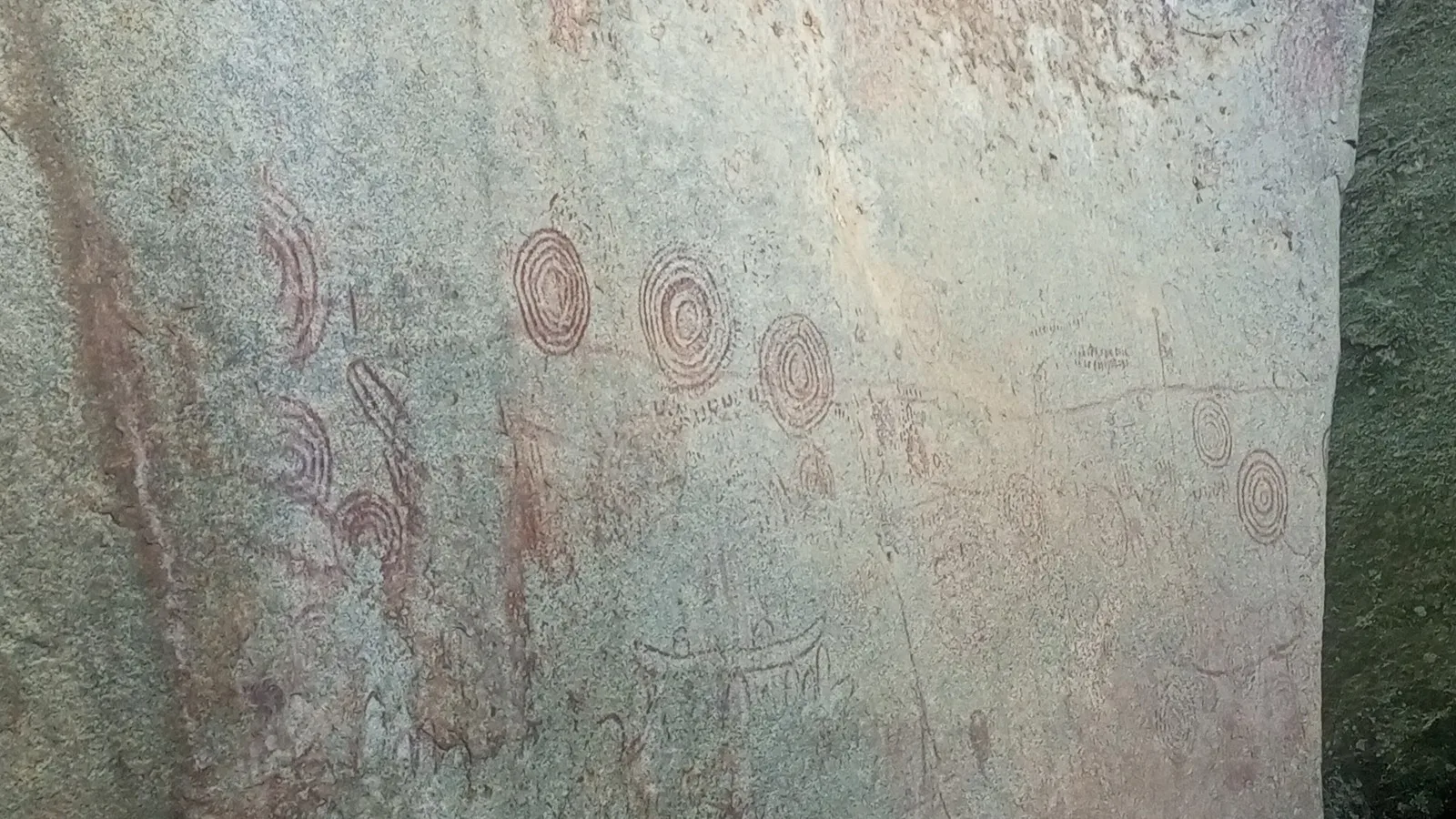
Credit Bonny.olobo, CC BY-SA 4.0, via Wikimedia Commons
Nyero is a set of rock shelters near Kumi in eastern Uganda, painted in red geometric forms: concentric circles, ovals, lines. It is one of the best known rock art sites in the country and one of the least resolved.
What is known, and what is not
Uganda placed Nyero on its World Heritage Tentative List in 1997, as part of a nomination covering "Nyero and other hunter-gatherer geometric rock art sites in eastern Uganda". The site is described there as three tiered rock shelters with paintings on their inner surfaces.
Then the entry says two things that do not sit together. Its title attributes the art to hunter-gatherers. Its description dates the site archaeologically to the Later Iron Age and states plainly that the makers of the paintings cannot be traced.
Both are printed here because the disagreement is real and it is in the primary source. Anyone who tells you confidently who painted Nyero and when is going beyond what the nomination itself claims.
A second, transboundary nomination covering geometric rock art across the Lake Victoria region of Kenya, Tanzania and Uganda was added to the Tentative List in 2024, which suggests the subject is being worked on rather than settled.
The shelters
There are three main shelters, conventionally numbered, set into granite outcrops in open country. The second is the largest and holds the best known panel; the others are smaller and require a short climb. The paintings are in red pigment and are geometric rather than figurative, which distinguishes them from the animal-rich rock art of southern Africa.
The site is managed by the Department of Museums and Monuments and there is a small site museum and local guides. Take one: the panels are not all obvious and the walk between shelters is not signposted.
Do not touch, and do not wet
Rock art anywhere is destroyed by two things, and both are done by visitors who mean well: touching the pigment, and pouring water on a panel to make it show up for a photograph. Water dissolves what has survived a thousand years of dry weather.
Nyero is also a place of local significance and the outcrops are used. Behave as a visitor to somewhere in use, not to an abandoned monument.
At Nyero
- Take a local guide from the site
- Never touch a painted surface
- Never wet a panel to improve a photograph
- Shoes with grip; the shelters need a short scramble
- Early morning or late afternoon light is better than midday
Sources and references
The Tentative List submission, its 1997 date, the description of the shelters and the statement that the makers cannot be traced are from the UNESCO Tentative List entry, read at source on 18 August 2026. The 1997 entry uses a word for the paintings that this page does not repeat.