Heritage
Pamplemousses Botanical Garden: Visitor and Heritage Guide
One of the oldest botanical gardens in the southern hemisphere, and the clearest surviving record of the plant economy that indenture was imported to serve.
- Country Mauritius
- Category Heritage
- Reviewed 19 August 2026
- Sources 4
- Length 2 min read
Credit B.navez, CC BY-SA 3.0, via Wikimedia Commons
The Sir Seewoosagur Ramgoolam Botanical Garden at Pamplemousses is not a World Heritage site and is not on Mauritius's Tentative List. It is here because it is where the economics of the island are written in plants, and because it is the most accessible major site in the country.
It is also one of the oldest botanical gardens in the southern hemisphere, which is a claim that is usually made about somewhere else and is true here.
A garden built to move crops
Colonial botanical gardens were not ornamental projects. They were the infrastructure of an economy: places to acclimatize, propagate and redistribute the plants an empire wanted grown somewhere else. Pamplemousses did that for the Indian Ocean, and sugar cane is the crop that mattered.
Understanding that is what turns a pleasant afternoon into a useful one. The estates that indentured laborers were shipped in to work grew a plant that had itself been shipped in. The garden is where that traffic was organized.
What people come to see
The giant water lilies are the photograph everybody takes, and they earn it: the pads are enormous and the flowers open white and turn pink over two nights. Beyond them are the palm avenues, the talipot palm that flowers once and dies, spice trees, ebony, and a great many labeled specimens that reward slowing down.
It is large. Two hours is a visit and half a day is not excessive.
If you go
This is the site to choose if anyone in your party has limited mobility. It is the best served on the island by a distance.
- It is at Pamplemousses in the north, easily reached from Port Louis.
- There is an entrance fee and a guide can be hired at the gate.
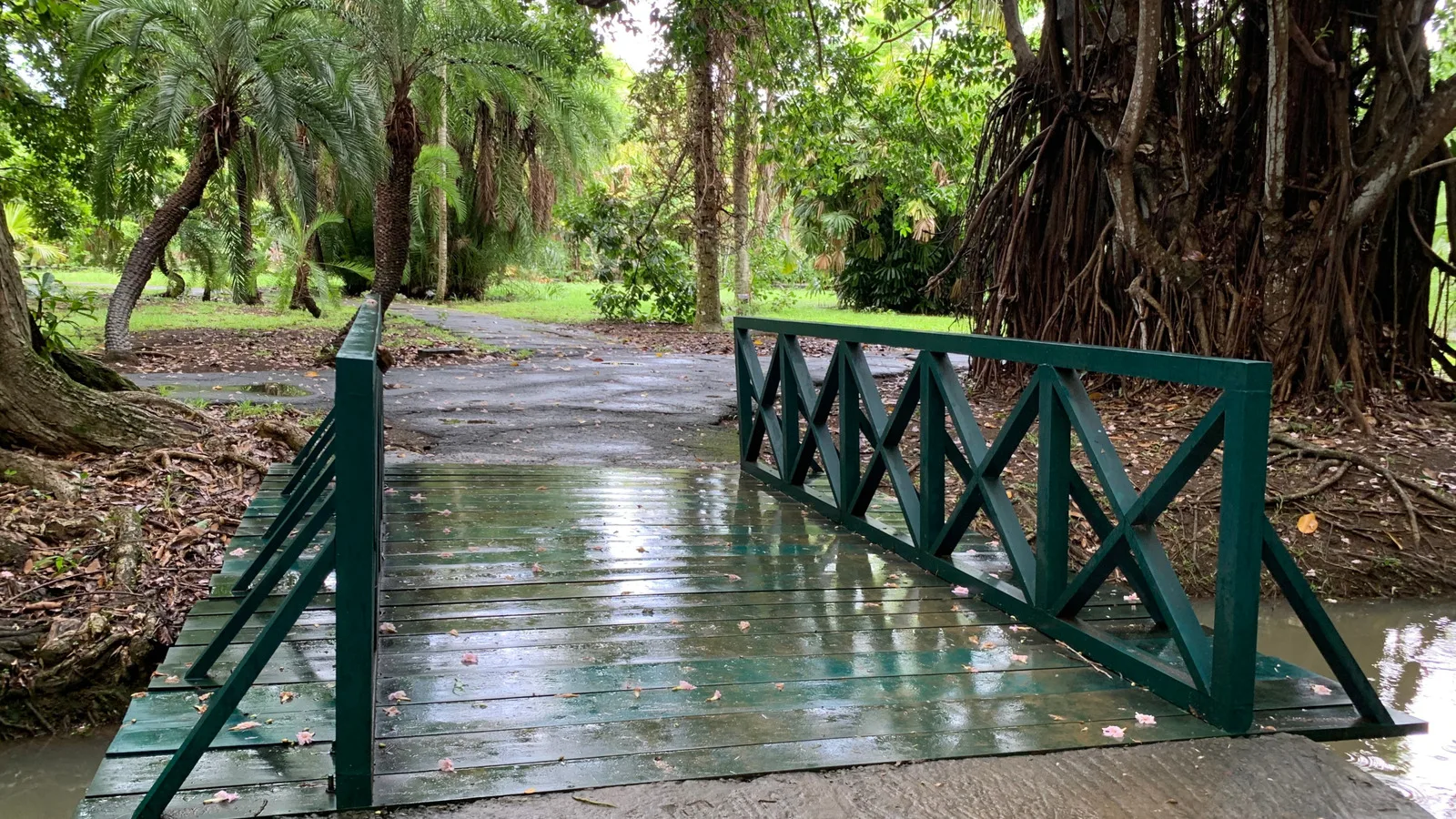
- Paths are paved and level, with railed footbridges over the water.
- Benches and shade are plentiful, which is not true of most sites here.
- Go early for the water lilies and the light.
- Allow two hours at least. It is bigger than it looks from the gate.
Reading it with the rest of the cluster
Aapravasi Ghat is where the workers arrived. Le Morne is where the people they replaced had escaped to. Ganga Talao is what the arrivals built once they stayed. Pamplemousses is the crop, and the crop is the reason for all of it.
Sources
- UNESCO World Heritage Centre: Aapravasi Ghat
- UNESCO World Heritage Centre: Mauritius
- Accessible travel in Mauritius
- Mauritius destination guide
Pamplemousses carries no UNESCO listing and none is claimed. The indenture context is documented on the UNESCO page for Aapravasi Ghat and in this site's own guides, and access guidance is set out in the Mauritius accessibility guide.