Heritage
Punic Town of Kerkuane: Visitor and Heritage Guide
The only known Punic city in the Mediterranean that Rome never built over. Abandoned in the third century BC and never reinhabited since.
- Country Tunisia
- Category Heritage
- Reviewed 20 August 2026
- Sources 4
- Length 2 min read
Credit Christian Manhart, CC BY-SA 3.0 igo, via Wikimedia Commons
Kerkuane is the most important archaeological site in Tunisia that most visitors have never heard of, and its significance rests on an absence. Everywhere else the Punic world is read through what Rome built on top of it. Here there is nothing on top of it.
What makes it unique
UNESCO states it plainly: contrary to what happened at Carthage, Tyre or Byblos, no Roman city was built over this Phoenician one. The town was abandoned around the middle of the third century BC and was never reinhabited, so its port, ramparts, residential districts, shops, workshops, streets, squares, temples and necropolis remain as they were.
It is the only known Punic city in the Mediterranean in that condition, which makes it a mine of information about how such a city was actually laid out: a pre-established general plan, wide and fairly straight streets in a checkerboard, and insulae filling the squares between them. The earliest evidence at the site goes back to the sixth century BC; what is visible dates from the end of the fourth and the first half of the third.
Visiting
Combining Kerkuane with Kelibia and the Cap Bon coast makes a full day out of Tunis or Hammamet.
- It is at the tip of Cap Bon, on a cliff above the sea, and needs a car or a taxi from Kelibia.
- The remains stand at ankle and knee height. This is a plan you walk rather than a monument you look up at.
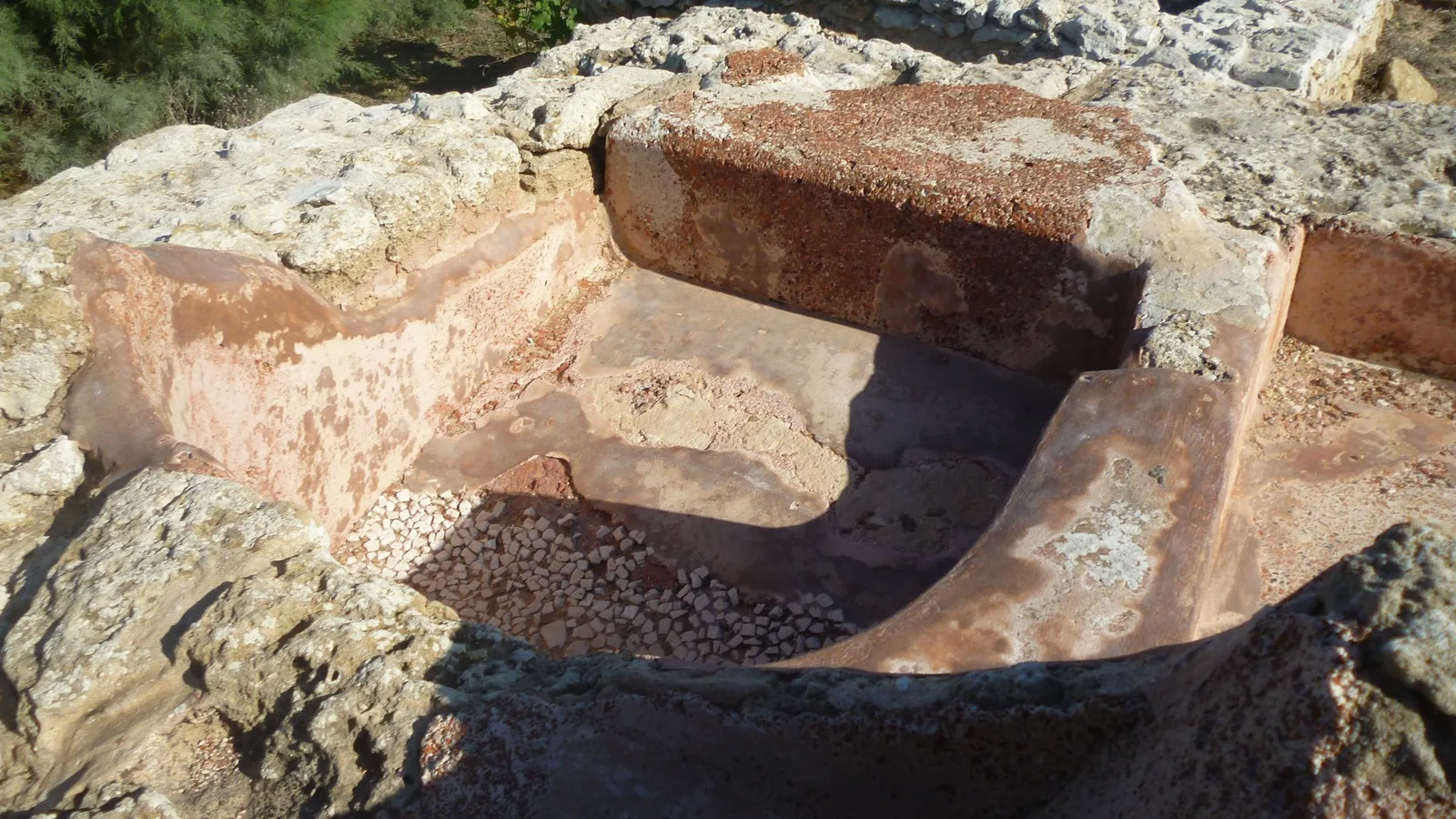
- The pink lined bathtubs cut into the stone are the detail everyone remembers.
- There is a small museum at the entrance.
- The necropolis is a separate short walk.
- Almost no shade, and a sea wind that disguises how strong the sun is.
Sources and references
- UNESCO World Heritage Centre: Punic Town of Kerkuane and its Necropolis
- UNESCO World Heritage Centre: Tunisia, States Parties
- Tunisian National Tourist Office
- UK FCDO: Tunisia travel advice
Everything here, including the 1952 discovery, the checkerboard plan and the necropolis of Arg el Ghazouani, is from the property's UNESCO page, read at source on 19 August 2026.