Heritage
Robben Island: Visitor and Heritage Guide
A quarantine station, a leper colony, a wartime garrison and finally a political prison, inscribed by UNESCO for what its last chapter came to mean.
- Country South Africa
- Category Heritage
- Reviewed 16 August 2026
- Sources 4
- Length 2 min read
Credit Paul Mannix, CC BY-SA 2.0, via Wikimedia Commons
Robben Island sits in Table Bay within clear sight of Cape Town, which was always the point of it. It has been used to hold people apart from the mainland for something like four centuries, and only the last chapter is widely known.
What UNESCO inscribed, and why
Robben Island was inscribed on the World Heritage List in 1999. UNESCO describes an island used at various times between the seventeenth and twentieth centuries as a prison, a hospital for people it describes as sequestered for being socially undesirable, and a military base.
It was inscribed under two criteria: that its buildings bear eloquent witness to a somber history, and that the island and its prison symbolize the triumph of the human spirit, of freedom and of democracy over oppression. That second criterion is the reason the site is on the list at all. The architecture is plain. The meaning is not.
The layers underneath the famous one
More than seven hundred buildings and sites are recorded on the island. Among what survives are quarries worked in the seventeenth century, the tomb of Hadije Kramat, who died in 1755 and whose shrine remains a place of pilgrimage, a nineteenth century village with a chapel and parsonage, a small lighthouse, and the lepers’ church, which is the only remaining trace of the leper colony the island once held.
There are also derelict Second World War military structures around the harbor. The maximum security prison that everybody comes for was begun in the nineteen sixties, which makes it the most recent significant thing on the island.
The visit
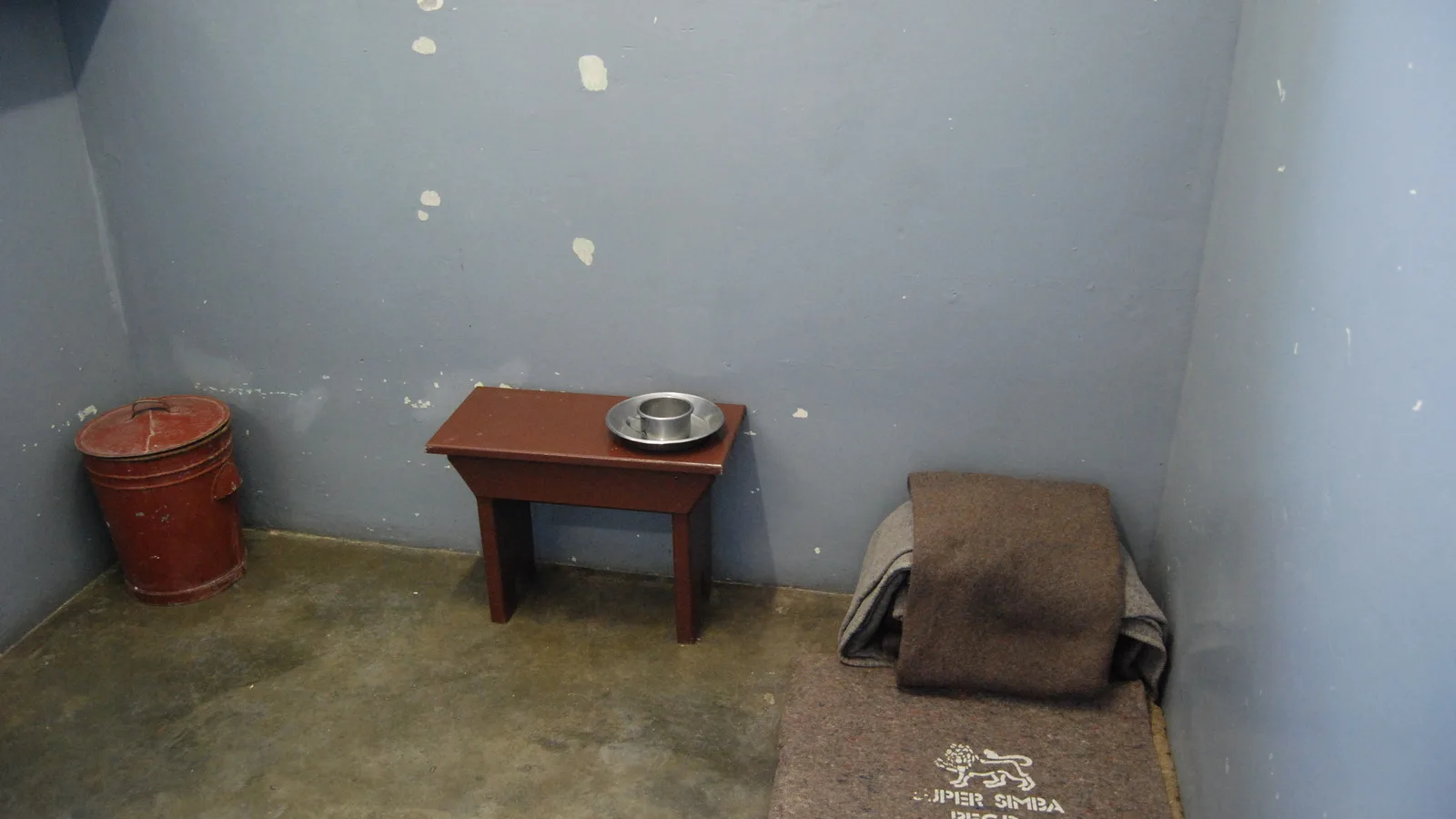
The island is reached by ferry from the V and A Waterfront and the round trip takes most of a day. Tours are led in part by former political prisoners, which is the single thing that distinguishes this from any other preserved prison, and the cell block section is usually the part people remember.
Sailings are weather dependent and are canceled outright when Table Bay is rough, which happens often enough that it should not be the last thing in your itinerary. Book well ahead through the museum, which is the custodian and the operator.
Before you go
Sailing times, ticketing and what is included change. The museum publishes the current position and is the only authority worth relying on for it.
- Book ahead through the Robben Island Museum rather than a reseller
- Allow most of a day, including the crossing in both directions
- Do not put it on your final day, because sailings are canceled in bad weather
- Take a warm and windproof layer whatever the weather is on the mainland
- The crossing is exposed and can be rough, so take something if you are prone to seasickness