Heritage
Selous Game Reserve: Visitor and Heritage Guide
Fifty thousand square kilometers of miombo woodland and sand rivers, and the only Tanzanian property currently in danger.
- Country Tanzania
- Category Heritage
- Reviewed 19 August 2026
- Sources 4
- Length 3 min read
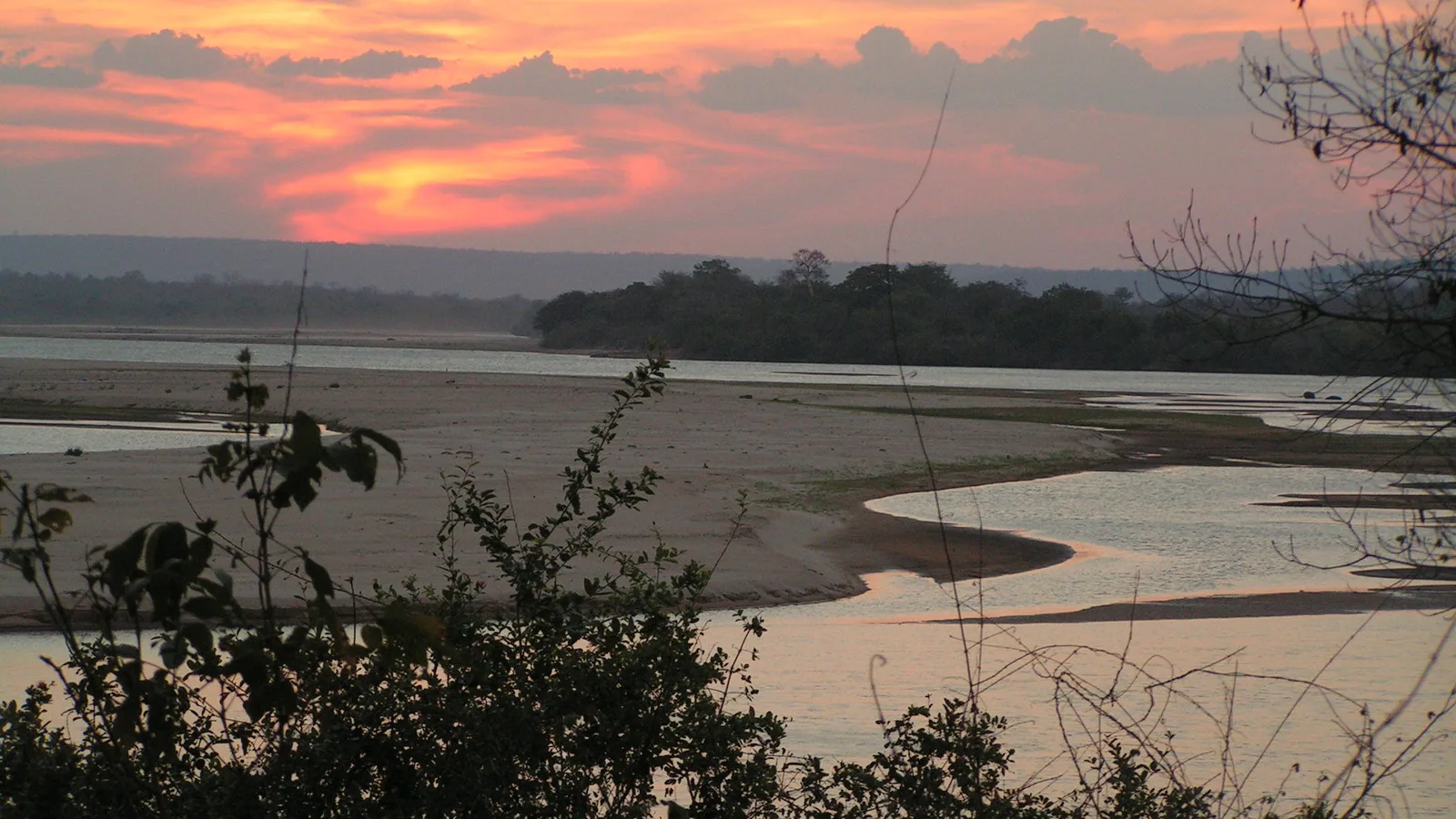
Credit Panii at German Wikipedia, CC BY-SA 3.0, via Wikimedia Commons
The Selous is the largest thing on this list and the least visited, and it is the only Tanzanian World Heritage property currently on the List of World Heritage in Danger. That is the reason to write about it.
The scale, and the sand rivers
The Selous Game Reserve covers 5,120,000 hectares, with a buffer zone of 21,492 hectares. It was inscribed in 1982 on criteria (ix) and (x), with a minor boundary modification in 2012. It is among the largest protected areas in Africa and has no permanent habitation inside its boundaries.
Its dominant vegetation is deciduous miombo woodland, and the inscription calls it a globally important example of that type. Because that vegetation is fire adapted, the soils erode heavily in rain, and the result is the property's signature: a network of normally dry rivers of sand that become raging torrents during the rains. Large parts of the northern reserve are seasonally flooded by the rising Rufiji River.
The reserve is functionally linked to the 42,000 square kilometer Niassa reserve across the border in Mozambique, and sits inside a wider Selous ecosystem of about 90,000 square kilometers.
The figures, and why they must be read as a date
The statement of Outstanding Universal Value records globally significant populations: 106,300 African elephant, 2,135 black rhinoceros, 18,200 hippopotamus and 204,015 buffalo, along with wild hunting dog, sable antelope, hartebeest, kudu, eland and wildebeest, more than 2,100 recorded plant species and 350 bird species.
Those are the numbers the inscription carries, and they are not a current census. The same document names control of poaching, in particular of elephants and black rhinoceros, as a key management issue, and the property has been on the Danger List since 2014. Anyone quoting the elephant figure as though it described the reserve today would be misleading you, and it is quoted here only so that the gap between it and the Danger listing is visible.
On the Danger List since 2014
The Selous was inscribed on the List of World Heritage in Danger in 2014 and remains on it. It is one of 58 properties worldwide currently listed and the only one in Tanzania.
UNESCO's own news record for the property is a sequence: concern over the state of conservation in February 2018; grave concern over planned dam construction within the property in December 2018; concern about an insufficient Strategic Environmental Assessment of the Rufiji Hydropower Project in December 2019; and, in April 2024, a note headed towards the removal of sites in East Africa from the Danger List.
The inscription itself, written before all of that, already flagged the risk in general terms: it names exploration and extraction of minerals, oil and gas, and large infrastructure plans as the most significant threats, and requires environmental impact assessments for development near the property.
What it is managed as
One fact about the Selous is rarely stated in travel writing and changes how the place reads. Only about 8 per cent of the property, in the north, is dedicated to photographic tourism. Most of it is managed as a hunting reserve.
That is in the inscription, in the section on protection and management requirements, along with the condition attached to it: that quotas be set and controlled scientifically, and that the income generated be made available for managing the reserve.
A visitor going to the northern sector is going to the eighth of it that was set aside for them, and is worth knowing that.
If you go
- The northern photographic sector is the part open to ordinary visitors.
- Access is by light aircraft or a long drive, and the rains change both.
- The sand rivers are the landscape, and they are dry for most of the year.
- Emergency access and evacuation from remote parks can be difficult.
- Use a licensed operator and confirm which sector your itinerary is actually in.
- Do not read the inscription population figures as a current count.
Sources and references
- UNESCO World Heritage Centre: Selous Game Reserve
- UNESCO: the List of World Heritage in Danger
- Ministry of Natural Resources and Tourism
- UK FCDO: Tanzania regional risks
The area, criteria, vegetation, species figures, management arrangements and threats are from the UNESCO inscription, and the Danger List year and the news sequence from the same page, read on 19 August 2026. The count of 58 listed properties is from the filtered List of World Heritage in Danger on the same day.