Food
Tanzania Food Guide
Ugali and mishkaki on the mainland, an island cuisine built by the Indian Ocean, and a plastic bag ban that changes how you carry it.
- Country Tanzania
- Category Food
- Reviewed 19 August 2026
- Sources 4
- Length 3 min read
Credit Sergei Andreichuk, CC BY-SA 4.0, via Wikimedia Commons
Tanzania has two food cultures that meet on the coast, and the difference between them is the difference between a continent and an ocean.
Ugali, and what it is for
Ugali is maize flour cooked with water into a firm, smooth, faintly elastic mass, eaten with the right hand. You pull off a piece, press a hollow into it with your thumb, and use it to lift stew, greens or fish.
It is not a side dish and it is not bland by accident. It is deliberately neutral, because its job is to carry the flavor of everything else on the plate. Judging it on its own is like judging bread by eating it without the meal.
Mishkaki, and the case for eating on the street
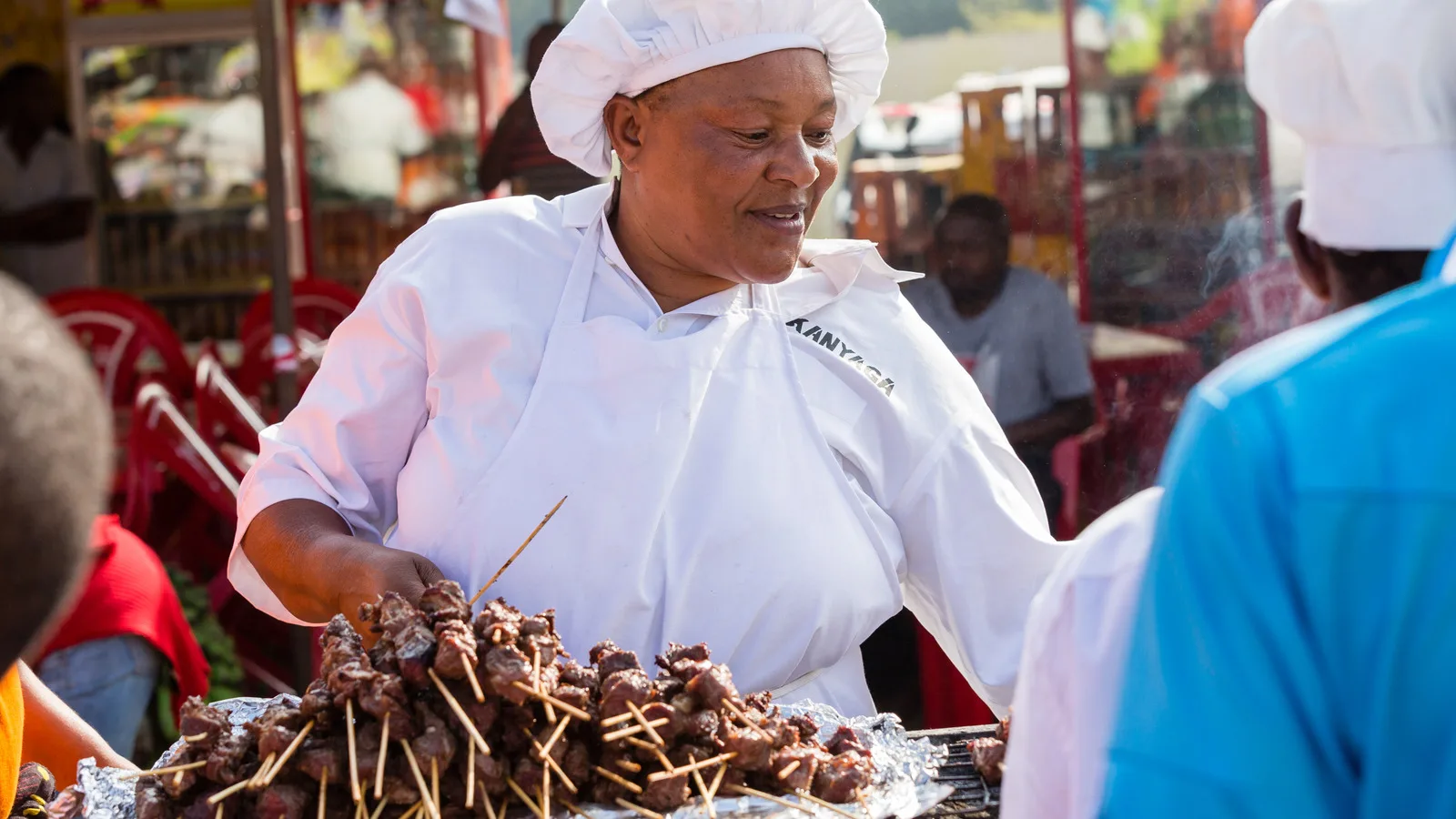
Mishkaki is marinated meat, usually beef or goat, cut small, threaded onto skewers and grilled over charcoal at the roadside in the evening. It is the country's most reliable street food and it is cooked in front of you at high heat, which is also the reasonable answer to the question everyone asks about street food.
The grills come out at dusk. In Dar es Salaam and along the coast they are the center of the evening rather than an accompaniment to it.
The islands were built by the trade, and so was the cooking
Zanzibar's food is the clearest surviving argument for what the Indian Ocean did to this coast. Cloves, cardamom, cinnamon, black pepper and nutmeg are not garnishes here; they are the structure of the dish.
UNESCO's inscription for Stone Town puts the reason plainly: for many centuries there was intense seaborne trading activity between Asia and Africa, and it is illustrated in an exceptional manner by the town's architecture and urban structure. The same sentence describes the kitchen. Pilau, biryani, coconut in almost everything, and the sweet spiced tea that follows a meal all arrive on the same ships as the carved doors.
Further south, the ruins at Kilwa Kisiwani record the earlier version of the same trade: gold and ivory from the interior exchanged for silver, carnelians, perfumes, Persian faience and Chinese porcelain between the 13th and 16th centuries.
What to look for
- Ugali with a stew or with fresh fish, eaten with your right hand.
- Mishkaki from a charcoal grill in the evening, cooked in front of you.
- Pilau and biryani on the coast and the islands, where the spice is the point.
- Chipsi mayai, the chip omelette, which is the country's great late night dish.
- Fresh coconut and tropical fruit from a stall rather than a buffet.
- Spiced tea after a meal in Zanzibar rather than coffee.
Two practical rules the kitchen does not set
The first is a plastic bag ban. Plastic bags are banned in Tanzania for environmental reasons and are collected from arriving air passengers. It changes how takeaway food is handed to you and it is a reason to carry a fabric bag rather than expect one.
The second is Ramadan. In Zanzibar and Pemba especially, avoid eating or drinking in public outside hotels and restaurants during the fasting month. The evening meal that breaks the fast is one of the best things to eat in the country, and you will be welcome at it.
Sources and references
- UNESCO World Heritage Centre: Stone Town of Zanzibar
- UNESCO World Heritage Centre: Ruins of Kilwa Kisiwani and Ruins of Songo Mnara
- UK FCDO: Tanzania safety and security
- Tanzania Tourist Board
The trade history is from the UNESCO inscriptions for Stone Town and for Kilwa Kisiwani and Songo Mnara. The plastic bag ban and the Ramadan guidance are from the UK FCDO advisory.