Events and Festivals
Tanzania Festivals and Celebrations
Ngoma, taarab and a film festival named for the dhow country circuit, in a nation with no intangible heritage inscriptions at all.
- Country Tanzania
- Category Events and Festivals
- Reviewed 19 August 2026
- Sources 4
- Length 3 min read
Credit Frank, CC BY-SA 4.0, via Wikimedia Commons
Start with the absence, because it changes how you read everything that follows.
Nothing here is UNESCO listed, and that is not what it sounds like
Tanzania has zero elements inscribed on any of UNESCO's intangible cultural heritage lists. Its neighbors have seven between them. This publication checked that twice, from the same source and by the same method that found Rwanda's single element and Uganda's six, because a zero is worth nothing until you know the tool can find a one.
What it measures is nomination, not vitality. Every form on this page is alive, performed and unlisted, and you will meet several of them without buying a ticket.
Ngoma is the word, and it means more than one thing
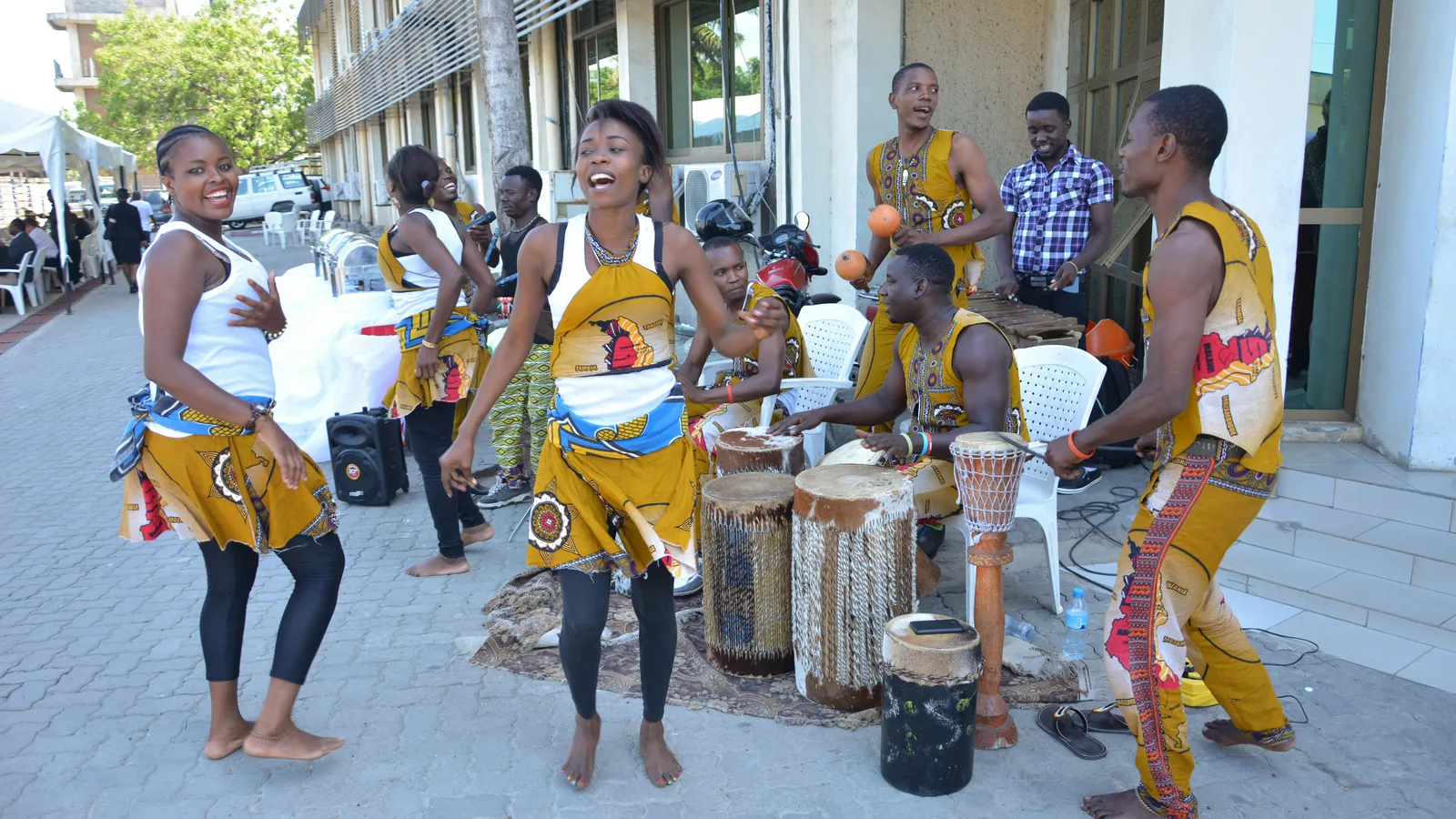
Ngoma means drum, and it also means the dance, and it also means the whole occasion: the drumming, the dancing and the gathering are not separable and there is no reason for the language to separate them.
Ngoma are regional and there are a very large number of them. They mark initiation, marriage, harvest, mourning and welcome, and the same troupe will perform on a city pavement for passers by and at a family occasion where an outsider would not be expected.
What a visitor usually meets is a performance, and there is nothing false about that. A performance for guests is one of the things ngoma has always been.
Taarab, the sound of the ocean rather than the interior
Taarab is the music of the Swahili coast and of Zanzibar in particular: sung poetry in Kiswahili over an orchestra whose instruments arrived from Egypt, the Gulf and India, and whose form owes as much to Cairo as to anywhere on this coast.
It is a music of allusion. A taarab lyric is frequently a message aimed at somebody in the room, and the audience knows who. That is the part a visitor cannot hear and is worth knowing is happening.
The Festival of the Dhow Countries
The Zanzibar International Film Festival is also known as the Festival of the Dhow Countries, and the second name is the more interesting one.
A dhow country is anywhere the monsoon sailing routes reached: the Swahili coast, the Gulf, the Horn, western India, the islands. Naming a film festival after that circuit rather than after a nation is a specific claim about where Zanzibar belongs, and it is the same claim the carved doors and the spice trade make.
Finding something real
- Ask your hotel or guide what is on this week rather than searching for an annual festival.
- Look for ngoma at the Old Fort in Stone Town and on the streets of Dar es Salaam in the evening.
- Check the film festival's own program rather than a third party listing.
- Expect dates to move: several fall against the lunar calendar and shift each year.
- Ask before photographing performers, and accept no as an answer.
- Pay the musicians rather than only the person who introduced you to them.
The calendar has a lunar half
A significant part of the Tanzanian year runs on the Islamic calendar, which moves against the solar one. Ramadan and the celebrations that end it fall roughly eleven days earlier each year, so the festival you read about in an old guide is not in that month any more.
This is the single most common error in festival writing about the region, and it is why this page names organizers rather than dates.
Sources and references
- UNESCO Intangible Cultural Heritage: United Republic of Tanzania
- Zanzibar International Film Festival, the Festival of the Dhow Countries
- UK FCDO: Tanzania safety and security
- UNESCO World Heritage Centre: Stone Town of Zanzibar
The intangible heritage count is from UNESCO's own state page for Tanzania, checked against Rwanda and Uganda on the same run. The festival's alternative name is from its own site. Ramadan guidance is from the UK FCDO advisory.