Heritage
Tsodilo: Visitor and Heritage Guide
Four thousand five hundred paintings in ten square kilometers of Kalahari, and the people who live beside them still treat it as a place of worship.
- Country Botswana
- Category Heritage
- Reviewed 18 August 2026
- Sources 3
- Length 2 min read
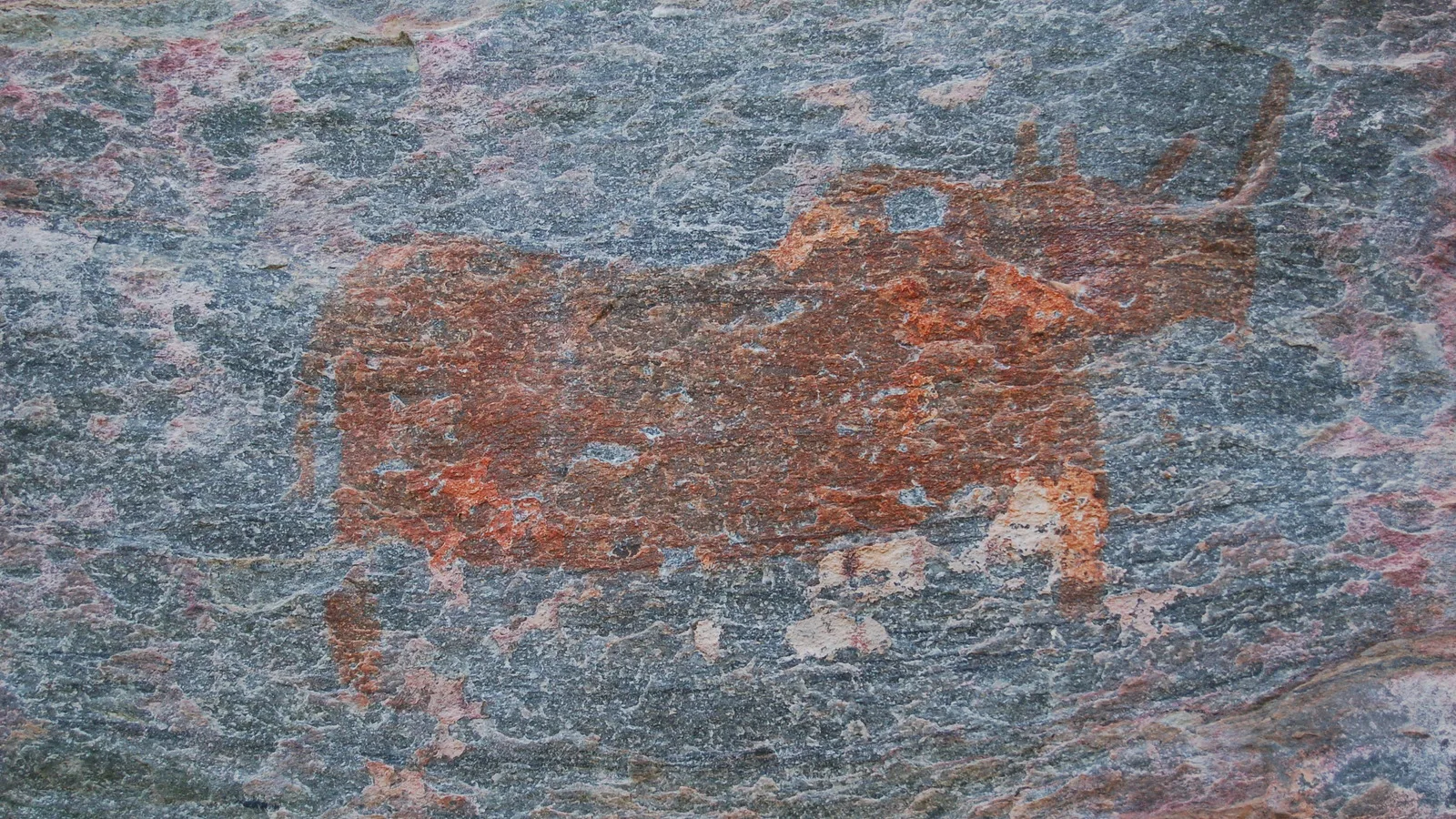
Credit Joachim Huber, CC BY-SA 2.0, via Wikimedia Commons
Tsodilo has been called the Louvre of the Desert, and for once the comparison understates the case. A major museum holds work gathered from everywhere. Tsodilo holds work made in one place, over an almost incomprehensible stretch of time, by people whose descendants still live there.
What is inscribed
Tsodilo was inscribed on the World Heritage List in 2001, in the cultural category. It is Botswana’s only cultural World Heritage property; the Okavango Delta, inscribed in 2014, is natural.
Over 4,500 paintings are preserved in an area of only ten square kilometers. The archaeological record gives a chronological account of human activity and environmental change over at least 100,000 years. Read that number again: it is not the age of the paintings, it is the depth of the occupation record beneath them.
The place itself
The hills are quartzite, rising abruptly out of the Kalahari in the north west of the country near the Namibian border. UNESCO describes them rising from ancient sand dunes to the east and a dry fossil lake bed to the west, which tells you something about how much this landscape has changed underneath the people recording it.
There are four hills, known locally as the Male, the Female, the Child, and a fourth that is unnamed. That naming is not decorative: it is part of how the site is understood by the people who use it.
It is not an archaeological site, it is a place of worship
UNESCO’s own description is unambiguous: local communities in this hostile environment respect Tsodilo as a place of worship frequented by ancestral spirits. The inscription covers archaeology, rock art and continuing traditions.
The Ju/’hoansi San and the Hambukushu both live at the hills and both have relationships with them. What that means for a visitor is straightforward: this is somebody’s church, and it is being visited rather than toured. Take a guide from the community, follow what you are told about where to walk and what to photograph, and do not touch the paintings. Skin oils are the reason a painting that survived a hundred generations does not survive a hundred visitors.
Getting there
Tsodilo is remote, in the north west of the country, and it is a long way from the delta circuit that most itineraries follow. It is reached by road, and the last stretch is sand. Ask locally about conditions rather than assuming, particularly in the rains.
Almost nobody comes here compared with the numbers that reach the Okavango, which is both the reason to go and the reason to arrive prepared.
Visiting Tsodilo
- Take a guide from the community rather than arriving alone
- Never touch a painting, for the reason above
- Ask what may be photographed before photographing it
- Treat the hills as a place of worship, because that is what they are
- Ask locally about the road, especially between November and March
Sources
- UNESCO World Heritage Centre: Tsodilo, inscription 1021
- UNESCO World Heritage Centre: Botswana, its inscribed properties and its Tentative List
- Botswana Tourism Organisation: the national tourism authority
The figures and the description of continuing traditions are taken from the World Heritage Centre’s own record of the inscription.