Heritage
Volcanoes National Park: Visitor and Heritage Guide
Five volcanoes, the mountain gorillas, and a cave system inside the park that carries a health warning most itineraries omit.
- Country Rwanda
- Category Heritage
- Reviewed 18 August 2026
- Sources 4
- Length 3 min read
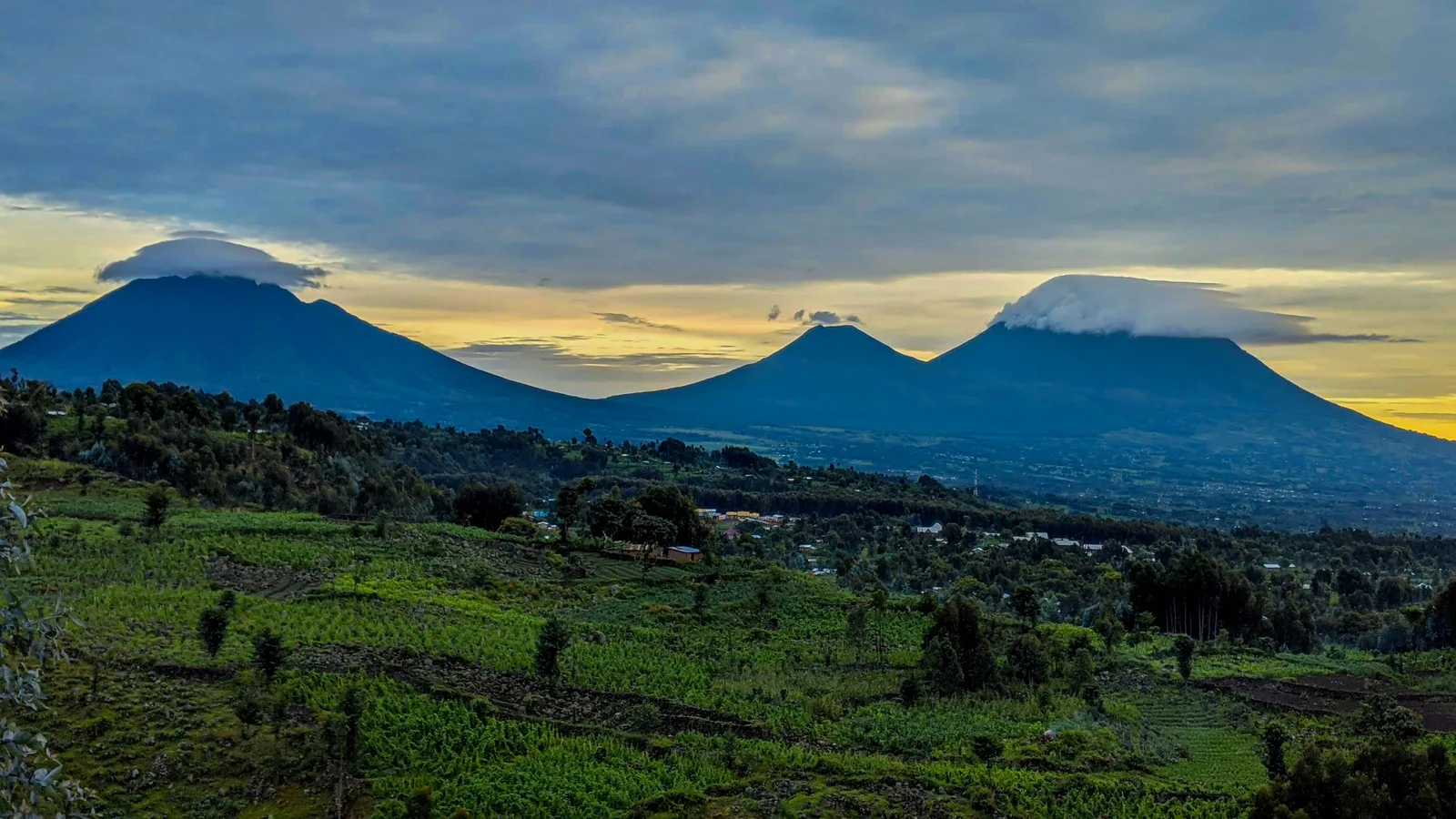
Credit Adygrafix250, CC BY 4.0, via Wikimedia Commons
Volcanoes National Park is not on the World Heritage List and is the best known place in Rwanda. It protects the Rwandan slopes of the Virunga massif, a chain of dormant volcanoes shared with Uganda and the Democratic Republic of the Congo.
The mountains
The park is named for the chain it sits on. Visit Rwanda names five: Karisimbi, the highest at 4,507 meters, Bisoke with its crater lake, Sabinyo, Gahinga and Muhabura.
The habitat is a mosaic rather than a single forest: evergreen and bamboo forest, open grassland, swamp and heath, stacked by altitude. Dian Fossey described the Virungas as great old volcanoes so high up that you shiver more than you sweat, which remains the most useful single sentence anyone has written about packing for them.
The gorillas, and what a permit buys
The mountain gorillas are why the park exists in its present form and why it is expensive to visit. Permit numbers are deliberately limited and the price is the instrument that keeps daily visitor numbers low. Tracking is a walk of unpredictable length on steep, wet, off path ground at altitude, and the animals decide where the day goes.
Golden monkey tracking is the other primate activity and is cheaper, lower and much less strenuous. Around 200 bird species have been recorded.
What the price also buys, and what is easy to miss, is habituation. A group that can be visited has been approached daily for years by people whose job that is. The calm you encounter is worked for, and describing it as untouched erases the work.
Musanze Caves, and the warning that belongs with them
Inside the park boundaries are Buhanga Eco Park, an ancient forest attached to a body of Rwandan folklore, and the Musanze Caves, formed after the last estimated volcanic eruption. The caves are a normal item on a Rwandan itinerary.
They deserve to be read alongside a separate document. Rwanda declared the end of a Marburg virus disease outbreak in December 2024; it had begun that September and was linked to contact with fruit bats in a mine near Kigali. Because the virus can persist, the standing FCDO advice is that anyone visiting or working in caves inhabited by fruit bat colonies should wear gloves, protective clothing and a face mask.
Those two facts come from different places and are rarely put together. They belong together.
Where the park is
The park is in the far northwest, on the border with the DRC and close to Uganda. The FCDO advises against all but essential travel to parts of the districts along that border and notes that gorilla and chimpanzee trekking near it needs checking against current advice. Artillery fire from the DRC has reached Rwandan territory in the Musanze District in the past.
None of that means the park is closed or that visiting is reckless. It means the itinerary should be discussed with an operator who is following the situation, and that a plan which crosses into the DRC has an entirely separate set of problems, including a border measure that can deny you re entry to Rwanda.
Practical
- Permits in advance, through the Rwanda Development Board or an operator
- Layers for genuine cold at altitude, and gloves for grabbing vegetation
- Boots already broken in, and gaiters for wet ground
- Gloves, covering and a mask for any cave with a bat colony
- Current advisory for the border districts, checked close to travel
- Golden monkeys as the lower and easier primate alternative
Sources and references
- Visit Rwanda: Volcanoes National Park
- UK FCDO: Rwanda safety and security
- UK FCDO: Rwanda health advice
- Rwanda Development Board: parks, permits and tourism
The mountains, their heights and the features inside the park are from Visit Rwanda, the national tourism site. The border advice and the Marburg guidance are from the UK FCDO. All were read at source on 18 August 2026. Permit prices and conditions are set by the Rwanda Development Board and change.