Culture
Rwanda Culture and Etiquette Guide
Language, greetings, the words used for what happened here, and several rules that carry a legal penalty rather than a raised eyebrow.
- Country Rwanda
- Category Culture
- Reviewed 18 August 2026
- Sources 4
- Length 3 min read
Credit Shabanmasengesho, CC BY-SA 4.0, via Wikimedia Commons
Rwanda is an easy country to behave well in and an easy one to be clumsy in, because several of its conventions are matters of law or of national memory rather than of manners.
Language
Kinyarwanda is the national language and is spoken by essentially everyone, which is unusual in the region and is a large part of why national identity is framed the way it is. English, French and Kiswahili are also official, and English is the language of schooling.
A visitor gets a long way in English in Kigali and around the parks. A handful of Kinyarwanda words gets you further than the equivalent effort would almost anywhere: muraho for hello, murakoze for thank you, yego and oya for yes and no. Greetings are not perfunctory here. Ask how someone is and wait for the answer before starting on business.
The words for what happened
The term in current official and United Nations usage is the genocide against the Tutsi. It is worth using. The older phrase "the Rwandan genocide" is heard less and reads as dated or evasive to many Rwandans, because it describes a country rather than naming who was killed and who did the killing.
You will meet the subject whether or not you seek it out; it is present in the landscape, the calendar and ordinary conversation. Rwandans differ enormously in how much they wish to discuss it. Follow rather than lead, do not ask people which group they belong to, and understand that the official framing of national unity is itself argued about, inside the country as well as outside it.
Rules that carry a penalty
It is illegal to photograph some government buildings, and flying a drone over a prohibited area without a permit risks imprisonment or a heavy fine. Some off limits military zones in Kigali are neither lit nor signposted.
Plastic bags are banned and are confiscated on arrival. Penalties for illegal drugs, cannabis included, are severe.
None of these is obscure locally. They are simply the sort of thing that a visitor assumes is a guideline and is not.
Dress, photographs of people, and Umuganda
Dress is fairly conservative and neat, and Rwandans present themselves carefully; scruffy travel clothing stands out more here than in most of the region. Ask before photographing anybody, and accept a refusal without negotiating.
Umuganda, the monthly morning of community work, is something visitors are sometimes invited to join. If you are invited, go. It is the single best way to spend three hours understanding how the country organizes itself, and it is not a performance staged for guests.
Intore, and what a dance is for
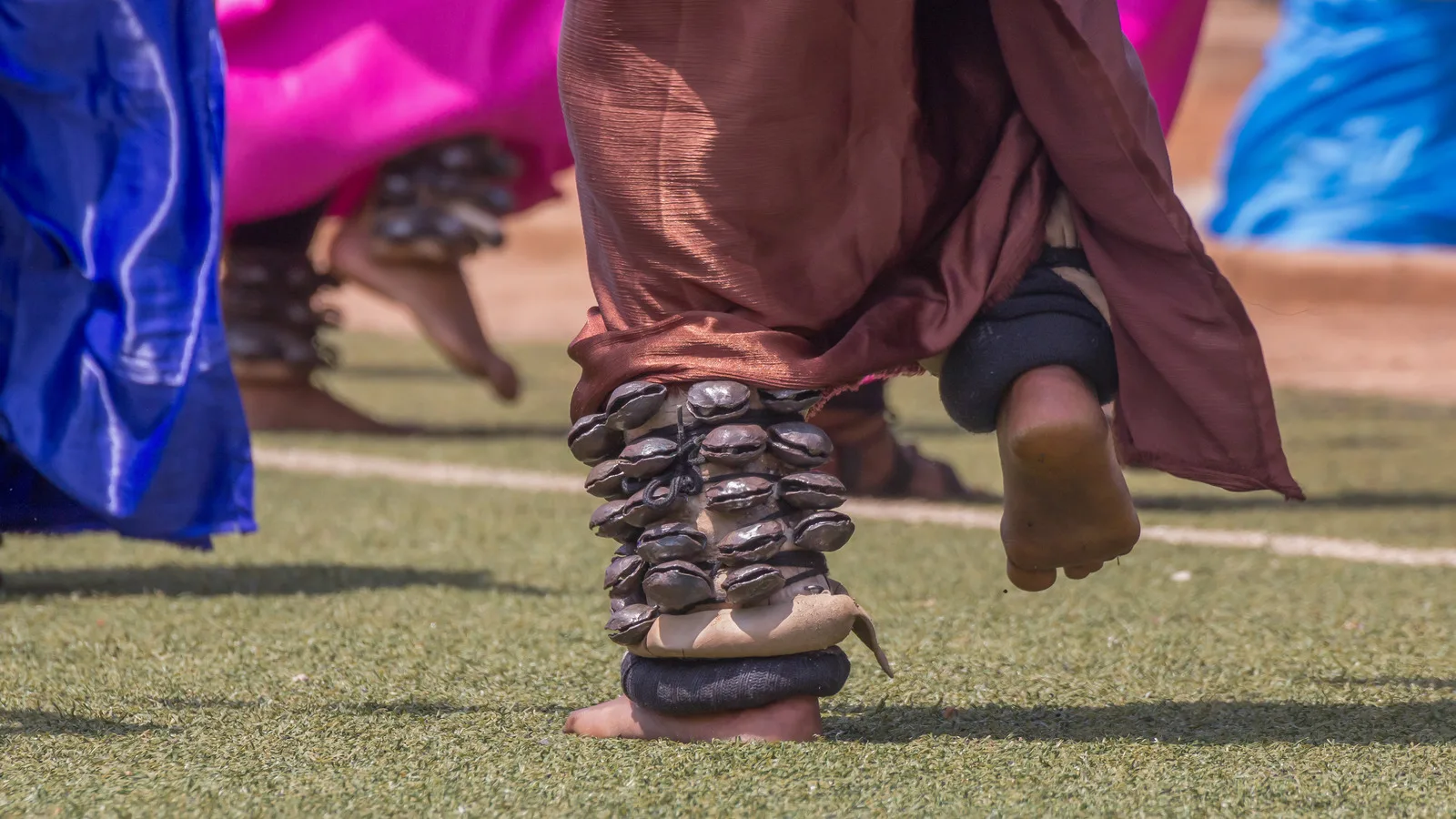
Intore is the martial dance tradition of the royal court, performed by dancers in headdresses with rows of seed pod bells at the ankle, and it is now inscribed on UNESCO's Representative List of the Intangible Cultural Heritage of Humanity. It is Rwanda's only inscribed element.
You will most likely see it as a performance at a lodge or a cultural village. That is a legitimate form of it and the dancers are professionals. It is worth knowing that the tradition is not folklore assembled for visitors: it has a court, a history and a formal training, and the ankle bells are an instrument rather than a costume.
In practice
- Greet properly and wait for the reply
- Say the genocide against the Tutsi; follow rather than lead the subject
- Do not ask anyone which group they belong to
- No photographs of government buildings; no drone without a permit
- No plastic bags, at all
- Ask before photographing people, and accept no
- Say yes if you are invited to Umuganda
Sources and references
- UK FCDO: Rwanda safety and security
- UNESCO Intangible Cultural Heritage: Intore
- UNESCO Intangible Cultural Heritage: Rwanda
- UNESCO World Heritage Centre: Memorial sites of the Genocide: Nyamata, Murambi, Gisozi and Bisesero
The legal points above are drawn from the UK FCDO advice for Rwanda, read at source on 18 August 2026, and the Intore inscription from the UNESCO intangible heritage register. Laws and enforcement change.