Heritage
Volubilis: Visitor and Heritage Guide
A 42 hectare Roman town on the edge of the empire, inscribed in 1997, that was an Amazigh capital first and an Idrisid one last.
- Country Morocco
- Category Heritage
- Reviewed 19 August 2026
- Sources 4
- Length 2 min read
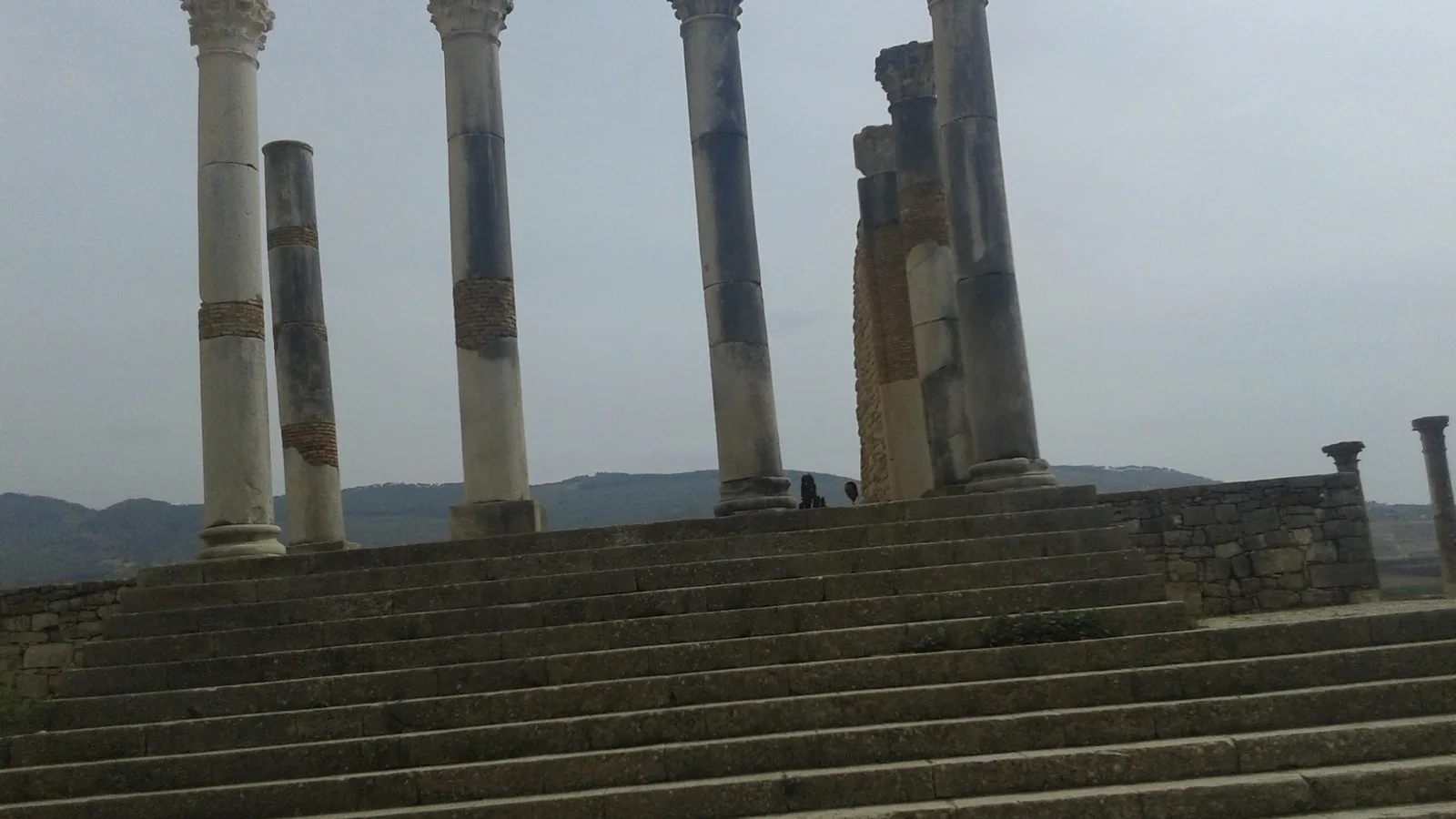
Credit Saida lemcharrea, CC BY-SA 4.0, via Wikimedia Commons
Volubilis sits on a commanding site at the foot of the Jebel Zerhoun, covers 42 hectares, and was inscribed in 1997 under four criteria: two, three, four and six. It is one of the richest sites of its period in North Africa, and not only for its ruins. Its epigraphic record, the hundreds of inscriptions found there, is part of why it matters.
Ten centuries, not one
The easy description is a Roman town, and it is incomplete. UNESCO records all the phases of ten centuries of occupation, from prehistory to the Islamic period. Before it was Roman it was part of an independent Mauritanian kingdom. Under Rome it was the metropolis of the province of Mauritania Tingitana, and the rampart that marks the limit of the site was built in 168 to 169 AD. After Rome came a period the inscription calls the dark ages, with a Christian era toward the end of it.
Then, briefly, it was the capital of the Idrisid dynasty, the family that founded Fez. The town of Moulay Idriss Zerhoun next door holds the founder's tomb and is the object of an annual pilgrimage.
Visiting
The site is open air and exposed, and the walk around it is longer than the 42 hectare figure suggests.
- The mosaics are in situ and uncovered. Stay on the paths and off the floors.
- There is almost no shade on the site. Go early or late, and take water.
- The triumphal arch, the basilica and the Capitol are the standing set pieces.
- Moulay Idriss Zerhoun, a few kilometers away, is a working pilgrimage town and should be visited as one.
- It is an easy half day from Meknes and a long day trip from Fez.
- Bronze and marble statuary from the site is in the archaeological museum in Rabat rather than on site.
Sources and references
- UNESCO World Heritage Centre: Archaeological Site of Volubilis
- UNESCO World Heritage Centre: Morocco, States Parties
- Moroccan National Tourist Office
- UK FCDO: Morocco travel advice
The area, the criteria, the rampart date of 168 to 169 AD, the succession of occupations and the list of cultures are from the property's UNESCO page, read at source on 19 August 2026.