Travel Planning
Best Time to Visit Zambia
Zambia has three seasons rather than two, and the water that makes the falls spectacular is the same water that closes the roads.
- Country Zambia
- Category Travel Planning
- Reviewed 18 August 2026
- Sources 3
- Length 3 min read
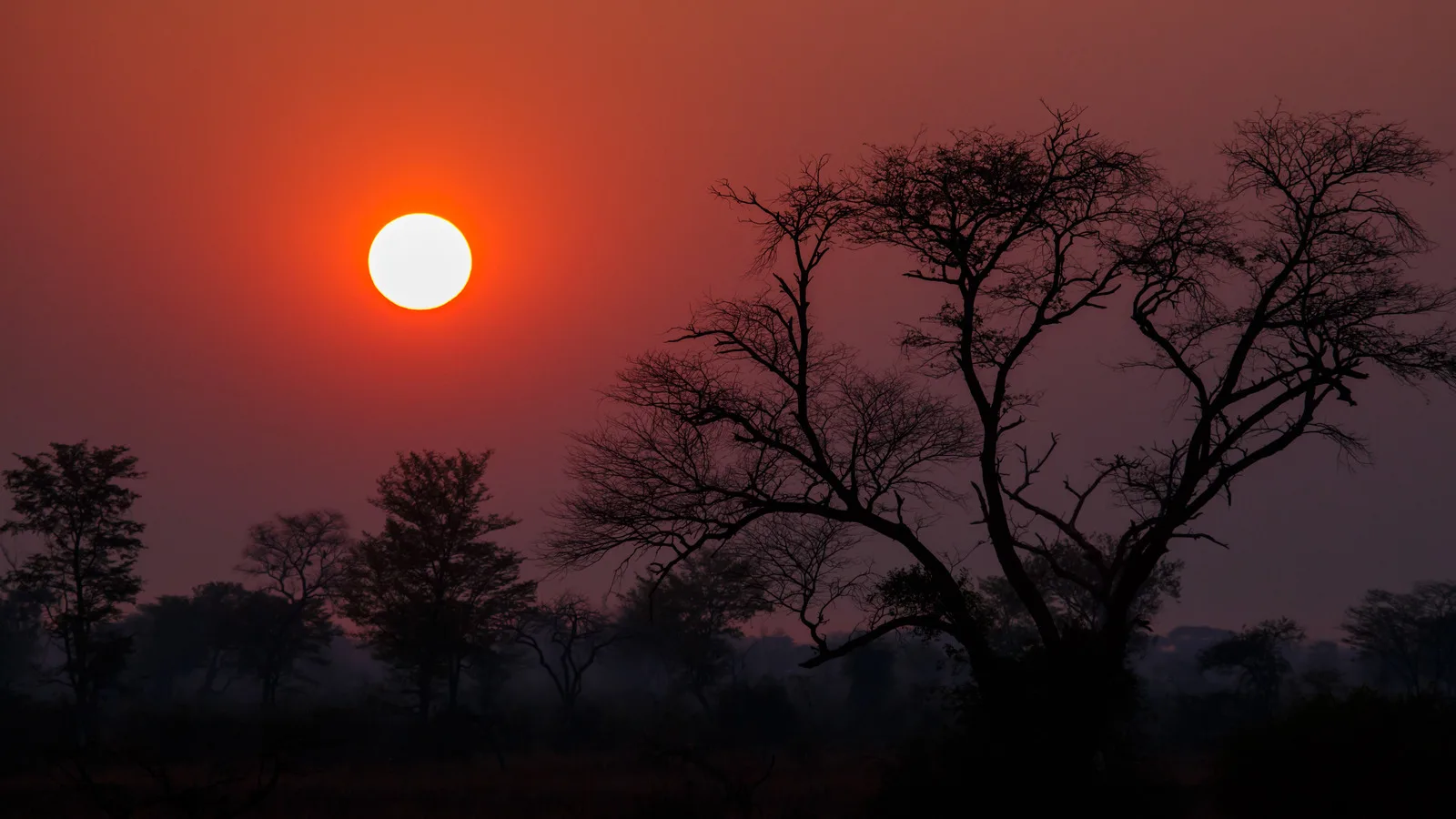
Credit Thomas Fuhrmann, CC BY-SA 4.0, via Wikimedia Commons
Zambia is one of the few countries where the two things most visitors come for peak at different times of year, and where choosing badly means seeing one of them properly and the other hardly at all. It is worth understanding the river before you choose the month.
Three seasons, not two
UNESCO’s description of the Barotse floodplain sets out the pattern the whole country runs on: a hot dry season from August to October, a hot wet season from November to April, and a cool dry season from May to July. Most of the region is described as having two seasons. Zambia is more usefully thought of as having three, because the cool dry months in the middle behave nothing like the hot dry ones at the end.
The river runs late
Here is the fact that reorganizes an itinerary. The rains are heaviest in January and February, but the flood does not arrive with them. On the Barotse plain the peak comes about three months after the height of the rains, usually in April, and the water recedes between May and July.
The Zambezi that pours over Mosi-oa-Tunya is the same river, further down. So the falls are at their most overwhelming in the months after the rain has stopped, and by the end of the dry season the Zambian side can be showing a great deal of rock. Both are real sights. They are not the same sight, and no month gives you both.
Game viewing works the other way
Wildlife in the Luangwa and Zambezi valleys concentrates as the country dries out. Water becomes scarce, the grass falls back, and animals become both easier to find and easier to see. That improves through the cool dry season and peaks in the hot dry months at the end of it, which is exactly when the falls are at their lowest.
Zambia is also a walking safari country, and walking is a dry season activity. The combination is why so many itineraries here are built around June to October.
What the wet season actually means
Between November and April the rain is heavy enough that the British Foreign Office warns that sudden floods can wash away bridges and roads outright. That is not a note about comfort. It is the reason many camps in the valleys are seasonal: not because the rain is unpleasant but because the road to them stops existing.
What the wet season gives in return is the country at its greenest, migrant birds, newborn animals and almost nobody else there. If that is the trip you want, build it around camps that stay open and around flights rather than drives, and ask locally about the roads on the day.
Choosing a month
- June to October for game viewing, walking safaris and dependable roads
- March to May for the falls at full volume, with more water than view on some days
- The cool dry season from May to July is genuinely cold at dawn, so pack for it
- November to April is green, quiet and cheap, and the roads are the constraint
- Ask whether a camp is open in the month you want before you build a route to it
- Expect to fly at least one leg if you travel in the rains
Sources
- UNESCO World Heritage Centre: the Barotse Cultural Landscape on Zambia’s Tentative List
- UK FCDO: Zambia safety and security
- Zambia Meteorological Department: seasonal forecasts and rainfall
Seasonal timing varies year to year, and the flood is a natural event rather than a schedule. Road conditions in the rains change without notice.