Events and Festivals
Zambia Festivals and Celebrations
Zambia holds more than twenty traditional ceremonies a year, and the most famous of them has no date because it waits for the flood.
- Country Zambia
- Category Events and Festivals
- Reviewed 18 August 2026
- Sources 3
- Length 3 min read
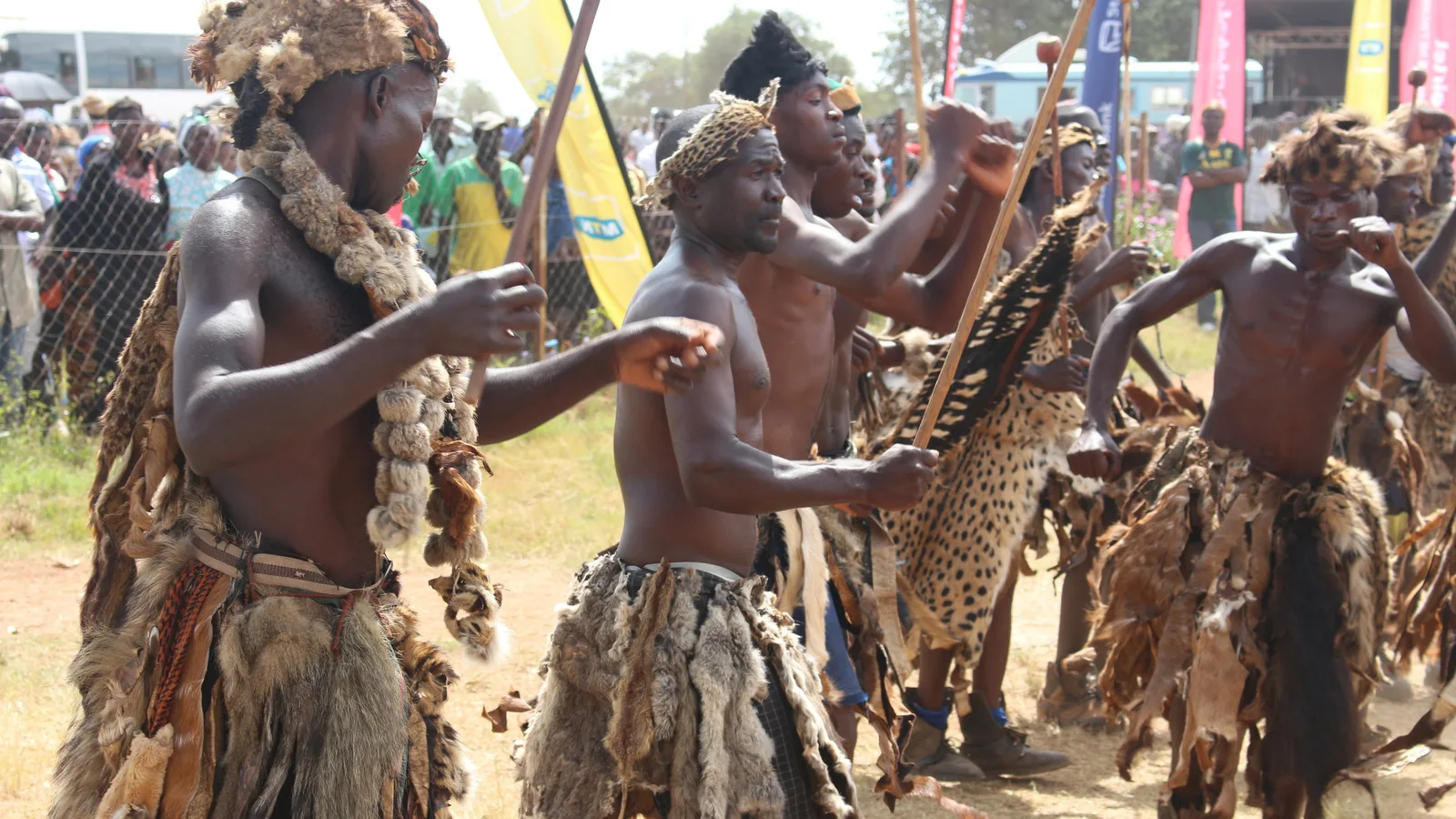
Credit ChaloNiZambia, CC BY-SA 4.0, via Wikimedia Commons
Zambia’s ceremonial calendar is unusually full and unusually alive. These are not reconstructions staged for visitors; they are the working ritual life of communities that have kept them going, and a visitor is a guest at them rather than an audience.
Kuomboka, and why this page gives no date
Kuomboka is the best known ceremony in the country. The word means emerging out of the waters. When the Barotse plain floods, the Litunga, the king of the Lozi, leaves the palace at Lealui in the plain and travels by barge to Limulunga on higher ground, accompanied by drummers and by everyone else who has to move.
No date appears on this page, and you should be suspicious of any page that gives you one. Kuomboka happens when the water says so. UNESCO’s own account of the floodplain notes that the peak arrives about three months after the height of the rains, usually in April, but it is announced by the Barotse Royal Establishment when the flood is ready and it has been called off in years when the flood did not come as expected. Plan to be in Western Province in that window and treat seeing it as luck.
The return journey, from Limulunga back to Lealui as the water falls, is a separate ceremony called Kufuluhela. UNESCO records plainly that it is not publicised. It is worth knowing that the thing tourists watch is one half of something.
The others worth planning around
Ncwala is the Ngoni first fruits ceremony, held in the Eastern Province near Chipata, in which the paramount chief tastes the new harvest before anyone else may. It is danced in animal skins and it is loud.
Mutomboko, in Luapula, marks the Lunda crossing of the Luapula River and ends with the Mwata Kazembe performing the dance of conquest himself. Chibwela Kumushi, Likumbi Lya Mize and many others fill out a calendar that runs to more than twenty ceremonies across the country in a year.
What UNESCO has actually listed, and what it has not
Six Zambian elements are inscribed on UNESCO’s Representative List of the Intangible Cultural Heritage of Humanity: the Makishi masquerade and Gule Wamkulu, both in 2008, the Mooba dance of the Lenje people of Central Province in 2018, the Budima dance in 2020, the Kalela dance in 2022 and the Mangwengwe dance in 2024.
All six are on the Representative List rather than the Urgent Safeguarding one, which is worth stating because the two lists mean opposite things. Representative means the practice is living and is offered as an example of human heritage. Urgent Safeguarding means it has been formally identified as at risk.
Kuomboka is not on either list. The Barotse Cultural Landscape, the place in which it happens, sits on Zambia’s Tentative List for World Heritage, which is a different scheme at an earlier stage. Sources that describe Kuomboka as UNESCO listed are wrong, and the distinction matters to anybody trying to understand what protection these practices actually have.
Attending well
These are ceremonies with hosts. Find out who is organizing, ask what is appropriate to wear, ask where visitors are expected to stand, and ask before photographing anything. A ceremony is not a performance with a ticket price, and the parts that are closed to outsiders are closed for reasons that predate tourism.
If you are planning around a ceremony
- Never book flights around a published Kuomboka date, because it is set by the flood
- Aim for Western Province in April and treat the ceremony as a possibility
- Ask the organizers what visitors wear and where they stand
- Ask before photographing, and accept a refusal
- Remember that Kufuluhela, the return journey, is deliberately not publicised
Sources
- UNESCO: Zambia’s elements on the Intangible Cultural Heritage lists
- UNESCO World Heritage Centre: the Barotse Cultural Landscape on Zambia’s Tentative List
- UK FCDO: Zambia travel advice
Ceremony dates are set locally and most are announced only weeks ahead. The UNESCO inscriptions listed above were read from the Convention’s own record.