Food
Zambia Food Guide
Nshima is not a side dish in Zambia, it is the meal, and everything else on the plate is named for its relationship to it.
- Country Zambia
- Category Food
- Reviewed 18 August 2026
- Sources 3
- Length 3 min read
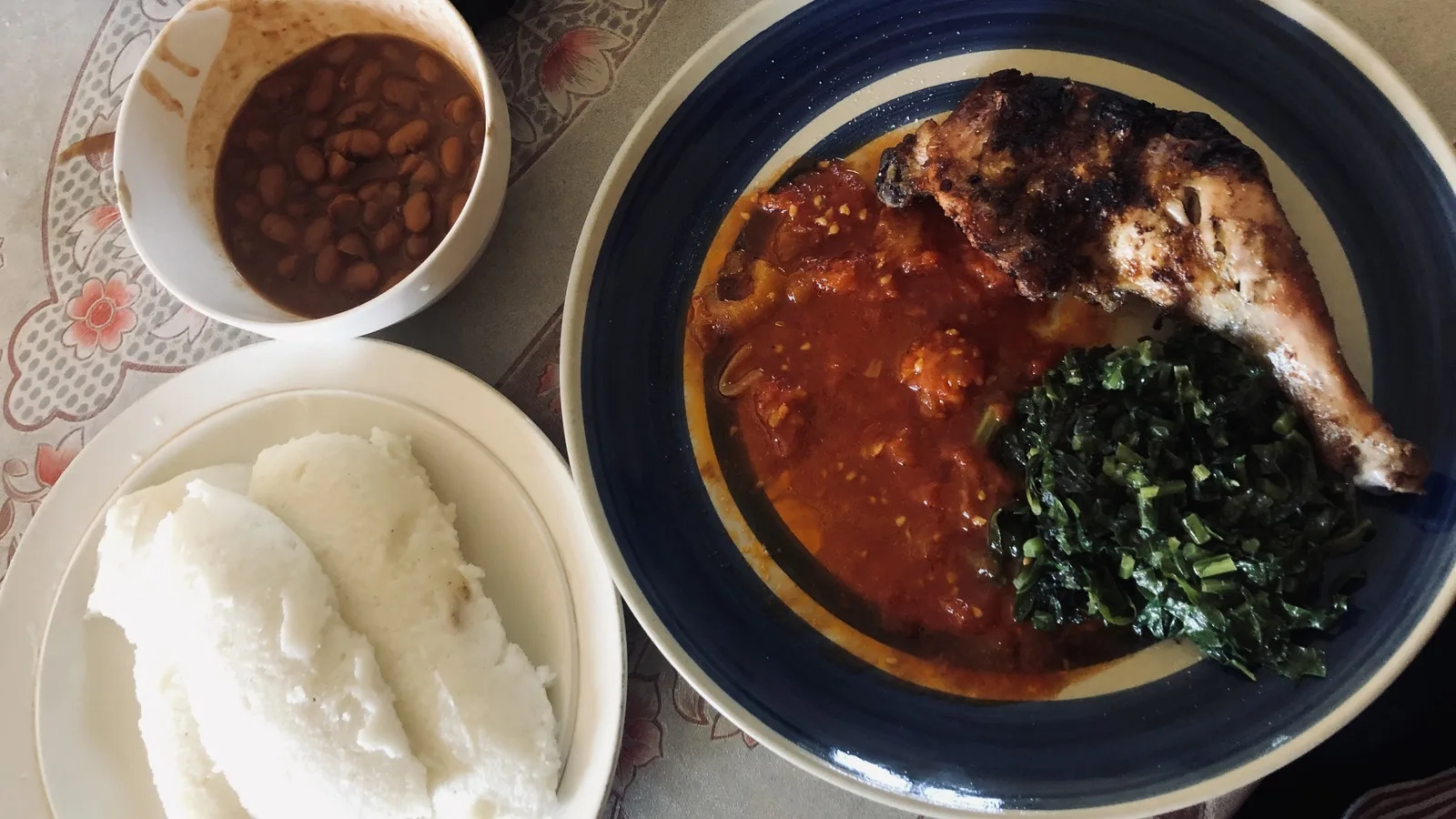
Credit Abby Magohomera, CC BY-SA 4.0, via Wikimedia Commons
You can eat in Zambia for two weeks and be served the same thing at almost every meal, and still not have eaten the same meal twice. That is not a complaint. It is how the cuisine is organized, and understanding it changes how the food tastes.
Nshima, and the idea of relish
Nshima is a thick porridge of white maize meal, cooked and worked until it is stiff enough to hold its shape, and served in a mound. It is the center of the plate and the thing a Zambian means by food. Everything served with it is a relish, and the relish is what changes.
It is eaten with the right hand. You take a piece, roll it into a ball against your palm, press a dent into it with your thumb, and use that to pick up whatever is beside it. Doing this competently at somebody’s table is a small courtesy that lands.
What comes with it
Greens are constant: rape, pumpkin leaves, cassava leaves and sweet potato leaves, usually stewed and often finished with groundnut. That last combination, greens cooked with pounded peanuts, is the one visitors tend to remember.
Fish is everywhere it can be. Kapenta, small dried freshwater fish, travel far inland and are fried until crisp. Bream from the rivers and lakes is the fish you are most likely to be served whole. Chicken is common; beef and goat appear at celebrations more often than on a Tuesday.
The regional things
Zambia is a large country and its provinces do not eat identically. Chikanda, sometimes called African polony, is a dense loaf made from wild orchid tubers, groundnuts and chilli, and it is a Northern specialty that is now sold nationally. In the Eastern Province, field mice are a genuine delicacy, sold roasted on skewers by the roadside.
The mice are worth mentioning honestly rather than as a curiosity to photograph. They are seasonal, they are caught in the harvested fields, and they are food. Treating them as a dare is the visitor behavior that makes a place tired of visitors.
Drinking
Munkoyo is a lightly fermented root and maize drink, mildly sour, more refreshment than alcohol. Local beers are widely available. Tap water is generally not what you should be drinking, and bottled or properly treated water is the norm for visitors.
One current warning about fish
This belongs on a food page rather than buried on a health one. In February 2025 chemical waste containing heavy metals was released from a mine in Copperbelt Province into the Chambishi Stream and the Mwambashi and Kafue rivers. The advice is to avoid consuming untreated locally sourced water or fish from that area.
Boiling does not remove heavy metals. That is the part people get wrong, because boiling is the answer to almost every other water question. Check the current advice if your route goes through the Copperbelt.
Eating well here
- Order nshima with two relishes rather than one, and try the groundnut greens
- Eat with your right hand, and take the lead from whoever you are with
- Try chikanda if you are in or near the north
- Ask before photographing anyone’s food, stall or family meal
- Drink bottled or treated water rather than tap
- Check current advice on fish and water if you are traveling in the Copperbelt
Sources
- UK FCDO: Zambia health advice
- US CDC: health information for travelers to Zambia
- World Health Organization: international travel and health
Food and water safety advice changes, and the Copperbelt contamination notice above is a live one. Check it against the current text before you travel.