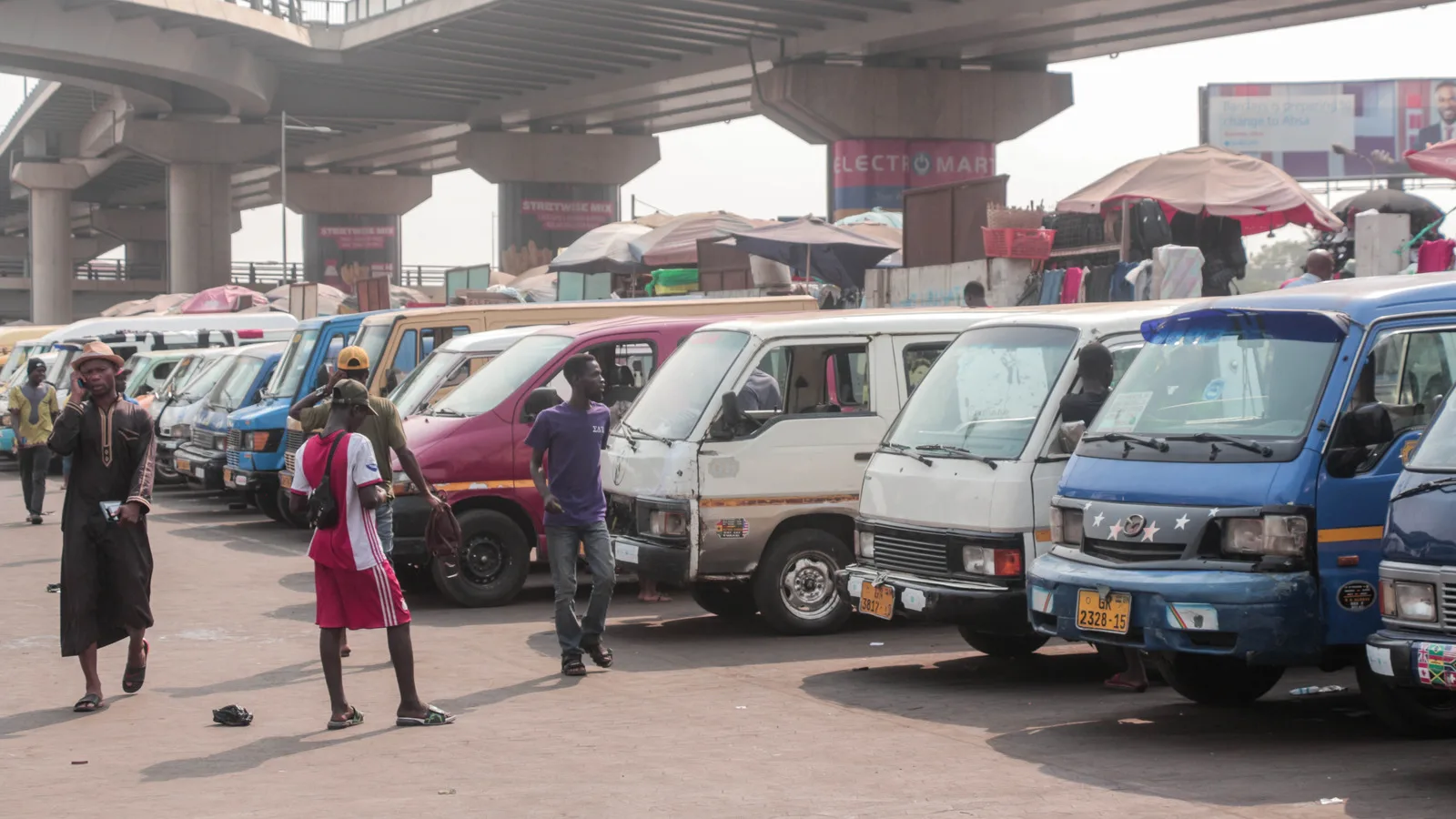
Getting Around Ghana
- Country Ghana
- Guide Flight Planning
- Reviewed 16 August 2026
- Length 3 min read
Credit SAgbley, CC BY-SA 4.0, via Wikimedia Commons
Last reviewed 16 August 2026
Ghana is well connected by road and the roads are the thing. Distances that look modest on a map are long days once you account for traffic out of Accra, and the choice of vehicle changes the trip more than the route does.
Airports and arrival
Almost every visitor arrives at Kotoka International Airport in Accra, which is close enough to the city that the drive in is short and the traffic is not. Kumasi and Tamale have airports served by domestic flights, and the Accra to Tamale route in particular saves the better part of a day over the road.
Arrange your first ride before you land, through your hotel if you can. It is the one journey where you have no local price sense, no local number and luggage, and it sets the tone for everything after.
Between cities
Intercity coaches are the sane default for long distances. Established operators run scheduled services between Accra, Kumasi, Takoradi, Cape Coast and the northern cities from fixed terminals, with reserved seats, luggage handling and air conditioning. Book ahead where the operator allows it and travel in daylight.
Below that sit shared taxis and tro-tros running fixed routes between towns, which leave when they are full rather than when a timetable says so. They are cheap, they are how most of the country moves, and they are not comfortable over long distances with luggage.
Within cities
The tro-tro is the shared minibus that carries Accra. It runs set routes from set stations, the conductor calls the destination from the door and the fare is small and fixed. It is genuinely useful once you know a route and genuinely confusing before then.
Taxis come in two forms: shared ones running a route like a bus, and dropping taxis hired for your journey alone. Agree the fare before you get in, every time, because meters are not the norm. Ride hailing apps operate in Accra and Kumasi and remove the negotiation entirely, which many visitors find worth the small premium.
Hiring a driver
For a trip taking in the coastal castles, Kakum and Kumasi, hiring a car with a driver is the option most visitors end up preferring, and it costs less than the equivalent would at home. A driver who knows the roads is also a driver who knows which stretch is being resurfaced this month.
Agree in advance what the daily rate covers: hours, fuel, tolls, and where the driver sleeps and eats on an overnight trip. Get it in writing, even informally. Self drive is possible with the right license and paperwork and is not what we would suggest for a first visit.
What to avoid
- Long distance road travel after dark, where unlit vehicles and livestock are the hazard
- Overloaded vehicles, however normal it looks, and however long you have already waited
- Getting into any taxi before the fare is agreed
- Motorbike taxis, which are common, quick and the fastest way to a serious injury
- Assuming a map estimate is the real journey time out of Accra