Getting Around Kenya
- Country Kenya
- Guide Flight Planning
- Reviewed 16 August 2026
- Length 3 min read
Credit Francis Akuka for the Wikimedia Foundation, CC0, via Wikimedia Commons
Last reviewed 16 August 2026
Kenya has more transport options than most of its neighbors, including a railway that works and an air network built around safari. The choice matters more here than in most countries, because the distances are real and the roads are variable.
Airports and arrival
Jomo Kenyatta International in Nairobi is the main gateway, with Moi International in Mombasa serving the coast directly. Nairobi’s Wilson Airport is the separate hub for light aircraft to the parks and airstrips, and a transfer between the two takes longer than the map suggests.
Arrange your first ride before you land, through your hotel where you can. It is the one journey where you have no local price sense, no local number and luggage, and it sets the tone for everything after.
Between cities
The Madaraka Express, the standard gauge railway between Nairobi and Mombasa, is the civilized way to cross the country: booked online in advance, seats reserved, and it avoids a long day on the road. Book early, because it sells out.
Intercity coaches run everywhere the railway does not, from fixed terminals on scheduled departures. Below them sit shared taxis and long distance matatus, which leave when they are full rather than when a timetable says so. They are cheap, they are how most of the country travels, and they are not comfortable over long distances.
For the parks, light aircraft are less an indulgence than a way to convert two driving days into forty minutes. That is where the soft bag and the operator’s own luggage limit come in.
Within cities
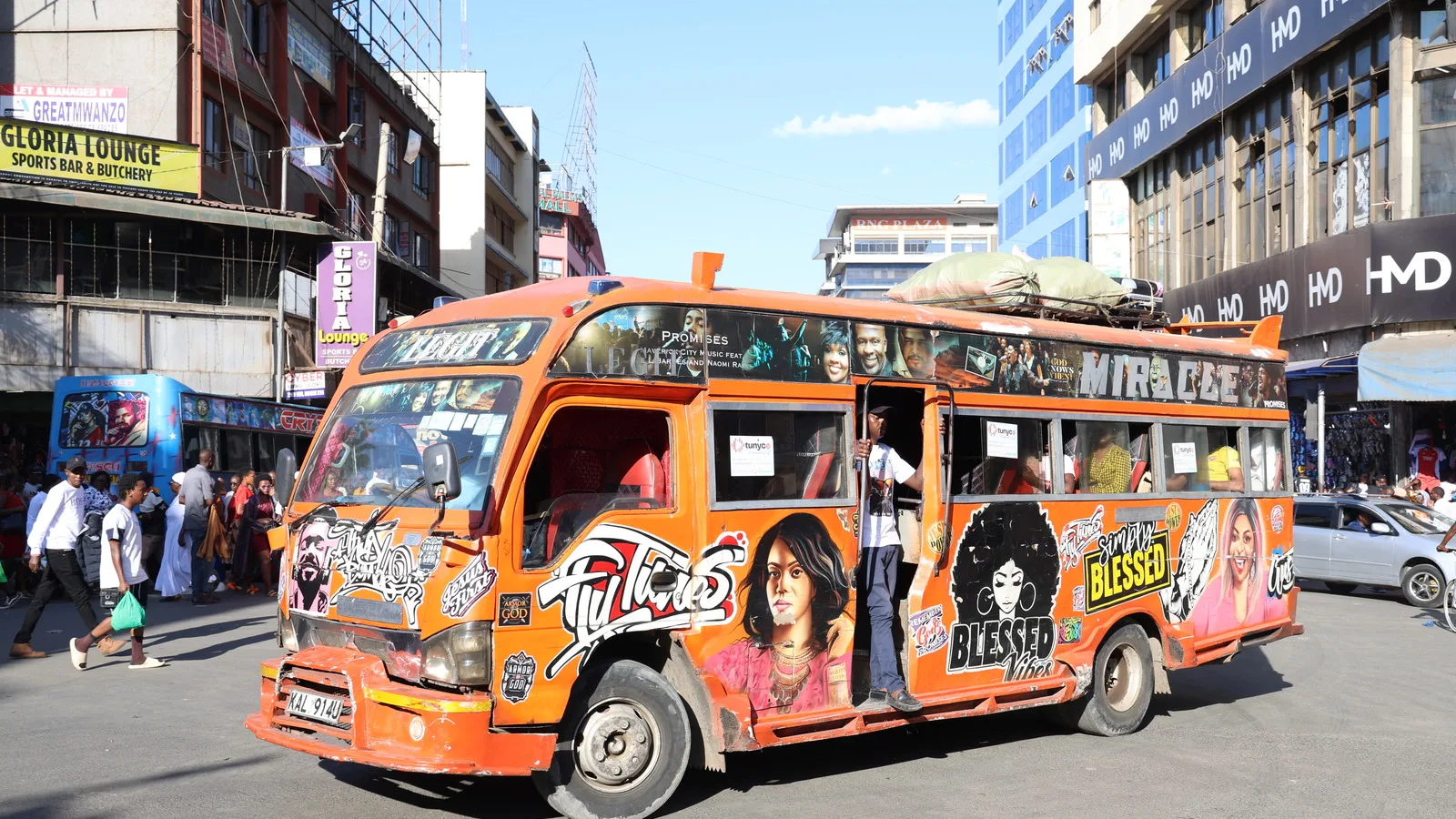
The matatu is the shared minibus that carries Nairobi, painted and fitted out with a seriousness that has become a genuine art form. It runs set routes from set stages, the conductor calls the destination, and the fare is small, cash or mobile money, and varies with demand. It is useful once you know a route and confusing before then.
Ride hailing apps operate in Nairobi, Mombasa and Kisumu and remove the negotiation entirely, which most visitors find worth the small premium. Ordinary taxis expect the fare to be agreed before you get in, because meters are not the norm.
The boda boda, the motorcycle taxi, is how Kenya beats its traffic and is also how a great many people arrive in its hospitals. We would not suggest one to a visitor.
Hiring a driver
For a trip taking in the coast, the Rift or several parks, hiring a vehicle with a driver is what most visitors end up preferring, and it costs less than the equivalent would at home. A driver who knows the roads also knows which stretch is being rebuilt this month.
Agree in advance what the daily rate covers: hours, fuel, park entry for the vehicle and driver, and where the driver sleeps and eats overnight. Get it in writing, even informally. Self drive is possible and is not what we would suggest for a first visit.
What to avoid
- Long distance road travel after dark, where unlit vehicles and livestock are the hazard
- Boda bodas, which are quick, cheap and the most likely way to be seriously hurt here
- Overloaded vehicles, however normal it looks and however long you have waited
- Getting into any taxi before the fare is agreed
- Assuming a map estimate is the real journey time out of Nairobi at rush hour