Getting Around Mauritius
- Country Mauritius
- Guide Flight Planning
- Reviewed 19 August 2026
- Length 2 min read
Credit Benoît Prieur, CC0, via Wikimedia Commons
Last reviewed 19 August 2026
Mauritius is about sixty kilometers end to end, which makes almost everything a day trip and makes the transport question less about distance than about patience. There are four ways to move around, and most visitors use three of them.
Buses
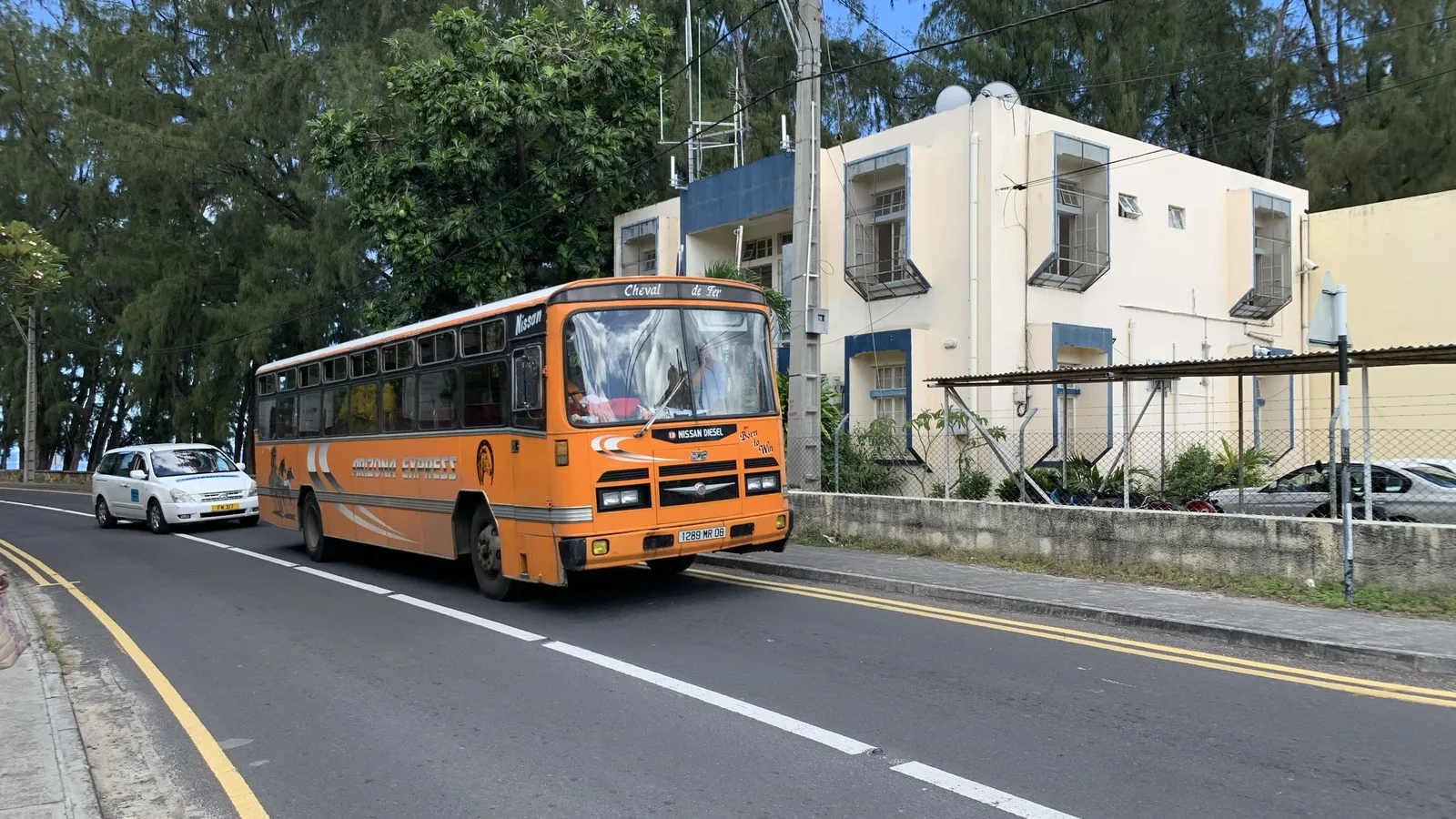
The bus network reaches nearly everywhere, costs very little and runs on its own logic. Routes converge on Port Louis, Curepipe and the larger towns, services thin out sharply in the evening, and the last bus back from a beach is earlier than you want it to be. Pay the conductor on board, in cash, in small notes.
It is the cheapest way to see the island and the slowest, and both of those are the point.
Taxis, and the Metro Express
Taxis are plentiful and mostly unmetered, so the fare is agreed before you get in rather than discovered when you get out. Ask your accommodation what a journey should cost before you negotiate one; the answer is the single most useful thing to know.
The Metro Express light rail runs between Port Louis and Curepipe by way of Rose Hill, Quatre Bornes and Vacoas. It is modern, cheap and useful on exactly that corridor and no help at all for the coast.
Driving
You can drive in Mauritius on a UK photocard license, and plenty of visitors do. Driving is on the left. What the brochures underplay is the roads: many are narrow, many have no pavement, pedestrians and dogs use the carriageway because there is nowhere else, and the motorway between the airport and the north is a different animal from a village lane in the south.
The other thing to know is seasonal. During a cyclone you are not permitted to leave your accommodation, and car insurance policies often become invalid. A hire car is not an escape route.
Getting around without stress
- Agree a taxi fare before the journey, after asking locally what it should be.
- Carry small notes. Nobody has change for a large one.
- Plan the last bus back before you set out, not after.
- If you drive, drive on the left, slowly, and expect people on the road.
- Avoid driving at night on unlit rural roads.
- During a cyclone warning, stay put. That is the rule, not advice.