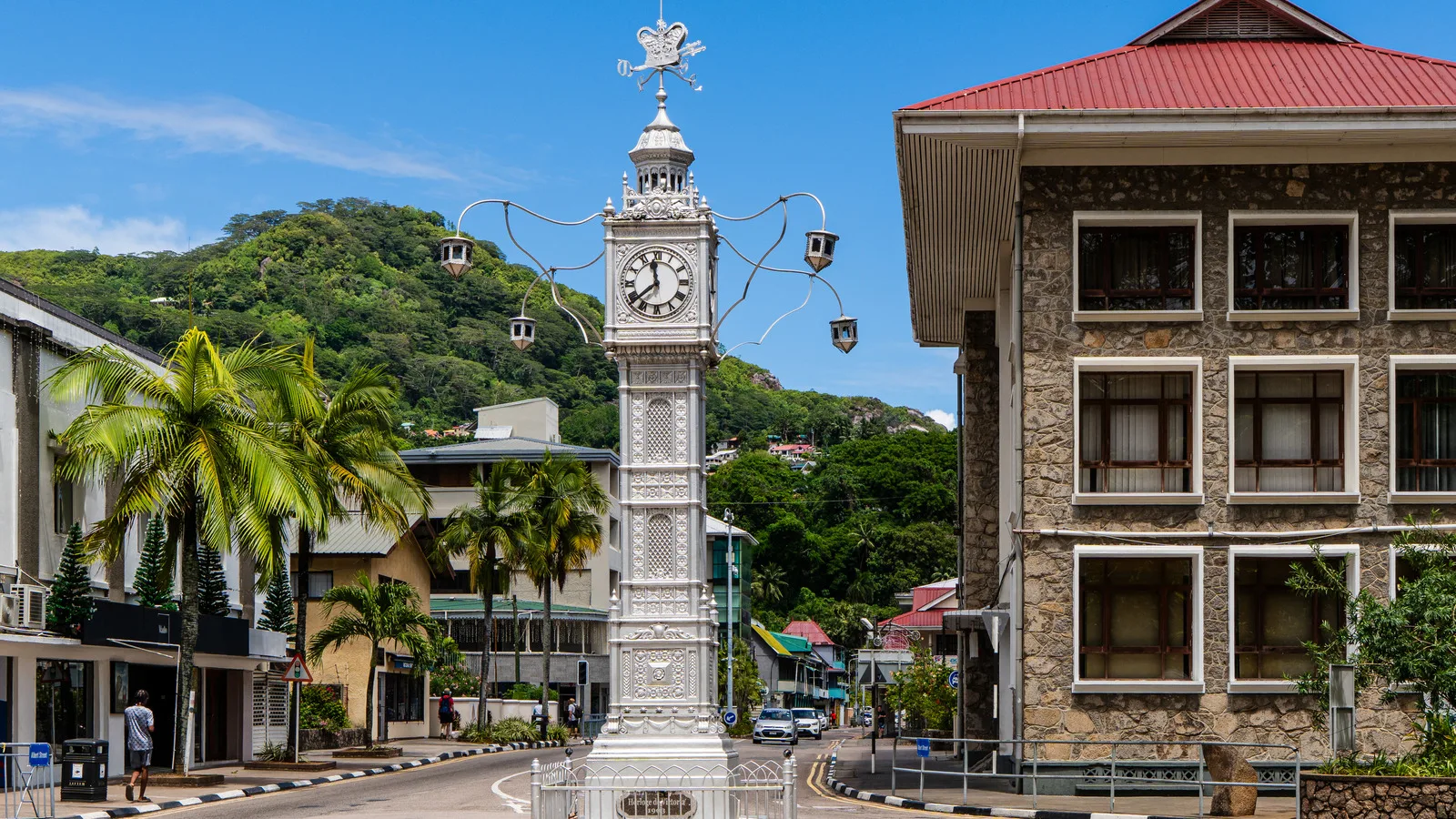
Seychelles Travel Safety Guide
- Country Seychelles
- Guide Safety
- Reviewed 20 August 2026
- Length 3 min read
Credit NorbertNagel, CC BY-SA 4.0, via Wikimedia Commons
Last reviewed 20 August 2026
This is the shortest safety guide in this series, and that is a finding rather than an omission.
Where the advice stands
The US State Department places Seychelles at Level 1, Exercise Normal Precautions, dated 9 December 2025. That is the lowest of the four levels.
The UK FCDO advises against travel to no part of Seychelles. We checked that rather than assumed it: the phrase "advises against" does not appear once across the whole of its Seychelles advice, its entry requirements, its safety and security page or its health page.
After a run of countries where whole regions are closed, the honest thing to report here is that nothing is.
The sea is the real subject
The most useful thing the FCDO says about Seychelles is seasonal and specific. Beaches can be safe for swimming at some times of the year and dangerous at others.
In general the west coast is unsafe during the north-west monsoon, around December to March, and the east coast is unsafe during the south-east winds season, around May to September. Beaches at the southern tip are not suitable for swimming at any time.
Beaches do not always carry safety information and should not be assumed safe. Beau Vallon, which is among the most popular, may have dangerous rip currents when the sea is rough. There are not many lifeguards, though some are stationed on popular beaches. Ask locally about conditions and follow any warning signs.
Crime, as the advice describes it
- There is a risk of break-ins, robberies, burglaries and opportunistic thefts.
- Crime is described as generally non-violent, but bags are snatched, and cars and boats are broken into.
- Criminals may target parked cars, residential accommodation including guest houses, hotels, beaches, and marked and unmarked walking trails.
- Do not carry large amounts of cash or wear expensive-looking jewelry or watches.
- To report an incident, call the Seychelles police on +248 428 8000.
Practical
- For an ambulance, dial 999.
- As a tourist you must pay for medical treatment. Insurance covering treatment and medical evacuation is not optional here.
- The main hospital is at Mont Fleuri in Victoria on Mahé, with an accident and emergency department and facilities such as scans. There are local health centers in most residential areas and many private clinics offering general practice.
- Carry a mobile phone with roaming for use in an emergency.
One live health matter
The US CDC records an active outbreak of chikungunya in Seychelles and recommends chikungunya vaccination for people traveling to an area with an outbreak. It is mosquito-borne, so repellent and covering up at dusk are part of the answer alongside the vaccine.
The same CDC destination page carries no malaria section for Seychelles at all. We are reporting what the page does and does not say rather than making a medical claim of our own; take your own itinerary to a travel clinic.
Terrorism, drugs and the law
The FCDO records that although there is no recent history of terrorism in Seychelles, attacks cannot be ruled out. That is a materially different sentence from the one it writes about most countries in this series.
Drug laws are strict and the penalties severe, including fines and prison sentences up to life imprisonment, applied both to supplying and to simple possession.
Same-sex sexual activity is legal in Seychelles. The FCDO records that attitudes vary and that same-sex marriage is not recognized. This is the first country in this series where the answer to that question is yes, and it is stated plainly for that reason.